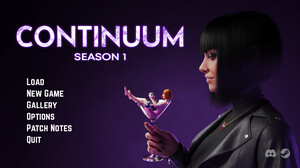





Continuum places you in a single, decisive academic year at a prestigious arts academy, where player choice steers both your creative path and personal life. Continuum presents a narrative-first experience built around relationships, artistic projects, and dozens of branching moments that combine to shape endings and mid-game opportunities. The first paragraph sets the tone: a slow-burning visual novel that rewards attention to detail, exploration of character motives, and replay-driven discovery.
Gameplay and Mechanics
The core gameplay of Continuum centers on choice-driven progression rather than action-based challenge. Players move through a sequence of scenes that represent days, workshops, and social events across an academic calendar. Each decision—whether about a creative project, a conversation, or how to spend limited time—affects story arcs, relationship dynamics, and the protagonist’s portfolio of work. Branching is deep and cumulative: hundreds of decisions combine to alter later opportunities, unlock different events, and reveal character histories. The result is a layered experience where small choices can produce meaningful consequences later in the season.
Controls and User Experience
The interface is designed to be touch-friendly and direct. Progress through dialogue by tapping or using on-screen prompts, select options from clear choice menus, and review recent events with an in-game history feature. Text pace and dialogue display are tuned for reading comfort, with an option to adjust speed to suit slower readers or those who prefer brisk progression. Menus remain unobtrusive, keeping focus on characters and scenes while allowing quick access to save points, progress indicators, and story summaries.
Progression and Structure
Progression in Continuum is structured around an academic year that divides content into scenes and milestone events. Players encounter deadlines, auditions, critiques, and exhibitions that present multiple ways to respond. Rather than traditional leveling, progression is measured by the choices you make: reputation with faculty and peers, the completion or success of creative projects, and the accumulation of secret or unlocked scenes that influence final outcomes. Season 1 establishes the fundamental systems and sets up threads intended for later updates, with an emphasis on discovery and replay rather than rapid power growth.
Visual Style and Presentation
The visual presentation emphasizes character portraits, atmospheric backgrounds, and scenes that reflect an arts academy ambiance—studios, theaters, and rehearsal spaces rendered with expressive color and lighting. Character expressions and staging are used to convey subtle emotional beats alongside written dialogue. The UI palette and typography prioritize legibility so that reading long scenes remains comfortable on a range of screen sizes. Background art and character framing support the narrative mood without distracting from choice-based interactions.
Customization and Player Choice
Customization in Continuum is narrative-driven. Instead of deep cosmetic editors, customization comes from choices about your creative focus, the kinds of projects you pursue, and how you present yourself in social and professional settings. These decisions determine which characters become close allies or rivals, which projects get spotlighted at key events, and which story branches open. This approach keeps the spotlight on meaningful role-playing opportunities rather than surface-level visual tweaks.
Replay Value and Challenge
Replayability is a central design goal. The branching structure encourages multiple playthroughs to explore alternate creative paths, relationship outcomes, and endings. Challenge arises from managing limited opportunities and deciding which events to prioritize: will you focus on a demanding personal project, foster a relationship, or accept a faculty challenge that could change your trajectory? Difficulty is narrative and situational, asking players to weigh long-term consequences against short-term gains.
Accessibility, Offline Play, and Performance
Continuum is designed to run offline once installed, allowing players to continue narrative progress without a constant internet connection. The interface supports readable text sizes and contrast-friendly palettes, and the design minimizes reliance on fast reflexes so users with different reading speeds can enjoy the experience. Performance is optimized for a range of devices, though the initial Season 1 release notes that future updates will further refine stability and polish.
Known Limitations and Version Notes
This initial Season 1 release provides the narrative foundation, core mechanics, and a significant number of branching choices but may have less content than later seasons. Players should expect mature themes presented in a narrative context; explicit content is avoided in favor of character-driven exploration of ambition, temptation, and creative struggle. Reported rough edges and stability issues are being addressed in planned updates, and the developers have signaled ongoing content expansions to broaden storylines and add additional scenarios in future releases.