
Badam Saat

| Package ID: | |
|---|---|
| Latest Version: | v35 |
| Latest update: | May 22, 2026 12:05:05 |
| Developer: | Gameyantra |
| Requirements: | Android |
| Category: | Card |
| Size: | 45.70 MB |
| Tags: | War Puzzle Management |
Rating :4.3
Badam Saat brings the traditional Indian card game Sevens (often called 7 of Hearts) to mobile devices with a polished, turn-based experience designed for single-device play against intelligent AI opponents. In Badam Saat each round begins with the player holding the 7 of Hearts and matches progress as players build suit sequences up and down from each seven, passing when no legal play exists; the game focuses on short five-round matches where scores are totaled by the face value of remaining cards and the lowest total wins. The presentation favors portrait play with clear card faces, smooth animations, and unambiguous round feedback so each decision and each discarded card feels meaningful during quick sessions.
Key features
Badam Saat faithfully reproduces the familiar mechanics of Sevens while keeping the interface approachable: four-player tables with three AI opponents, a standard 52-card deck, suit-based sequences that expand outward from the sevens, and a fixed five-round scoring format that keeps matches brisk. The app provides visual pass/play indicators, per-round summaries, and a short winner celebration screen that lets you see how scores accumulated. The emphasis is on strategy and timing rather than long campaigns, making it ideal for short games during commutes or coffee breaks.
Gameplay mechanics
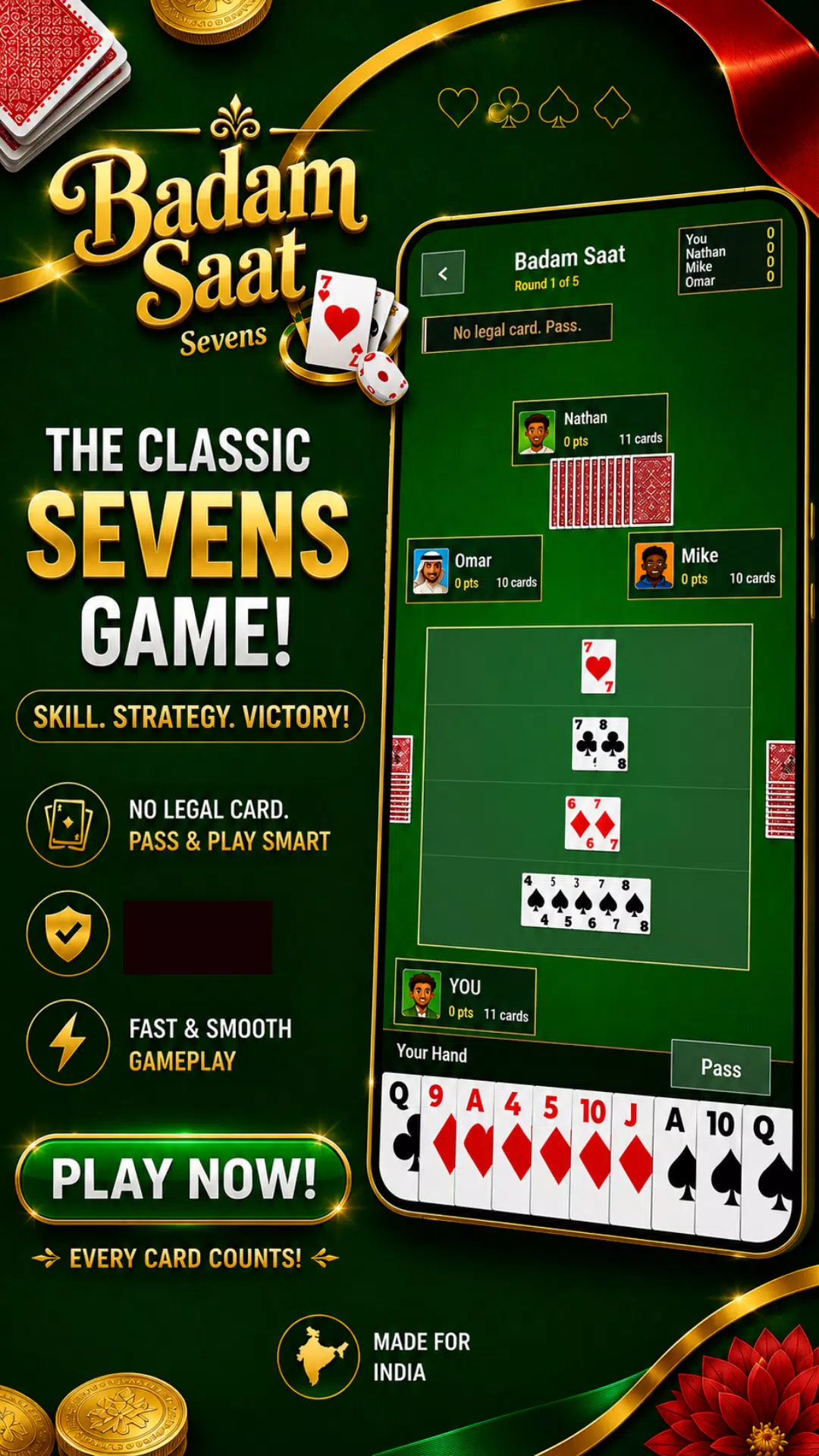
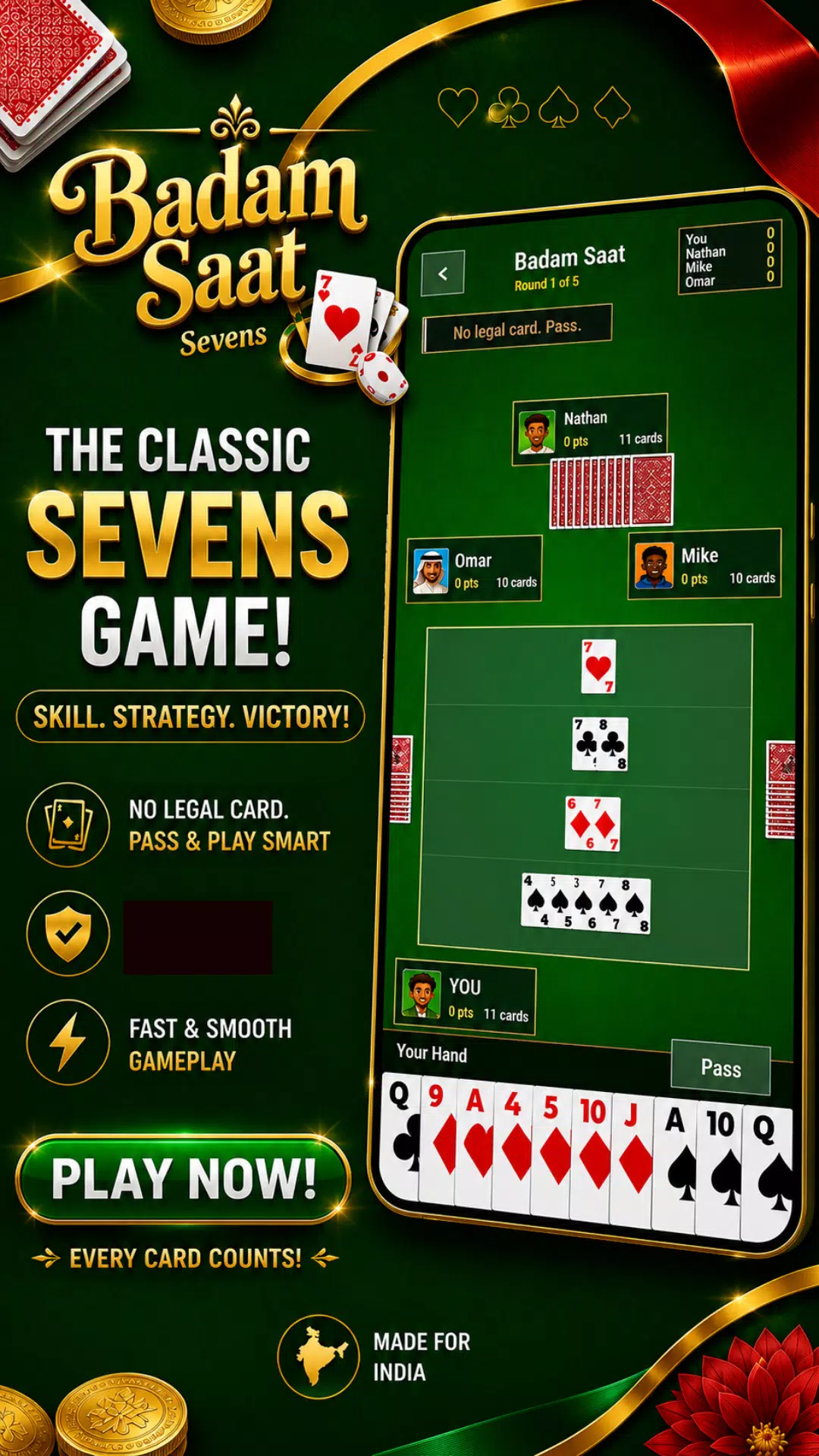
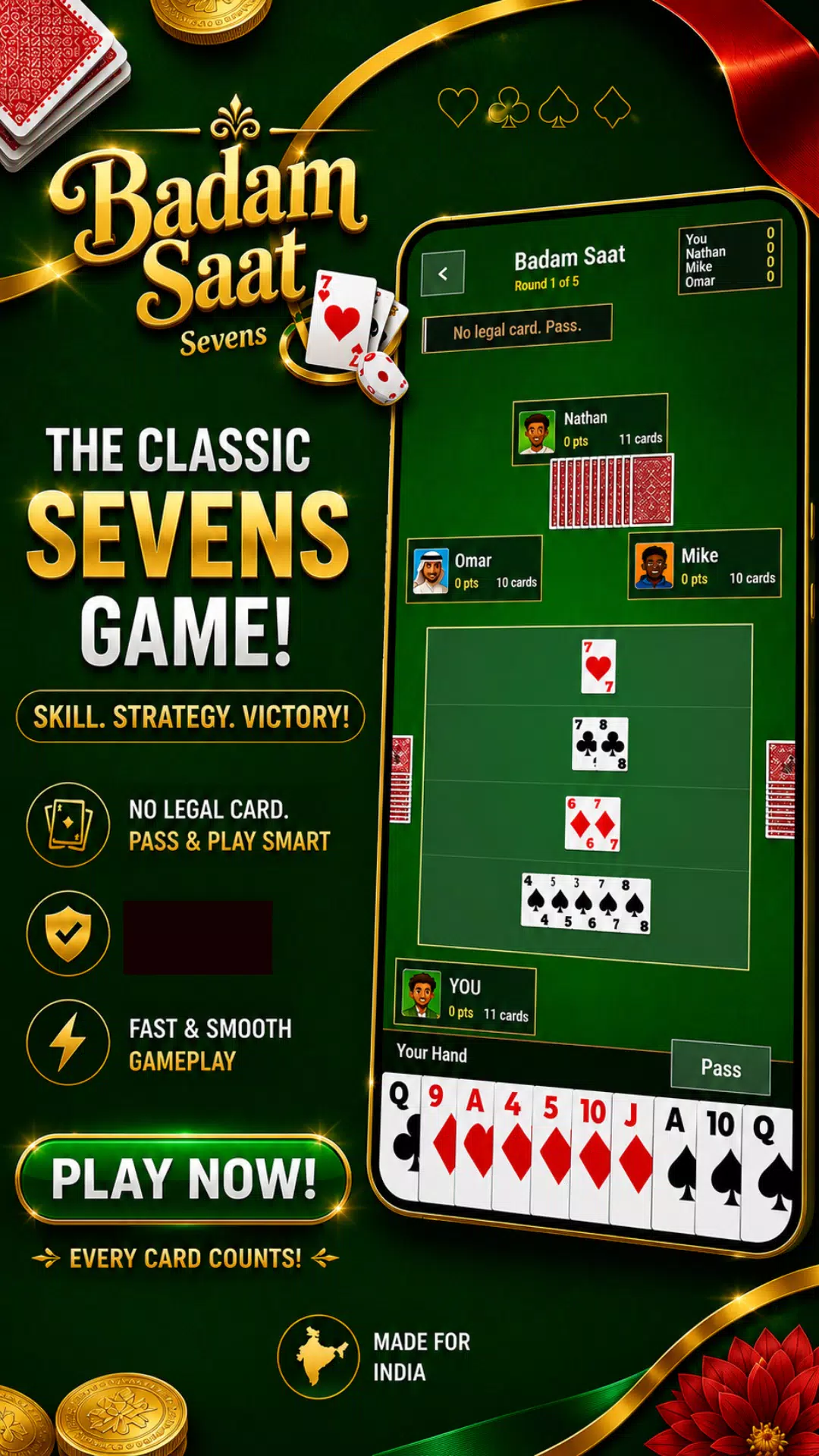
The core gameplay in Badam Saat centers on building continuous sequences for each suit starting from the seven. A legal play is any card that continues a suit’s sequence either upward or downward; when no legal play is available a player must pass. The player who holds the 7 of Hearts always starts the round, which creates predictable openings and strategic opportunities as players decide whether to extend sequences or hold cards to force opponents into higher penalties. Card values carry over into scoring at the end of each round, so retaining high-value cards can be costly. This structure encourages forward planning, suit control, and careful timing of plays across all five rounds.
Controls and table interaction
The interface prioritizes simple, direct touch controls so you can focus on strategy. Tap a card to select and play it; the table highlights legal moves and clearly indicates when no plays are available. Pass and play indicators give immediate feedback about turn results, and round summaries show which cards contributed to the final scores. The layout aims to keep the most important information—current suit sequences, remaining cards, and round totals—immediately visible without clutter, helping new and experienced players make decisions faster.
Scoring and progression
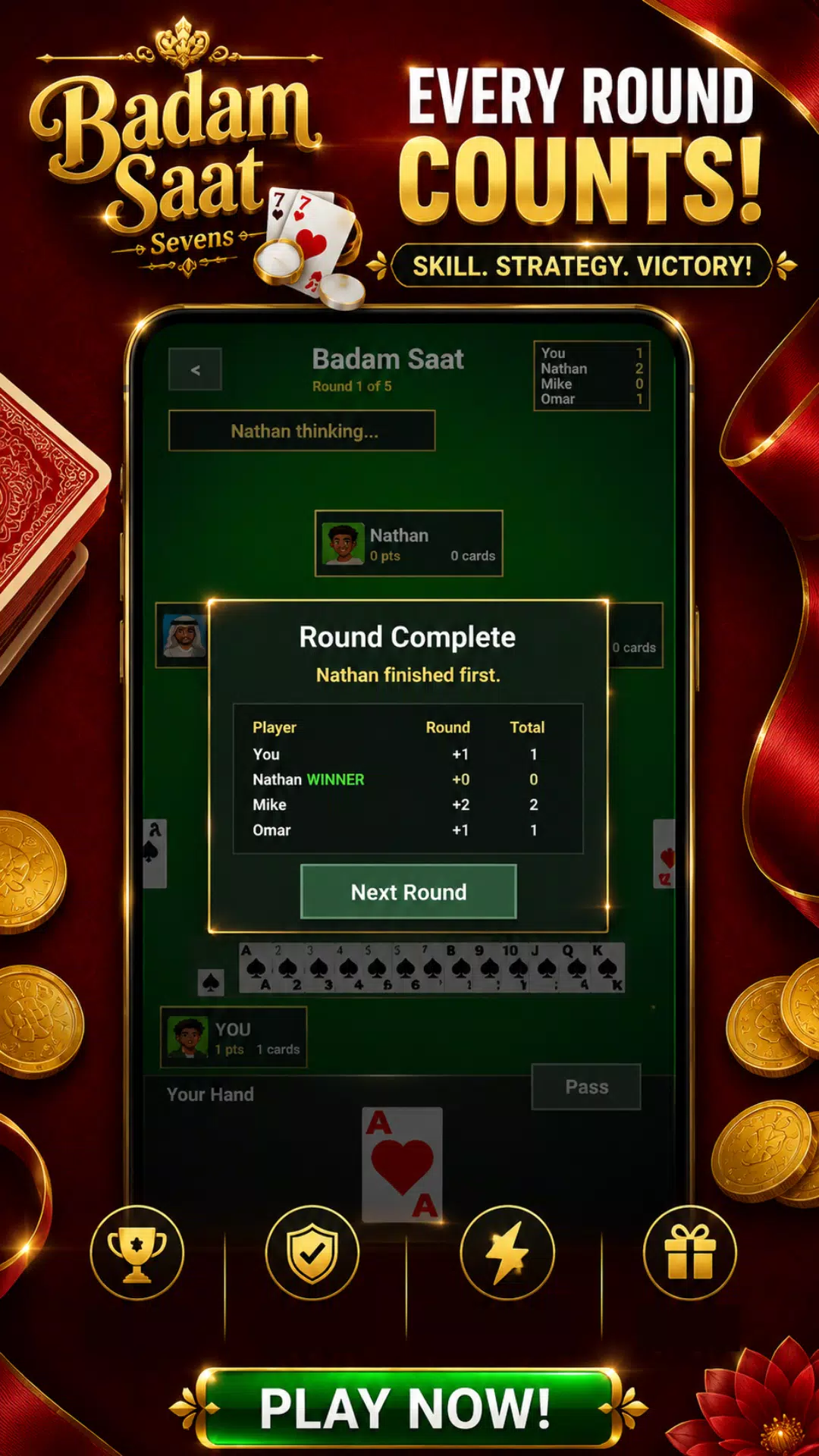
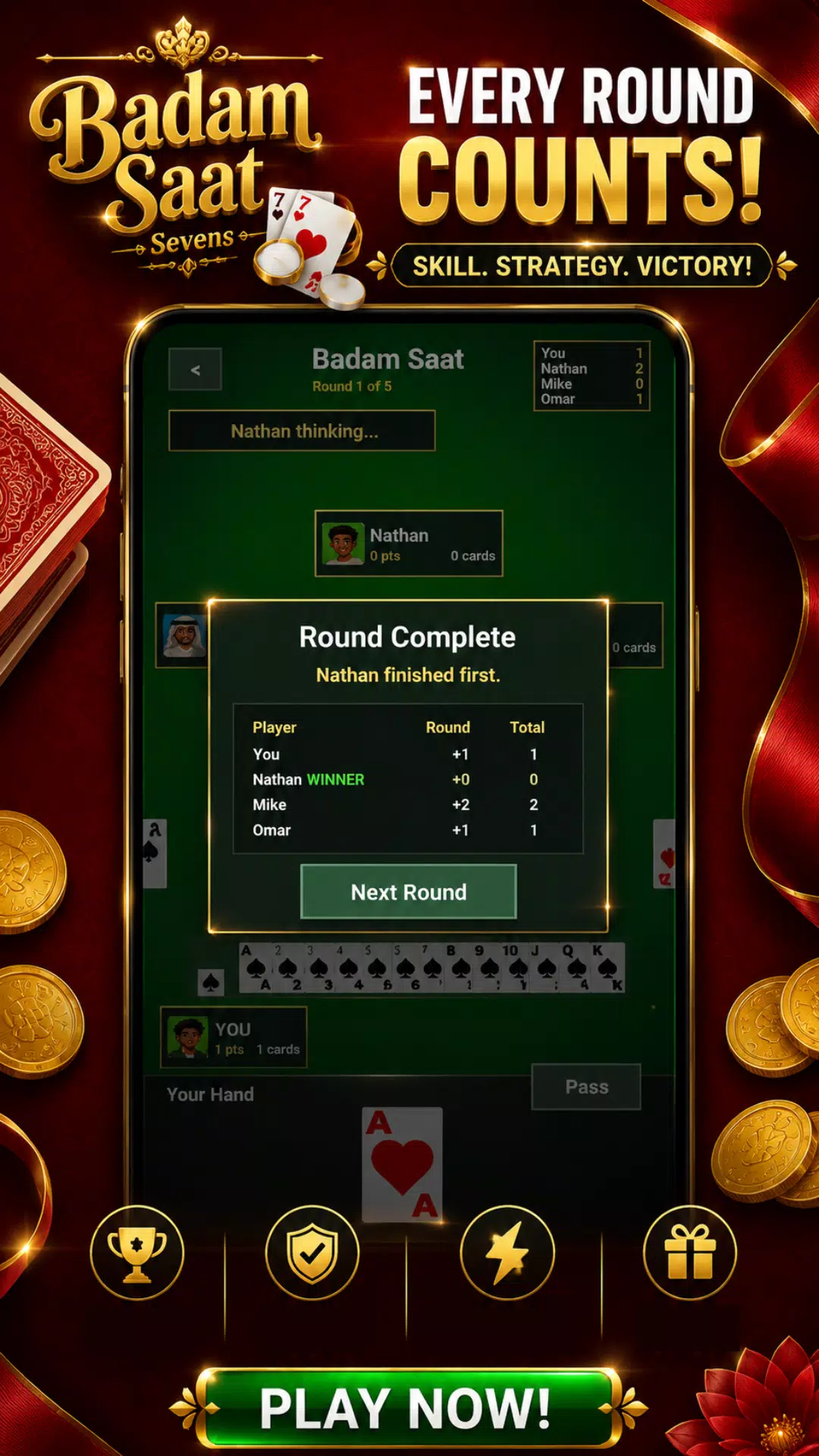
Matches in Badam Saat are structured as five-round sessions with cumulative scoring: after each round the face value of unplayed cards is added to a player’s total and the aim is to finish the match with the lowest score. Because there is no persistent leveling system, progression is expressed through improving play, learning AI tendencies, and lowering your match totals over repeated sessions. The consistent five-round format makes it easy to practice specific tactics—such as early suit control or intentionally playing low cards to minimize end-of-round penalties—and to measure progress by comparing scores from match to match.
Visual style and accessibility
The visual presentation favors clarity and legibility. Card faces use high-contrast suits and readable numbers to make quick recognition simple, and animations are kept smooth and unobtrusive so they do not interrupt decision flow. Visual cues for legal plays, pass states, and round results are prominent to support players who rely on clear on-screen signals. Text labels and score readouts are sized to remain legible in portrait orientation, improving accessibility for users who prefer larger interface elements or who play on smaller screens.
Offline play, replay value and challenge
Badam Saat is designed for offline, single-device play against reliable AI opponents, making it a solid choice when you don’t have an internet connection or other players are unavailable. Replay value comes from the combination of short match length, strategic depth, and the natural variability of card shuffles—the same basic rules produce different tactical puzzles each time. The scoring system and the AI’s consistent behavior create an approachable challenge that rewards learning: as you refine timing, suit management, and card retention strategies, your average match totals should fall and your understanding of the game’s nuances will deepen.
Practice and learning curve
For new players, Badam Saat offers a gentle learning curve: early rounds tend to be forgiving, allowing you to experiment with play patterns and observe how the AI responds, while later rounds test your ability to plan across the match. The clear round feedback and visible score tallies make it easy to analyze mistakes and adjust tactics on subsequent matches, encouraging iterative improvement without the pressure of rankings or persistent progression systems.