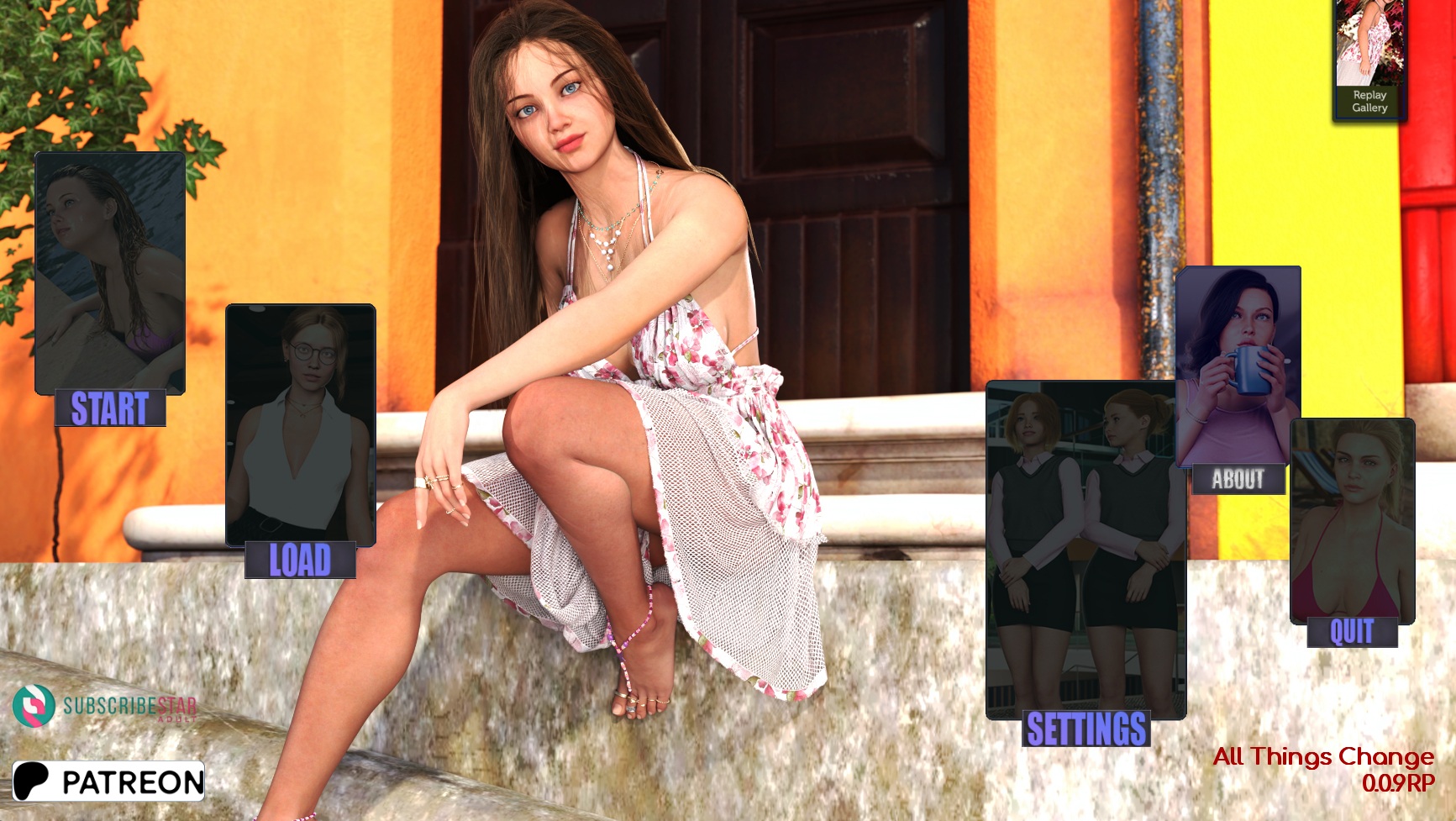






All Things Change places you in the role of a returned writer who accepts the position of Director at a local academy, a narrative-driven simulation that blends quiet management with branching interpersonal storytelling. In All Things Change you will balance day-to-day responsibilities while guiding a small cast of characters, including Linda, as the protagonist confronts memories and rebuilds relationships. The opening scenes set a reflective tone but the gameplay unfolds across clearer systems for scheduling, decision making, and consequence tracking so players who prefer considered, character-focused experiences can engage at their own pace.
Gameplay and Core Mechanics
The game mixes light academy management with interactive story chapters. Management mechanics revolve around planning schedules, assigning tasks, and responding to events that affect student morale and resource levels. Decision points appear both in administrative choices and in personal conversations; a single choice can alter a character interaction or open a new scenario later. The pacing emphasizes slow-burn development so that daily routines and longer narrative arcs feed into one another, creating a satisfying loop of problem solving and character discovery.
Controls and User Interface
Controls are optimized for touch devices: tap to select dialogue options, tap and drag to adjust schedules, and long press for character profiles and contextual tooltips. The interface keeps core information accessible with a calendar-style planner for week-by-week tasks, a relationship tracker that summarizes recent interactions, and a compact resource panel for quick decisions. Menus are designed to minimize interruption to the story flow while still offering access to customization and progress details.
Progression, Choices, and Replay Value
Progression in All Things Change is driven by story chapters, reputation metrics, and unlocked scenarios. As Director you unlock new events and areas by meeting certain administrative goals and by developing relationships with faculty and students. Branching paths lead to multiple endings and optional scenes, encouraging replay to see alternate outcomes. The decision-driven structure rewards exploration of different approaches, whether you focus on rebuilding the academy, deepening bonds with characters like Linda, or pursuing tucked-away narrative threads introduced by earlier choices.
Visual Style and Level Structure
The visual presentation favors character portraits and richly detailed background environments that match the introspective tone of the writing. Levels are organized into chapters and daily segments that map to the academy schedule, so each in-game day can present a mix of routine tasks and narrative beats. New chapters introduced in expansions add fresh locations and scenarios, making the academy feel like a living place that changes as the story progresses.
Customization and Management Options
Customization focuses on managing the academy and tailoring daily priorities rather than extensive cosmetic systems. You can prioritize upgrades, allocate resources to facilities or programs, and choose staffing or scheduling priorities that reflect a particular leadership style. Those choices visibly influence how students and staff respond over time, and different management strategies open different narrative possibilities, tying administrative decisions directly to character outcomes.
Accessibility, Offline Play, and Challenge
All Things Change includes accessibility-friendly elements such as adjustable text size, a discrete hint system for new players, and multiple difficulty settings for management challenges. The game supports local save and resume so it is suitable for offline play once the core files are installed, with optional downloadable content available separately. Challenge arises from balancing limited time and resources against narrative goals, creating moments that require strategic planning rather than reflexive action.
Version Information and Additional Content
The latest release, version 0.1.99RP, expands the narrative with DLC2, adding new scenarios and story beats that deepen the protagonist's return to his hometown and his evolving role as academy Director. These updates add scenarios that explore past events in greater detail, more relationship outcomes to discover, and additional management challenges that extend replayability without changing the game into an online or multiplayer product.