

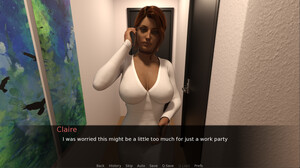



Angst is a story-driven visual novel that places players inside an intense, mature relationship drama between Claire and Miles. In Angst, the narrative centers on a focused sequence of conversational scenes and intimate character moments as the two must confront trust, communication, jealousy and emotional boundaries. Players of Angst will encounter a compact, atmosphere-first experience that favors psychological realism and the consequences of choices rather than action or arcade-style mechanics.
Key Features
This visual novel emphasizes character and dialogue: branching narrative choices influence immediate scenes and longer-term relationship dynamics, while carefully written exchanges reveal different facets of each protagonist. The tone is mature and reflective, exploring difficult emotional territory without explicit descriptions. The game uses scene-based progression so each chapter functions as a contained vignette that contributes to the overall arc. Audio and ambient design work with visuals to create mood-driven moments that reward close attention.
Gameplay Mechanics
Angst is driven by decision-making and scene navigation rather than fast reflexes. Players progress by selecting dialogue options at key moments, which can open alternate scenes, change the tone of future conversations, or steer the relationship toward different outcomes. A visible relationship or tension indicator tracks how choices affect rapport between Claire and Miles, and certain sequences unlock additional context or epilogues when prerequisites are met. The game emphasizes reading, reflection and the cause-and-effect of interpersonal choices as the primary gameplay loop.
Controls and Progression
Controls are simple and tailored for touch and traditional inputs: tap or click to advance text, tap choices to select responses, and long-press or use on-screen buttons to access the save/load menu. An auto-advance option and adjustable text speed let players control pacing. Progress is organized into chapters and scenes with a clear navigation map that records completed segments and available branches. Multiple save slots and a scene history feature make it easy to revisit earlier decisions and experiment with alternative paths without starting over.
Visual Style and Audio
The presentation uses expressive character portraits set against evocative backgrounds to emphasize mood and emotional detail. Lighting, color palettes and composition shift to reflect tension, unease or reconciliation in each scene. Minimal but purposeful animations highlight facial expressions and subtle movements, while a restrained soundtrack and ambient effects support the atmosphere without overwhelming the dialogue. The overall visual approach is intimate and cinematic, designed to keep focus on character interaction and psychological nuance.
Replay Value and Customization
Angst offers replayability through branching scenes and multiple endings unlocked by different decision paths. Players who explore alternative choices will discover added vignettes, expanded dialogue, and variations in the characters' emotional trajectories. The game does not rely on collectible systems or character customization; instead, replay value comes from unpacking different responses and observing how small changes produce distinct consequences. An extras gallery preserves unlocked scenes for later review.
User Experience and Accessibility
The interface prioritizes readability and straightforward navigation, with adjustable text size, optional auto-play, and configurable text speed to accommodate different reading preferences. Contrast settings and simple UI controls help maintain focus for players with visual sensitivities. The narrative is fully available offline once installed, and the single-player structure keeps progress local to the device without requiring online accounts. Tooltips and an in-game glossary explain recurring terms and relationship indicators for new players.
Challenge and Tone
Challenge in Angst is interpretive rather than mechanical: the difficulty comes from making meaningful choices under emotional uncertainty and living with the consequences. The game encourages deliberate attention to dialogue, with moral ambiguity and interpersonal complexity rather than puzzles or timed tests. Content is intended for mature audiences and handles delicate situations responsibly, keeping descriptions non-explicit and focused on psychological impact.
Advantages
Angst delivers a concentrated, character-led narrative that rewards careful reading and multiple playthroughs. The emotional realism and tight scene structure make it suitable for players who prefer introspective storytelling and atmosphere-driven pacing. Clear controls, save functionality, and offline accessibility support a comfortable single-player experience.
Disadvantages
The subject matter is heavy and may be uncomfortable for some players; the limited scope and emphasis on conversation mean there is little in the way of action-oriented gameplay. The tone and themes are niche, so the title will appeal most to players seeking deep interpersonal drama rather than varied mechanics.
Version Information
Current version: 0.81. This update includes interface refinements, stability improvements and minor fixes to save/load handling. Players can expect a compact, polished visual novel experience that preserves the story's emotional focus while improving usability.