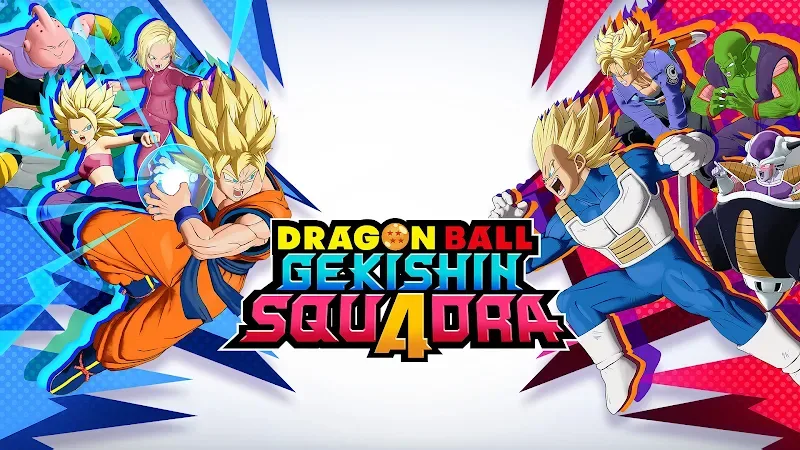
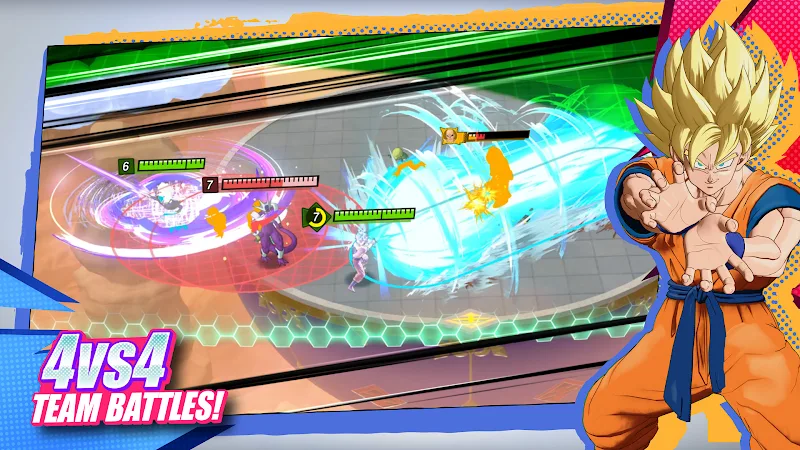

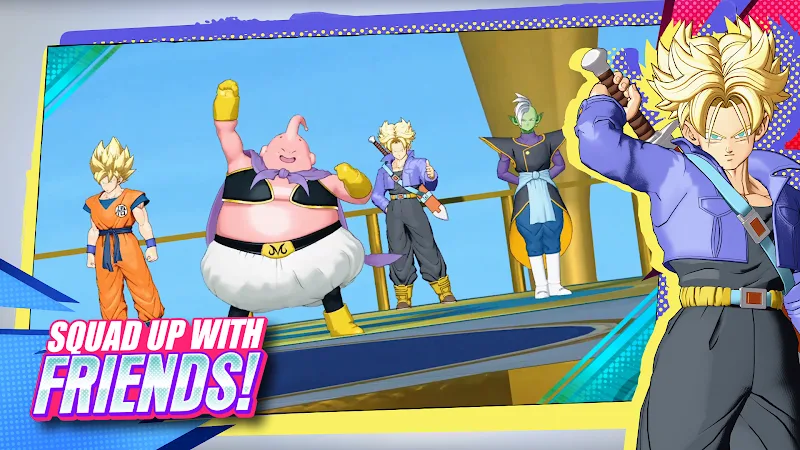

DRAGON BALL GEKISHIN SQUADRA drops you into energetic 4v4 arena combat that leans on teamwork, timing and clearly defined character roles to shape short, intense matches that reward coordination and skill. In DRAGON BALL GEKISHIN SQUADRA players select fighters with distinct ability kits and staggered responsibilities—strikers who deal burst damage, supports who enable combos, and disruptors who control space—so every round feels like a compact tactical puzzle as much as an action brawl. The introductory matches are designed to be approachable while offering depth for players who invest time in learning character synergies and situational decision-making.
Core gameplay and match flow
Matches emphasize small-team objectives and direct player-versus-player engagements, where basic auto-attacks are augmented by skill-based abilities that chain into meaningful combos. Positioning and timing are central: a well-timed assist or a coordinated joint attack can swing control of an arena, and objective mechanics encourage coordinated pushes rather than solo play. Rounds are deliberately concise to suit mobile sessions, with win conditions that prioritize tactical movement and effective use of cooldowns so teams are rewarded for communication and role execution over raw button-mashing.
Controls and accessibility
The control scheme has been tailored for touchscreens with responsive on-screen buttons, gesture-friendly inputs for ability activation and an intuitive dodge mechanic to keep play fluid on smaller displays. Visual feedback is comprehensive: cooldown timers, hit windows and on-screen prompts reduce guesswork while customizable HUD options let players rearrange icons and scale text to match their device. Accessibility settings include simplified input modes for users who prefer fewer simultaneous controls, adjustable icon and font sizes, and colorblind-friendly indicators to make combat clarity more universal across different player needs.
Progression, upgrades and customization
Progression centers on character growth that complements playstyle rather than replacing it. Experience earned in matches unlocks skill upgrades that modify how a given ability behaves, passive boosts that accentuate a chosen role, and optional cosmetic items to personalize a fighter’s look without affecting balance. Upgrades are incremental and transparent so players can see how changes influence performance in coordinated team play; the system is designed to reward practice, experimentation with different builds, and mastery of timing and positioning instead of forcing steep power gaps.
Visual style and level structure
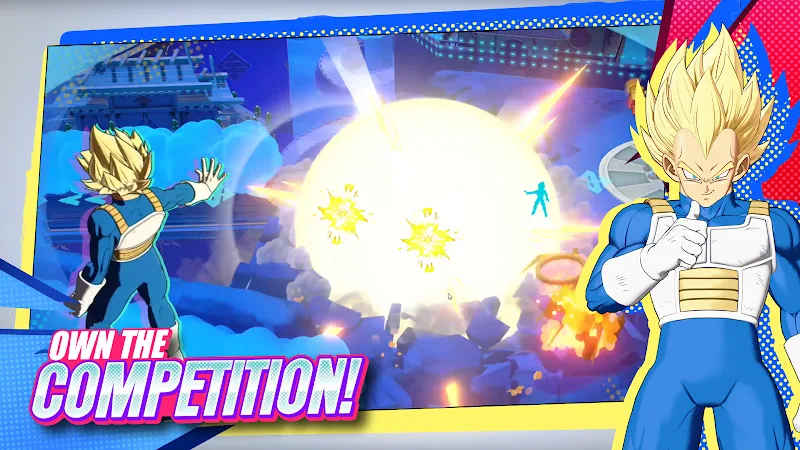
Visually the game favors high-contrast art and clear, dramatic effects that make combat readable at a glance while retaining a sense of spectacle. Arenas are compact, with distinct landmarks and environmental cues that influence movement, cover and line-of-sight decisions during engagements. Map variety ranges from tight, obstacle-filled stages that promote close-quarters skirmishing to more open arenas that reward ranged tactics and spatial control, so learning a map’s layout becomes a meaningful tactical element rather than mere decoration.
Modes, practice and offline options
In addition to live matches, the app provides dedicated practice and training modes where players can rehearse combos, test ability synergies or spar against AI opponents to refine timing and positioning. These offline options are useful for newcomers who want to learn fundamentals at their own pace and for experienced players who need a controlled environment to rehearse advanced strategies. Training sessions can be scaled for short practice bursts or longer drills, making them suitable for both quick mobile play and deliberate preparation.
Replay value and challenge systems
Replayability stems from a blend of team dynamics, evolving player skill and tactical depth across the character roster and level designs. Built-in challenge systems and incremental goals encourage experimentation with roles, abilities and item choices without turning progression into an endurance test. As players become familiar with interactions between skills and map features, new tactical opportunities and counterplay emerge, keeping each session feeling fresh even when match lengths are intentionally brief.
User experience and community considerations
The user interface focuses on clarity: match status, objective timers and teammate signals are displayed prominently to support fast decision-making. Matchmaking and global play expand the pool of opponents for quicker pairing, while social tools and quick-communication prompts help teams coordinate in real time. The app includes reporting and match feedback features to help maintain a respectful environment, and in-game prompts aim to reduce friction when forming parties or rejoining matches. DRAGON BALL GEKISHIN SQUADRA balances accessible controls, meaningful progression and both online and offline practice options to create a focused competitive experience that new and returning players can learn and enjoy.