
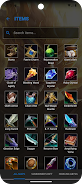







LoL Wiki

| Package ID: | |
|---|---|
| Latest Version: | v1.0.2 |
| Latest update: | May 23, 2026 11:21:04 |
| Developer: | ssteam |
| Requirements: | Android |
| Category: | Other |
| Size: | 93.16 MB |
| Tags: | Study Navigation Date |
Rating :4.1
LoL Wiki is a compact, fast reference app for League of Legends players that puts champions, items, runes, and summoner spells into a single, easy-to-navigate interface. The LoL Wiki experience focuses on clarity: searchable entries, concise ability breakdowns, and high-resolution skin previews are organized so you can find critical numbers or lore between games. Whether you open LoL Wiki to check ability scaling, preview a skin, or confirm an item cost, the app is designed for quick consultations and dependable facts rather than coaching or overlays.
Key features and content structure
The core content is split into clearly labeled sections for champions, items, runes, summoner spells, and Runeterra lore. Champion pages show base stats, per-level scaling, detailed ability tooltips and example damage formulas where applicable. Item pages present visual build paths from components to final upgrades, list stats and passive effects, and include filters to restrict results by map and game mode. Lore entries and skin previews include credit and release info alongside high-resolution images suitable for reference or discussion.
Controls and navigation
Navigation is built around fast search and simple touch gestures: a predictive search bar surfaces matching champions and items as you type, while swipe gestures move between related pages (for example, from a champion to recommended items). Long-press actions let you add a champion or build to favorites, and a compare button opens two items or champions side-by-side for quick stat comparisons. The interface minimizes taps so you can retrieve information reliably during short breaks between matches.
Gameplay-related mechanics explained
Although LoL Wiki is a reference tool rather than a game, it provides detailed mechanics context to support gameplay decisions. Ability descriptions include cooldowns, cast ranges, damage types and scaling sources so you can evaluate trade timings and burst windows. Item pages clarify on-hit effects, unique passives, and situational considerations so you can tailor builds for lane matchups or late-game scaling. Runes are documented with activation conditions and interactions to help with theorycrafting and role-specific choices.
Progression, updates and data accuracy
Content is organized to reflect patch-driven progression: patch notes and version tags appear on pages where numbers or mechanics have changed so you can trace when a stat was modified. The app’s changelog highlights recent corrections or additions and makes it straightforward to see how a champion’s power curve evolved over several patches. This emphasis on versioning supports players who study meta shifts over time without implying in-app ranked progression or matchmaking features.
Visual style and media handling
Design focuses on compact, readable layouts with consistent typography, clear stat tables and large ability icons. High-resolution skin previews are presented with zoom and share options; images are optimized for fast loading and you can choose lower-resolution downloads to reduce bandwidth. Visual consistency helps you compare skins and splash art while the UI maintains contrast and spacing for legibility on small screens.
Customization, accessibility and user experience
Personalization options let you set a preferred theme (light or dark), adjust font sizes for readability, and configure default filters for items and champions. Accessibility features include high-contrast mode and clearly labeled interface controls to support screen readers and users with visibility needs. The app’s search history and favorites list act as a lightweight personalization layer so you can return to frequently consulted entries quickly.
Offline use, performance and storage
LoL Wiki supports offline caching of selected pages: you can mark champions, items or lore entries for offline access when a network connection is unavailable. Cached content is stored compactly and can be cleared selectively to manage device storage. The app is optimized for low memory use and fast cold-start times so routine lookups remain responsive even on older devices.
Replay value and practical use cases
The replay value of this reference comes from daily utility: players revisit it to refine builds, compare champions for role swaps, or refresh knowledge on obscure interactions. Theorycrafters benefit from the precise numbers and version history, while casual players appreciate quick access to item costs and cooldowns. The app is intended as a companion resource that supports practice and discussion rather than providing live coaching or guaranteed in-game outcomes.
Limitations and recommended expectations
As a focused encyclopedia, LoL Wiki emphasizes data and summaries rather than interactive coaching, live match overlays, or simulated play. Users must interpret stats and apply them in practice; the app supplies the facts and context to inform choices but does not replace experience and in-game decision-making. Large image downloads can consume bandwidth, so consider using the lower-resolution media option when on limited connections.