
Apps
Productivity
Stomata Labs
Stomata Labs

| Package ID: | |
|---|---|
| Latest Version: | v1.2.0 |
| Latest update: | May 08, 2026 13:34:03 |
| Developer: | Chaitanya Rai |
| Requirements: | Android |
| Category: | Productivity |
| Size: | 33.00 MB |
| Tags: | Date Read |
Rating :4.3
Stomata Labs delivers satellite-derived crop health monitoring tailored for large-scale sugarcane operations, giving agronomists, field supervisors and mill operators a unified view of parcel performance updated automatically every five days. The app converts Sentinel-2 multispectral imagery into clear, agronomically meaningful products—so teams can spot stress, track seasonal progress and prioritise interventions without GIS expertise or manual processing. Managers who oversee thousands of parcels across multiple mills will find the parcel-level analytics, AI-driven weed mapping and cloud-corrected raster overlays useful for consistent, data-driven decision making during the active zafra cycle.
Key Features
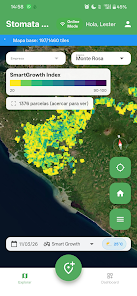
⭐ Stomata Labs translates cloud-corrected Sentinel-2 multispectral imagery into ready-to-use raster overlays, refreshed automatically on a five-day cadence.
⭐ Access NDVI, NDWI and Smart Growth indices rendered as precision overlays and classified into agronomically calibrated tiers for consistent intervention thresholds.
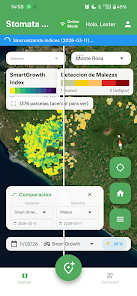
⭐ AI-powered weed detection and infestation probability maps identify field-scale weed pressure so operations teams can prioritise treatments.
⭐ Per-parcel analytics present mean index values, variability bands and full acquisition history scoped to the current zafra cycle.
⭐ Built for enterprise workflows managing thousands of parcels across multiple mills, removing the need for manual data processing or GIS expertise.
Advantages
✅ Stomata Labs provides a unified dashboard for agronomy, field supervision and mill operations, simplifying cross-team coordination.
✅ Automated five-day updates and cloud-correction reduce manual effort and ensure teams work from the latest imagery available.
✅ Weed probability mapping enables proactive, severity-based prioritisation of treatment resources rather than reactive surveys.
✅ Parcel-level seasonal reports tied to the zafra cycle deliver agronomically relevant baselines for harvest-season decisions.
Disadvantages
❎ The five-day update cadence means very rapid-onset issues may not be captured in real time.
❎ Persistent cloud cover can limit the availability of usable satellite acquisitions despite cloud-correction.
❎ The platform is designed for large enterprise sugarcane operations and may be excessive for smallholders or single-parcel use.