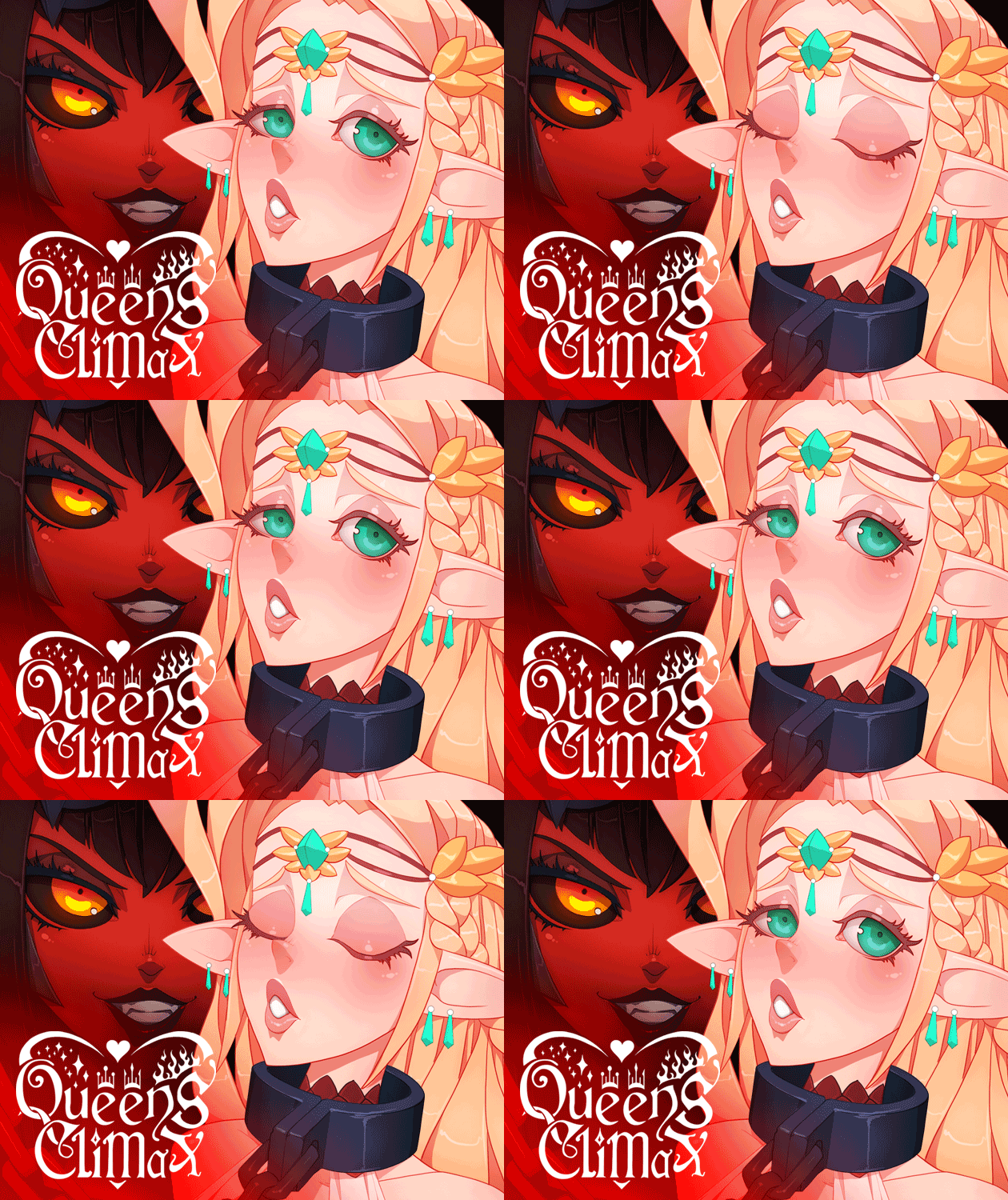




Amnesia is a story-driven visual novel and narrative adventure that places you in the role of a man waking from a coma with no memories, forced to reconstruct his past and reconnect with the people who matter. Categorized as a narrative visual novel, Amnesia emphasizes character interaction, atmosphere, and slow-burn mystery rather than action-heavy mechanics, and it guides players through branching scenes that explore identity, memory, and emotional consequence.
Key Features
The central content in Amnesia includes the Iris story scenes: optional narrative episodes that deepen the main mystery and expand character arcs when discovered through particular choices or dialogue exploration. The game ships with a large visual library—over 1,300 illustrations—that documents environment work, character expressions, and pivotal moments, while more than 25 short animations accent key beats. A bonus extended story becomes available after the main arc and provides additional closure and context for players who pursue every thread. All unlocked images and animated sequences are collected in an in-app gallery so players can revisit favored moments and study the visual storytelling at their own pace.
Gameplay and Controls
Gameplay is deliberately simple and focused on reading, choice selection, and narrative navigation. Players progress by tapping to advance text and by selecting responses through a clean, menu-driven choice system; the interface supports swipe gestures to browse the gallery and simple taps for scene transitions. Settings include adjustable text speed, an auto-advance option for hands-free reading, and an option to skip already-seen text. Save and resume functionality is provided through a chapter menu and manual save points, allowing players to pause and return to specific scenes without losing progress. These mechanics keep the interaction lightweight and let the story remain the primary focus.
Progression and Replayability
Progression in Amnesia is chapter-based and scene-oriented: new content unlocks as you follow narrative threads, make specific choices, and sometimes revisit earlier chapters when new dialogue options appear. Rather than levels or combat, progression depends on decisions and exploration of conversational paths; different choices open alternate emotional beats and reveal previously hidden images or Iris scenes. The gallery, collectible assets, and the bonus extended story provide concrete incentives to replay, and the branching structure encourages players to return to earlier chapters to test alternative responses and uncover more context.
Visual Style and Presentation
The visual design favors mood and expressive detail. Illustrations range from intimate interior portraits to memory-like sequences that blend realism with impressionistic touches; animations are used sparingly to highlight emotional or narrative pivots without breaking immersion. Typography and layout prioritize readability: unobtrusive text boxes, adjustable font sizing, and considered spacing ensure the artwork remains central during key moments. The overall presentation is meant to support the mystery and character-driven focus rather than distract with flashy effects.
User Experience and Accessibility
The user experience is built for accessibility and for readers who prefer measured pacing. Options include text speed adjustment, adjustable font size, contrast modes for readability, and simple navigation via a chapter list and gallery. The interface is designed to be predictable and low-friction: clear menus, labeled choices, and a straightforward save system make it easy to pause and resume sessions. These accessibility options are intended to help a broad range of players, including those who need larger text or slower text advancement to comfortably engage with the narrative.
Offline Play and Performance
Amnesia is primarily a single-player experience and is playable offline once installed; main story assets, images, and animations are stored locally so an internet connection is not required to experience the core narrative. Because the title includes a substantial visual library, performance can vary on older or lower-memory devices, so the app offers basic graphics settings to reduce memory use and streamline playback. Disabling animations or lowering image quality can improve stability while preserving the story content for devices with limited resources.
Challenge and Intended Audience
The principal challenge in Amnesia is interpretive rather than mechanical: uncovering the right choices and following narrative threads to reveal deeper context requires attention to dialogue cues and a willingness to explore. The game is best suited to players who enjoy contemplative, story-first experiences and who appreciate visual craftsmanship and character-driven mysteries. Players seeking fast action or complex gameplay systems may find this title deliberately paced and tightly focused on narrative rather than mechanics.
Disadvantages
Because Amnesia emphasizes reading and image-driven scenes, it may not appeal to users looking for action-oriented or highly interactive gameplay. The rich visual asset set also increases storage needs, and some lower-end devices may require reduced graphics settings to maintain smooth playback. Players should expect a measured, reflective pace rather than quick rewards or arcade-style challenges.
Version Information
Version v0.97a expands the narrative offering by adding the Iris story scenes, includes 1,376 images and over 25 animations, and delivers the bonus extended story; this update also improves gallery browsing, scene stability, and the reliability of save/resume functions for a smoother reading experience in Amnesia.