
Brain Test: Tricky Puzzles is an addictive brain-teaser app that challenges players with clever riddles and unexpected quizzes designed to make you think differently. This editor's introduction focuses on the game's variety: short, often deceptive puzzles that reward creative thinking rather than rote answers. Brain Test: Tricky Puzzles works offline and is suitable for quick solo sessions or conversational group moments, and the puzzles lean on lateral thinking, observation and playful misdirection rather than conventional multiple-choice trivia.
Gameplay and mechanics
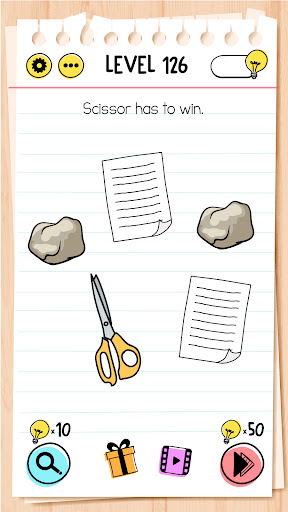
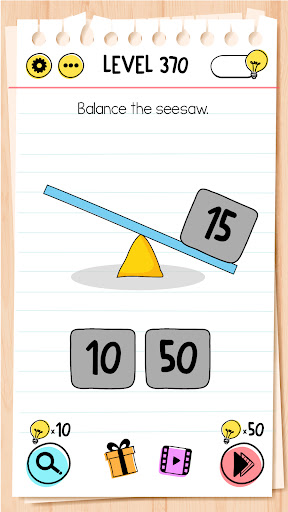
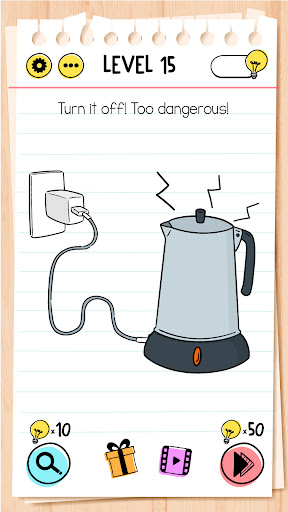
The core gameplay in Brain Test: Tricky Puzzles encourages out-of-the-box reasoning through compact, self-contained challenges. Each puzzle presents a visual or textual prompt and relies on simple touch interactions: tap to select options, drag to move objects, and swipe when the solution requires rearranging on-screen elements. Puzzles are deliberately deceptive: the obvious answer is often a trap, so you will be prompted to re-evaluate assumptions, combine clues in unusual ways, and consider lateral logic. The mechanics are intentionally lightweight so you can focus on the thought process rather than complex controls.
Controls and user input
Controls are straightforward and optimized for mobile use. The touch interface responds to single taps for choices, long presses when context matters, and gentle drags to manipulate items inside a puzzle. No complex gestures are required, which keeps entry barriers low for casual players and family groups. Visual feedback and subtle animations confirm correct interactions, while incorrect taps provide immediate cues so you can iterate on your approach without frustration.
Progression and level design
Brain Test: Tricky Puzzles advances through a series of levels that increase in subtle ways, introducing new twists and types of reasoning as you progress. Early levels build familiarity with the game's logic by offering approachable riddles, while later stages combine multiple puzzle ideas and require more flexible thinking. Progression feels natural: solving puzzles unlocks the next challenge, and the variety prevents repetitive sequences by shifting focus between wordplay, pattern recognition and visual tricks. The app does not rely on timers, so players can take their time to experiment and learn.
Visual style and presentation
The visual approach is clean and uncluttered to keep attention on the puzzle itself. Simple illustrations, clear typography and restrained color choices support readability and help clues stand out. Animations are functional rather than flashy, used primarily to confirm actions or reveal surprising solutions. This understated style makes the content accessible across different screen sizes and keeps the mood light and playful rather than competitive or aggressive.
Level structure and variety
Levels are designed to be short and satisfying: most puzzles can be completed in a few moments, while a handful may require more thought. Variety is a central design principle, so you will encounter questions that emphasize observation, lateral leaps, wordplay, and unconventional logic. The nonrepetitive approach encourages revisiting the game during short breaks, social occasions, or longer focus sessions without feeling monotonous.
Customization and settings
While the gameplay focuses on puzzles, the app includes basic settings to tailor the experience to your preferences. You can toggle sound effects and background music, adjust text size for readability, and access straightforward help information that clarifies interaction patterns. These small adjustments make the game more comfortable for a wider audience, from younger players to older adults who prefer larger text.
Replayability and challenges
Replay value comes from the deceptive nature of the puzzles and the occasional alternative solutions that reward unconventional thinking. Because many riddles avoid a single obvious route, players often return to try different approaches or challenge friends and family to find a new answer. The mixture of quick brain teasers and longer puzzles provides a balanced challenge for casual play and deeper problem solving alike.
User experience and accessibility
Brain Test: Tricky Puzzles aims to be approachable for a broad audience. The interface minimizes clutter, instructions are concise, and visual cues guide interactions. Puzzles vary in difficulty so that families and mixed-age groups can enjoy the same sessions together, and the absence of time pressure reduces anxiety for players who prefer reflective problem solving. Where appropriate, text and contrast are kept readable to support players with basic accessibility needs.
Offline play and practical use
Because Brain Test: Tricky Puzzles functions offline, it is ideal for situations where internet access is limited or when you want to preserve data and battery life. Offline play also makes the app a convenient companion for travel, waiting periods and social gatherings. The compact puzzles fit into short breaks but also provide occasional moments of deeper engagement when you want a more extended mental exercise.