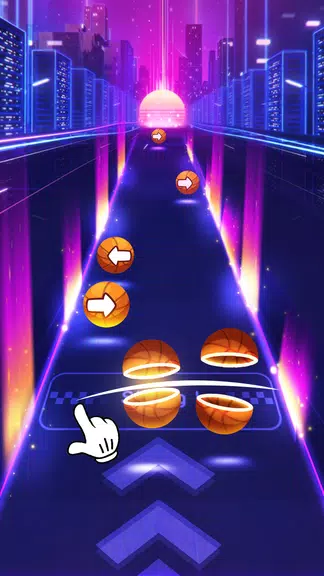
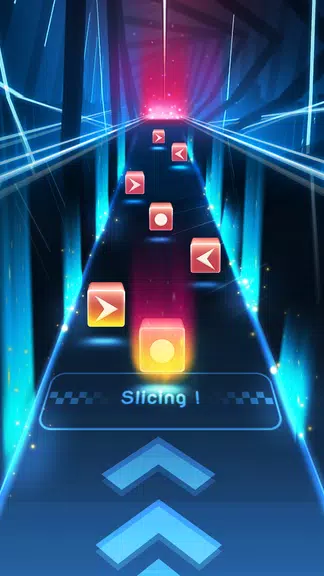
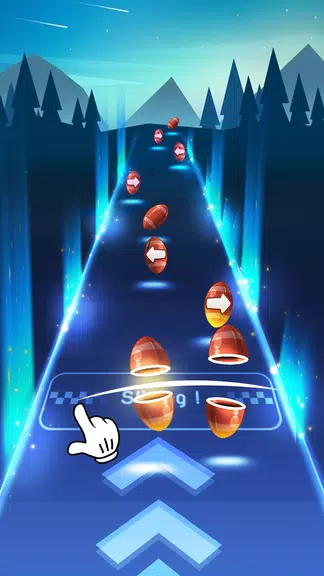
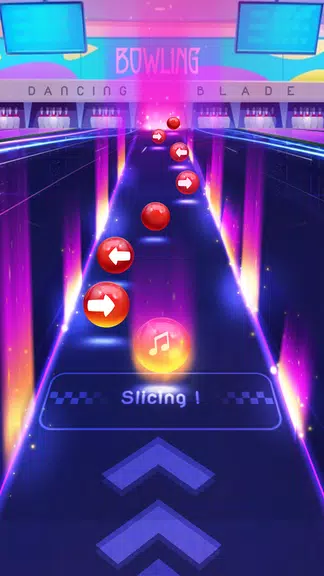

Dancing Blade is a fast, finger-driven rhythm game that turns swipes into satisfying slashes timed to pulsing EDM and electronic beats. In each handcrafted stage, notes fly toward a strike zone and you respond with simple directional slices — left, right, up — or intentionally miss certain notes to maintain timing and combos. The first paragraph gives a clear view of what to expect: tight timing windows, tactile touch controls, and a campaign of objectives that focus sessions into short, rewarding runs.
Key features
The core of Dancing Blade is its emphasis on deliberate design rather than random generation. Levels are hand-mapped to tracks so each sequence of notes aligns with musical phrasing and transitions; visual and audio cues are tuned to match the tempo and drop of every song. The game includes a campaign of staged objectives that build skill gradually, a feature that keeps progression meaningful without relying on online infrastructure. You can also add your own songs to create custom slicing sessions, making it easy to practice with familiar tracks.
Gameplay and controls
Gameplay focuses on rhythm recognition and precise swipes. Incoming beats appear on clear, readable lanes and require a directional slice timed to the beat. Missing a note intentionally is sometimes the correct move, and the scoring system rewards accuracy and clean streaks rather than sheer speed alone. Controls are built for touch: swipes register with short travel distances and immediate feedback so the interaction feels fast and responsive. Control sensitivity and on-screen indicators can be adjusted to suit different devices and play styles, helping players find a comfortable balance between responsiveness and forgiveness.
Progression and challenge
The campaign unfolds through a sequence of levels that introduce new timing patterns, denser note clusters, and variant rhythm motifs. Objectives range from hitting accuracy thresholds and sustaining combo streaks to clearing specific level segments with minimal misses. Difficulty ramps up in predictable, learnable ways so mastery comes from practice and pattern recognition rather than sudden spikes. Sessions are structured to be short enough for quick play but deep enough to encourage repeated runs aimed at improving scores and refining timing.
Visual style and audio design
Dancing Blade pairs high-fidelity audio with a clean, artful visual approach. Stages and musical moments are presented with hand-crafted backgrounds and beat-synced effects that emphasize drops and tempo changes without obscuring gameplay. Visual feedback — such as hit sparks, subtle camera shakes, and dynamic lighting — communicates timing and impact while remaining unobtrusive. The audio pipeline prioritizes clarity of the rhythm track so players can rely on both sound and sight to judge timing.
Customization and music options
Beyond the curated library, you can import your own tracks to create personalized slicing experiences that match your listening preferences. When you use custom music, the game adapts the session length and preserves the handcrafted feel by aligning slices to clear musical cues where possible. Control customization allows adjustment of swipe sensitivity and visual timing windows, and display settings offer contrast and color options to make note patterns easier to see under different lighting conditions.
Replay value and accessibility
Replayability comes from a combination of score-based goals, escalating objectives, and finely tuned level design that rewards precision. Multiple difficulty bands accommodate both casual players and those seeking a technical challenge, while assist options broaden accessibility: larger timing windows, enhanced visual guides, and tactile feedback alternatives help players with different needs enjoy the same core mechanics. The design encourages steady skill improvement and repeat plays focused on cleaner execution rather than random variation.
Offline play and performance
Dancing Blade is designed to run well on a range of devices and supports offline play so you can practice and progress without requiring a persistent network connection. Optimization choices prioritize consistent frame rates and low input latency to preserve the feel of real-time rhythm slicing, and storage requirements are kept moderate thanks to hand-crafted rather than procedurally generated levels. The result is a compact, responsive experience that fits short sessions and longer practice runs alike.