



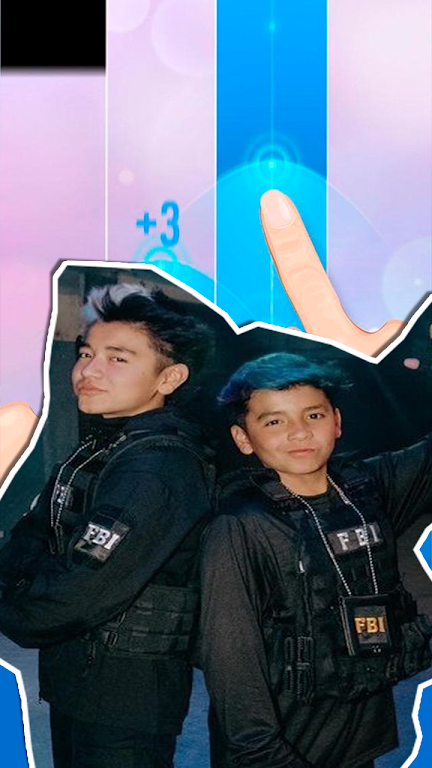

Picus Música Juegos Piano is a free, offline rhythm title that adapts popular tracks from Mexican singers Luigi, Anthony (Tony) and Dominick into a piano-tiles style experience you can play anywhere. In this editor review we describe how the app combines simple tap controls with progressively challenging patterns, recognizable melodies such as FBI, Super Ultra Mega, Aunque Digan and Mi Primer Amor, and character-themed levels that give each song a distinct visual identity. The app is designed for casual play sessions but includes timing and streak mechanics that reward accuracy and practice.
Gameplay and core mechanics
The core gameplay in Picus Música Juegos Piano revolves around tapping descending tiles in time with the music. Notes are mapped to lanes and appear at varying speeds to match the song arrangement; players earn points for on-time taps, larger combos for consecutive accurate hits, and bonus multipliers for perfect streaks. Patterns are adapted from the vocal and instrumental hooks of the selected tracks so the experience feels familiar to fans while remaining approachable to newcomers. Timing windows are forgiving at lower difficulties and tighten as levels progress, creating a natural learning curve.
Controls and accessibility
Controls are intentionally simple: tap the screen where tiles land, with visual feedback for hits, near-misses and misses. The title supports touch sensitivity adjustments and basic audio/visual settings, allowing players to change volume levels and toggle visual cues for improved readability. These options help users with different skill levels or accessibility needs; for example, color contrast between lanes and background can be increased and note speed can be adjusted to suit reaction time. The interface avoids clutter so players focus on rhythm rather than menus.
Progression and level structure
The progression system in Picus Música Juegos Piano is level-based and built around increasing complexity rather than paywalled content. Early stages present simple melodic lines to teach timing and combo basics, while later levels layer faster sequences, syncopation and longer run patterns that demand concentration. Completing a level improves your score and streak history, encouraging replay to improve accuracy. Some songs include multiple difficulty tiers so the same track can serve as a tutorial and, later, a serious challenge for mastery.
Visual style and presentation
Visually, the game favors clean, colorful tile lanes that reference the personalities of Luigi, Anthony (Tony) and Dominick without overwhelming the playfield. Character portraits and themed backgrounds appear between rounds to provide variety, and subtle animations mark milestone achievements like long combos or high-accuracy runs. The overall art direction balances fan-oriented character elements with clear gameplay visual cues so players can focus on timing while enjoying a personalized aesthetic.
Customization and optional features
Players can customize basic elements to tailor the experience: adjust note speed, toggle sound effects, and choose between difficulty settings. While advanced customization is limited by the offline focus, these options are sufficient to accommodate different playstyles and improve accessibility. The developer has also hinted at additional mini-games and extras, such as a coloring mode and a videollamada real mode, as future additions; these are presented as upcoming content and are not required for the core rhythm gameplay.
Challenge systems and replay value
Replay value comes from improving accuracy, chasing higher combo streaks and tackling harder difficulty tiers of the same tracks. The scoring emphasizes timing over button-mashing, so players who refine their sense of rhythm will see clear progress. Challenge modes are rooted in song-based difficulty ramps and score goals rather than online leaderboards, which aligns with the offline design and keeps the experience focused on personal improvement.
User experience, offline play and suitability
Because Picus Música Juegos Piano runs entirely offline, it is convenient for commutes, low-connectivity environments or quick practice sessions without data use. The installation size and simple UI make it suitable for a broad range of devices, and the absence of required network features means fewer interruptions. At the same time, the current song library and character focus make the title especially appealing to fans of the featured singers; however, casual players who enjoy rhythm mechanics will still find accessible gameplay and a clear learning path.
Overall, Picus Música Juegos Piano offers an approachable, offline rhythm experience that combines tap-based controls, progressive level design and familiar tracks into a compact package. Fans will appreciate the character-themed levels and hinted extras, and newcomers can enjoy a straightforward, skill-based challenge that rewards timing and practice.