
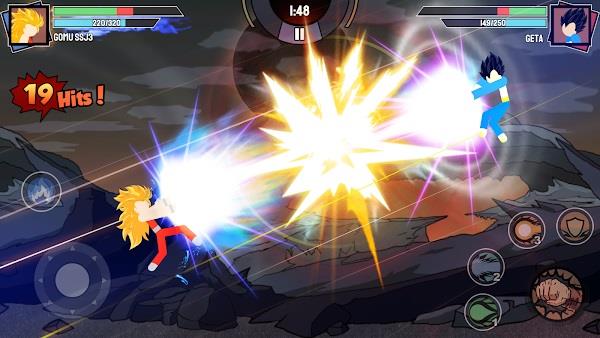
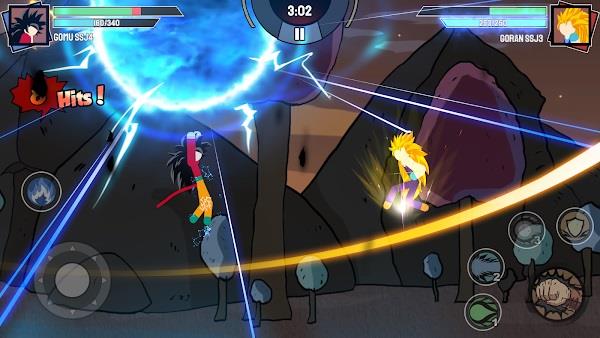
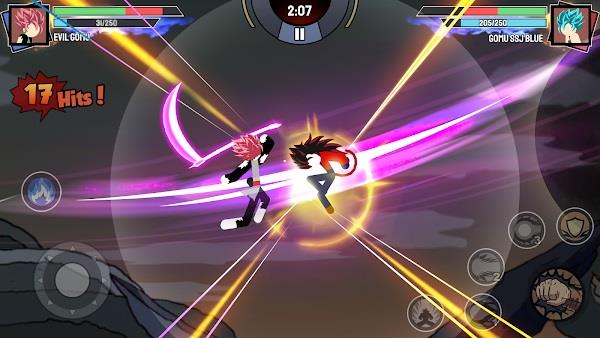
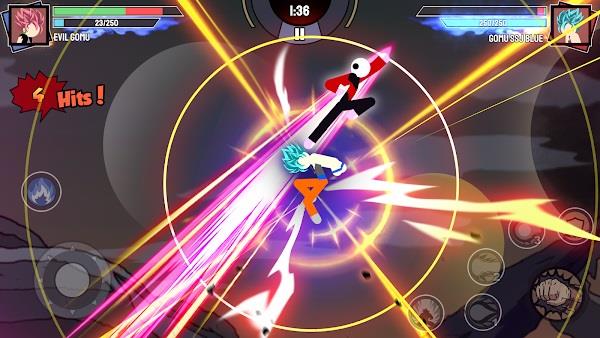
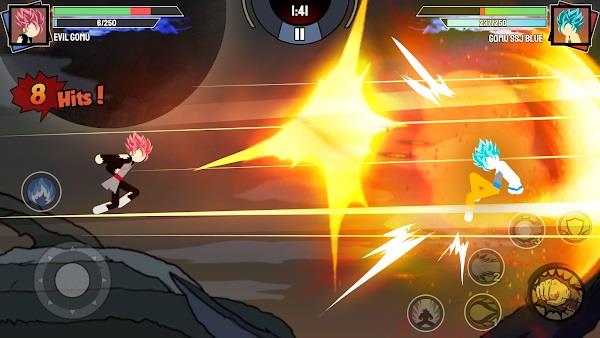
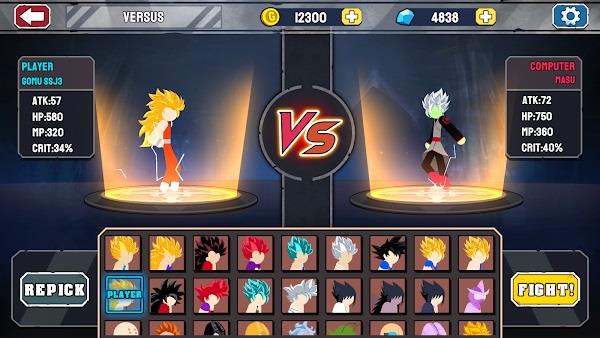

Stickman Warriors drops you into razor-fast, close-quarters duels where reflexes, timing and movement decide every exchange. This mobile fighter emphasizes precise combos and counterplay rather than long health bars or slow build-up, delivering short, intense matches across a large roster and several distinct play modes that reward practice and adaptation.
Key features and what to expect
The game pairs quick character movement with cinematic visual flourishes and combo-driven melee to create matches that feel immediate and skillful. You can choose from 72 distinct fighters, each with unique timing windows and mobility traits that change how you approach spacing and offense. Core modes include Story for narrative-themed encounters, Battle for quick pick-up matches, Tournament to string together a series of escalating opponents, and Training for unlimited practice and drills.
Gameplay mechanics and controls
Combat in Stickman Warriors centers on hand-to-hand exchanges where timing, not frantic button presses, wins fights. Controls use a responsive touch layout combining directional inputs and attack buttons; taps, holds and swipes map to light or heavy strikes, dashes, and evasive moves like blocks and rolls. Combos are built by linking directional movement with attack inputs and using short pauses or feints to break an opponent’s rhythm. Because counter windows are intentionally narrow, matches favor players who study behavior patterns and learn to bait or punish predictable actions.
Progression and character mastery
Progression is designed around skill and familiarity rather than hidden stat inflation. As you advance through Story and Tournament modes you unlock new encounters, learn new enemy archetypes and open up additional roster members. Mastery comes from practicing individual combos in Training mode, discovering optimal spacing for each fighter and recognizing subtle opponent tells that signal when to counter. The variety of characters encourages experimentation: switching fighters changes movement priorities, attack reach and the cadence of combos.
Visual style, arenas and level structure
The visual presentation combines minimalist stickman silhouettes with cinematic camera work and vivid combat effects so hits feel impactful without visual clutter. Arenas vary in scale and layout, from cramped indoor rings that emphasize close pressure to wider outdoor stages that reward footwork and spacing. Story mode is structured as a sequence of encounters that gradually introduce new mechanics, while Tournament mode groups several matches into escalating difficulty tiers that test consistency and endurance.
Customization and accessibility options
Although the focus is core combat, the game supports simple visual customization to help you identify fighters and express a personal look for your preferred characters. Control sensitivity and layout options allow players to adjust button sizes and positions for comfort, and Training mode includes guided tutorials, slow-motion demonstrations and targeted drills to teach basic inputs, combo strings and defensive timing. These accessibility features make it easier for new players to bridge the learning curve without diluting the skill-based emphasis.
Replay value and user experience
Replayability stems from the depth of the combo system and the large roster: learning a new character or refining a sequence of moves opens fresh strategies and keeps matches surprising. Short match lengths make it simple to practice repeatedly, and the immediate feedback loop for improving timing creates a satisfying sense of progression. The interface prioritizes clarity during combat so players can focus on decisions rather than menu navigation, and simple visual cues highlight damage timing and counter opportunities.
Offline play and challenge systems
Stickman Warriors is fully playable offline and does not require a constant internet connection, allowing you to train, run through story encounters and take on tournament runs on the go. Challenge systems are built around AI behavior patterns and predefined difficulty tiers: higher tiers alter AI decision-making, reaction windows and aggression, creating mechanically meaningful obstacles rather than artificial resource gates. This keeps competitive focus local and concentrated on player skill.
Strengths and limitations
The game excels at delivering fast, rewarding melee combat with a clear learning curve for players who like to master combos and movement. The large roster and multiple modes encourage long-term exploration and steady improvement. On the other hand, the quick tempo can be unforgiving for newcomers and the emphasis on close-range encounters means players seeking ranged or highly varied attack types may find options narrower. Persistence, practice and attention to timing are the best ways to climb tougher tiers and get the most out of the experience.