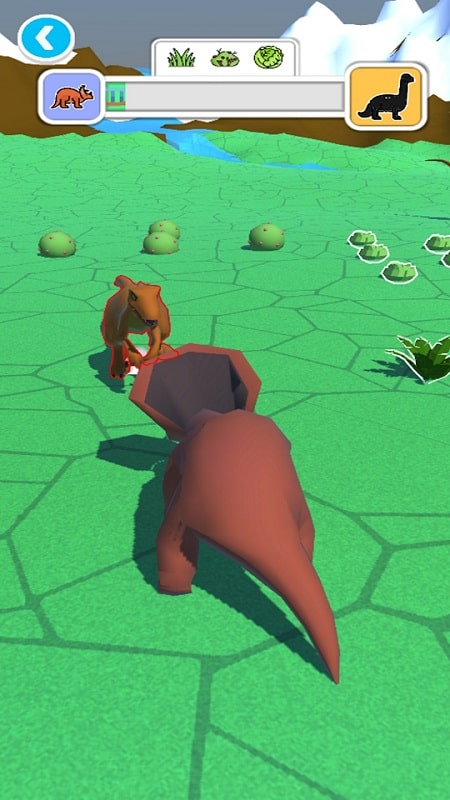

Dino Domination puts you in control of a single hungry life-form that eats, grows and evolves across dozens of dinosaur-inspired forms to tackle short, fast-paced levels. In Dino Domination each run begins with a tiny, vulnerable creature that feeds on plants and smaller animals to increase size and unlock new abilities. The clear objective loop—eat, evolve, survive—drives quick arcade sessions where every decision about movement and feeding matters, and the game encourages experimentation with different evolutionary paths.
Gameplay mechanics
The core loop focuses on absorbing organic matter to grow and to fill an evolution meter that enables form changes. Early gameplay emphasizes grazing and avoiding larger predators, while later stages reward more aggressive play when you unlock carnivorous traits or specialized defenses. Evolution is both incremental and branching: repeated feeding grants steady growth and minor stat boosts, while choosing particular upgrades steers your creature toward specific dinosaur archetypes with distinct strengths, weaknesses and playstyles. Tactical choices—when to risk rare food in dangerous zones, when to retreat and when to pursue a fleeing target—shape each run.
Controls and interface
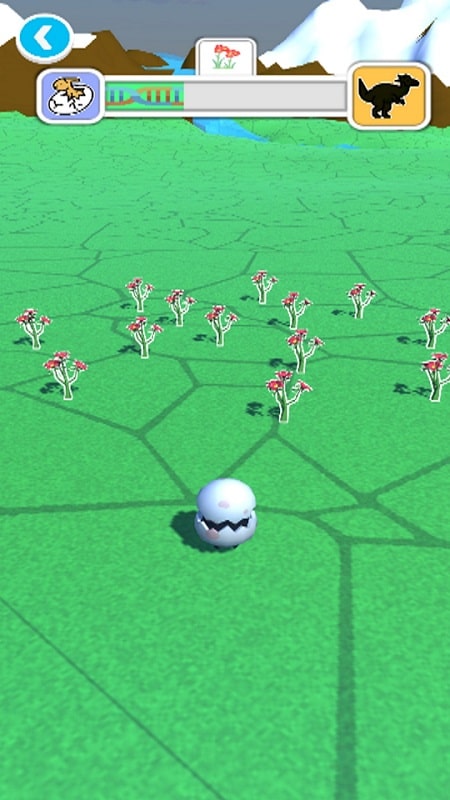
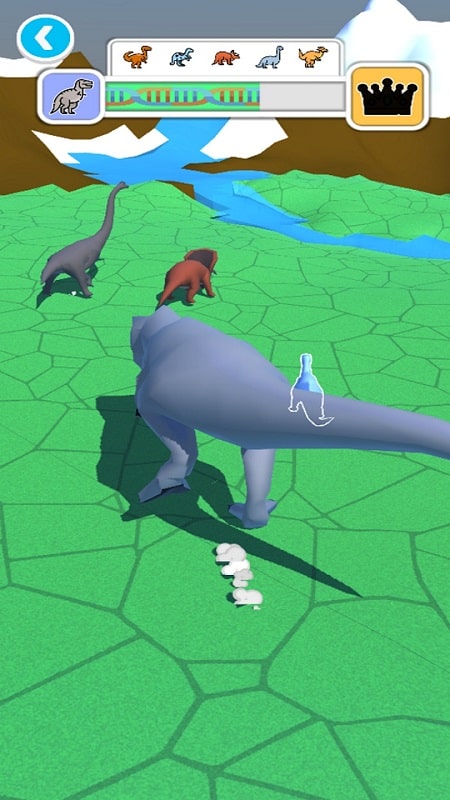
Controls are tuned for mobile comfort and short sessions. Movement uses a responsive on-screen joystick area and simple touch gestures; a single tap or swipe triggers bites, short bursts or ability activations depending on your current form. The HUD is deliberately minimal but informative: size, evolution progress and active abilities are visible at a glance through clear icons and meters so you can make split-second calls. Contextual tips appear early to explain new mechanics without interrupting the flow of play.
Progression and evolution systems
Progression centers on unlocking and experimenting with evolutionary traits rather than permanent stat inflation. Feeding awards evolution points that you spend during runs to gain speed, offensive types, or defensive mechanics such as temporary armor or camouflage. Because your size resets between habitats, the emphasis is on unlocking new forms and passive bonuses across multiple runs. This design encourages trying different build routes—speed-focused builds favor hit-and-run tactics, whereas armored forms trade mobility for survivability—and discovering synergies between abilities over time.
Visual style and audio
The visual presentation prioritizes readability and personality. Creature and hazard silhouettes, color contrast and clear animation frames help you recognize threats and opportunities quickly as your creature changes shape. Animations communicate mass and movement so growth feels physical, moving from a small nimble hunter to a lumbering apex form. Ambient soundscapes and rhythmic background tracks support the arcade pacing while short audio cues mark successful evolutions or incoming predators to enhance situational awareness without overwhelming the action.
Level structure and challenge
Levels are compact, themed habitats that introduce unique environmental elements, food types and predator behaviors. Early habitats serve as training grounds with forgiving enemy patterns; later stages increase difficulty through faster, smarter predators, tighter spaces and environmental hazards that reward precise timing. The restart-at-small-size mechanic creates meaningful risk-versus-reward scenarios: push into dangerous areas for rare food that accelerates evolution, or play conservatively to survive and collect incremental gains. This structure keeps runs engaging and varied.
Customization and replay value
Customization in Dino Domination comes from choosing evolutionary traits each run and mixing abilities unlocked across sessions rather than equipping fixed gear. Different combinations lead to distinct playstyles—some runs emphasize mobility and evasion, others rely on brute force or specialized attacks—so replaying with alternative builds uncovers new strategies. Cosmetic options such as color patterns and form details let players personalize appearance without changing game balance, preserving fairness while offering visual variety.
User experience, accessibility and offline play
Designed for short, satisfying sessions, the game supports offline single-player play so you can jump into a run anywhere. The UI uses large icons and legible text sizes, with color-contrast choices that help color-blind players distinguish threats and food. Optional slower-paced tutorials and adjustable control sensitivity make the experience approachable for newcomers while leaving depth for players who want to master evolution strategies. Small touches—like clear feedback for upgrades, concise tutorial prompts and smooth restart transitions—help maintain a steady play rhythm.
If you enjoy quick tactical runs that blend growth mechanics with predator–prey tension, Dino Domination provides a compact but deep single-player experience where every feeding decision and ability choice changes how a run unfolds. Try a few short runs to learn core mechanics, then test different evolutionary combinations to see which strategies dominate each habitat and keep the gameplay feeling fresh over many sessions.