


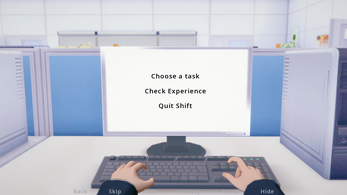

A Home Between Us is a raw slice-of-life visual novel and life sim that places you in the muted daily grind of Riku, a character who traded ambitions to raise a sibling and survives by routine and small, consequential choices. A Home Between Us emphasizes endurance over spectacle: the narrative is grounded, the pace deliberate, and the core systems—hunger, energy, mental health and hygiene—create an intimate background tension that shapes each day and decision.
Gameplay and Core Mechanics
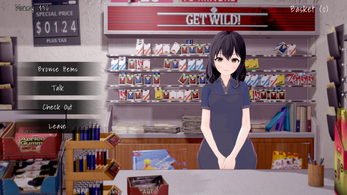
The gameplay in A Home Between Us blends narrative scenes with survival-style resource management. Players balance basic meters for hunger, energy, mental health and hygiene while choosing low-paying shifts, shopping for food and medicine, and deciding how to spend limited time across a true 24-hour day cycle. Time-of-day icons and a visualized home let you track routines visually, and daily tasks and an inventory system force trade-offs: rest or overtime, medication or save for groceries. The result is a slow-burn experience where small choices carry weight and shape Riku’s immediate survival and long-term story paths.
Controls and Interaction
Controls are designed for simple, touch-first play: tap to advance dialogue, tap or long-press interactive hotspots in rooms to inspect objects, and open a clear menu for inventory, tasks and status trackers. Work and shop interfaces use straightforward selections and confirmations so the learning curve stays gentle while still requiring planning. A Home Between Us also integrates a compact minigame that uses simple touch gestures to add variety to routine tasks without disrupting the core narrative flow.
Progression Systems and Economy
Progression in the preview centers on stabilizing Riku’s life through incremental improvements. Jobs feature levels and overtime bonuses that increase earnings as you invest time into certain roles, encouraging specialization or a diversified work schedule. Money management matters: every purchase affects food, medicine and the ability to tackle new tasks. Status trackers evolve with play and influence which narrative threads become available, so daily survival choices indirectly guide story progression.
Visual Style and Level Structure
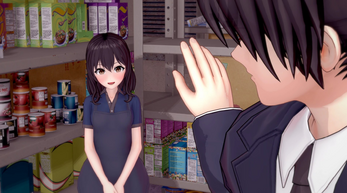
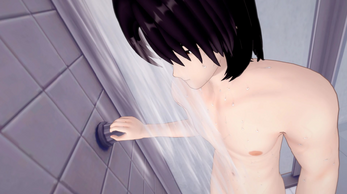
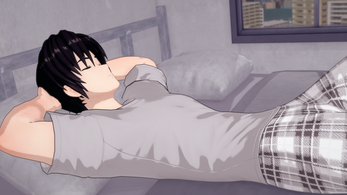
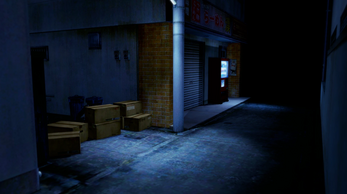
The art and presentation support the game’s subdued tone: redesigned backgrounds, boxed UI elements for clarity, and fully visualized rooms (bedroom, living room, kitchen, bathroom) that change with time and actions. Locations are compact but detailed; the current build offers multiple areas such as a park, alley and beach, with additional zones like a mall listed as work-in-progress. Each location serves distinct gameplay needs—rest, social interaction, scavenging or low-wage work—and together they create a compact, believable urban environment.
Inventory, Tasks and Interactivity
The inventory and task systems are practical rather than decorative. Items have clear in-game uses: food replenishes hunger, medicines stabilize mental health or hygiene, and particular objects unlock contextual interactions in rooms or locations. Tasks are time-bound suggestions that help structure days and provide short-term goals; completing them yields tangible benefits for Riku’s meters or finances. Interactivity emphasizes decision-making and consequence rather than cosmetic customization.
Replay Value and Challenge
Replay value arises from the interplay of survival mechanics and narrative choice. Different job strategies, spending habits and how you prioritize rest or overtime create varied daily rhythms and open alternative scenes. Challenge is largely systemic: meter management, limited funds and a realistic day-night cycle produce persistent trade-offs, while the slow, cyclical pace invites players to experiment with different approaches across multiple playthroughs.
User Experience, Accessibility and Offline Play
Designed for single-player, offline play, the preview is suitable for short sessions or extended runs without requiring network access. Accessibility touches include color warnings for meter states, readable fonts and a straightforward interface that makes core information visible at a glance. Controls and menus aim to be intuitive on phones and tablets, and the game’s pacing allows players to pause their progress without penalty, making it approachable for a range of play styles.
Preview Status and Ongoing Development
The current preview of A Home Between Us is labeled version 0.3.0b and implements the main systems: work, shop and pharmacy mechanics, hunger/energy/mental health/hygiene decay, a true 24-hour day cycle, inventory and task systems, a new minigame and several playable locations. Several trackers, additional areas and quality-of-life polish remain work-in-progress and are actively being refined; future updates aim to expand zones, deepen job progression and refine UI clarity while keeping the game’s grounded tone intact.