
A Werewolf in Charleston

| Package ID: | |
|---|---|
| Latest Version: | v0.9 |
| Latest update: | Jul 24, 2026 14:09:04 |
| Developer: | rhettoeraven |
| Requirements: | Android |
| Category: | Casual |
| Size: | 472.16 MB |
| Tags: | Entertainment Drive Slot |
Rating :4.4
A Werewolf in Charleston places you in a mature Southern Gothic thriller about transformation, politics, and body horror, telling the story of Anthony 'Andy' Crane as he navigates a city on the brink of violent change. A Werewolf in Charleston opens with careful pacing and strong writing, inviting players who prefer branching narrative, morally complex decisions, and an unsettling atmosphere; the tone is adult and the themes are presented in a neutral, narrative-focused manner rather than as shock value. This editor's introduction summarizes core systems, control choices, progression structure, and accessibility options while noting the game’s suitability for mature audiences.
Gameplay and mechanics
The core gameplay relies on choice-driven narrative rather than action: scenes unfold through text, character portraits, and occasional event visuals while your selections alter relationships, public tensions, and the sequence of later revelations. Decision flags are persistent and can unlock unique scenes or endings; many branches hinge on accumulated choices rather than isolated decisions, so the title rewards attention to dialogue and the consequences of earlier actions. Pacing and scene structure emphasize deliberation—readers advance by tapping or using auto-play, then choose from branching options that influence both Andy’s personal arc and Charleston’s civic landscape.
Controls and user interface
Controls are streamlined for mobile consumption with obvious, accessible gestures: tap-to-advance text, long-press for additional context where available, and an auto-play mode for hands-free reading. A skip function accelerates previously seen text, while a visible backlog preserves earlier dialogue for reference. The interface keeps touch interactions minimal and predictable so players can focus on choices and narrative memory rather than complex inputs. Save and load are straightforward, with multiple manual slots and automatic saves at major decision points to minimize lost progress during replay and experimentation.
Progression and structure
Progression is arranged into chapters and scenes following a three-act rhythm that ramps tension toward critical decision points; chapter transitions mark shifts in scale from intimate character moments to wider civic consequences. The game records outcome flags and relationship states to enable branching content later in the story, and exported save support lets you return to a particular branch without replaying the entire opening. Multiple endings reflect personal and public ramifications, so exploring different moral stances and alliances yields distinct narrative payoffs across playthroughs.
Visual style and audio
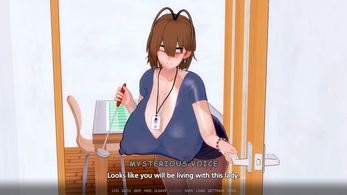
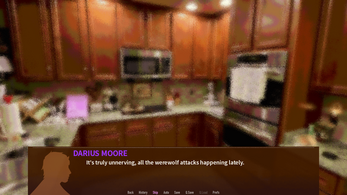
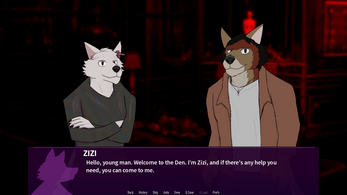
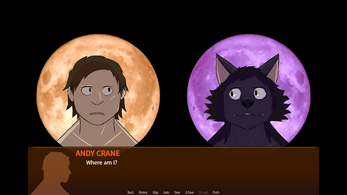
The presentation leans into Southern Gothic aesthetics with atmospheric backgrounds, a subdued color palette, and portraits that change expression to reflect narrative beats. Art includes stylized body-horror imagery used sparingly to underline story moments rather than to titillate; visual options let players tone down or disable explicit imagery while keeping the textual story intact. Sound design supports atmosphere through ambient layers and a measured soundtrack: quiet pieces accompany introspective scenes and more intense audio cues heighten political confrontations, all optimized to balance immersion with performance on a range of Android devices.
Customization and accessibility
Players can tailor readability and visual comfort through adjustable text speed, font size, and screen contrast settings. A preference toggle controls the display of nudity and graphic visuals so readers who prefer a censored presentation can still follow the full narrative. Accessibility features include a high-contrast mode, a readable font option, and a clear backlog for context. The UI avoids flashing effects and offers a paced mode that inserts brief pauses before major choice screens, which helps users who benefit from slower decision windows.
Replay value and challenge
Replayability stems from branching routes, relationship dynamics, and hidden scenes unlocked through specific decision combinations rather than mechanical difficulty. The game’s challenges are ethical and narrative: weighing loyalty, identity, and civic responsibility produces meaningful dilemmas without relying on timed inputs. Players who take notes or try divergent attitudes toward key characters will uncover alternate scenes, characters’ fates, and endings, encouraging several playthroughs to reveal the story’s full scope.
Offline play and user experience
This single-player visual novel runs fully offline after installation and does not require persistent internet access, so readers can play without network interruptions or background downloads. Performance is designed to be gentle on battery life compared with action titles, and options to reduce animation make the experience smooth on lower-end devices. Clear progress markers indicate unread material and scene completion, helping players pick up where they left off and manage multiple playthroughs.
Content and development notes
This mature title includes graphic violence, body-horror elements, and political themes intended for audiences 18 and older and is presented as a narrative exploration rather than explicit entertainment. A Werewolf in Charleston was developed by RhettoeRaven as an indie submission to the 2026 May Wolf Jam, reflecting a focus on story experimentation and tight, choice-driven design. If you enjoy dark, character-focused visual novels where each decision reshapes both an individual life and a community, A Werewolf in Charleston offers a layered, replayable experience that balances atmosphere, consequence, and accessibility.