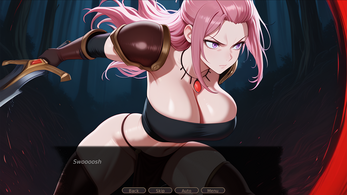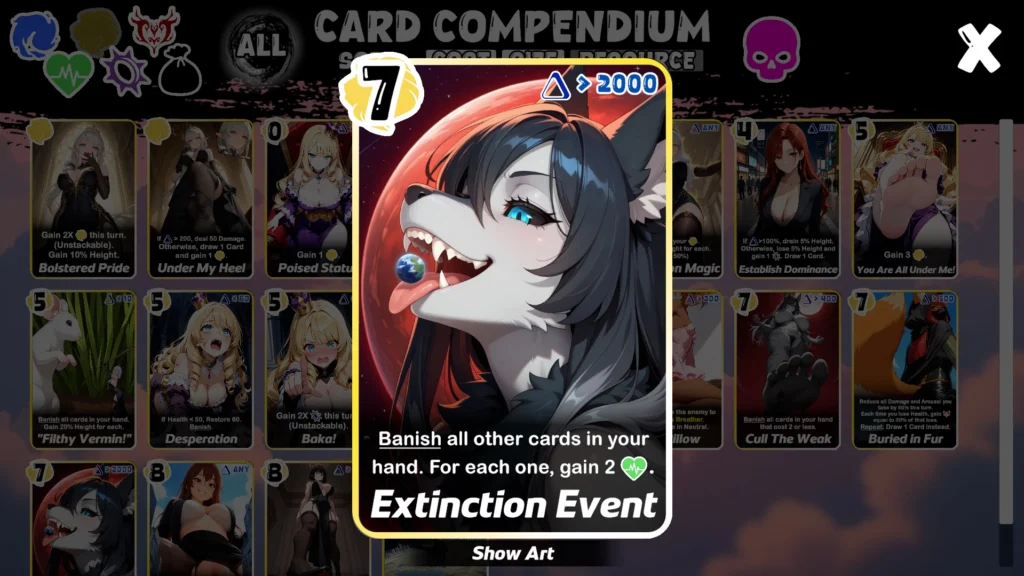

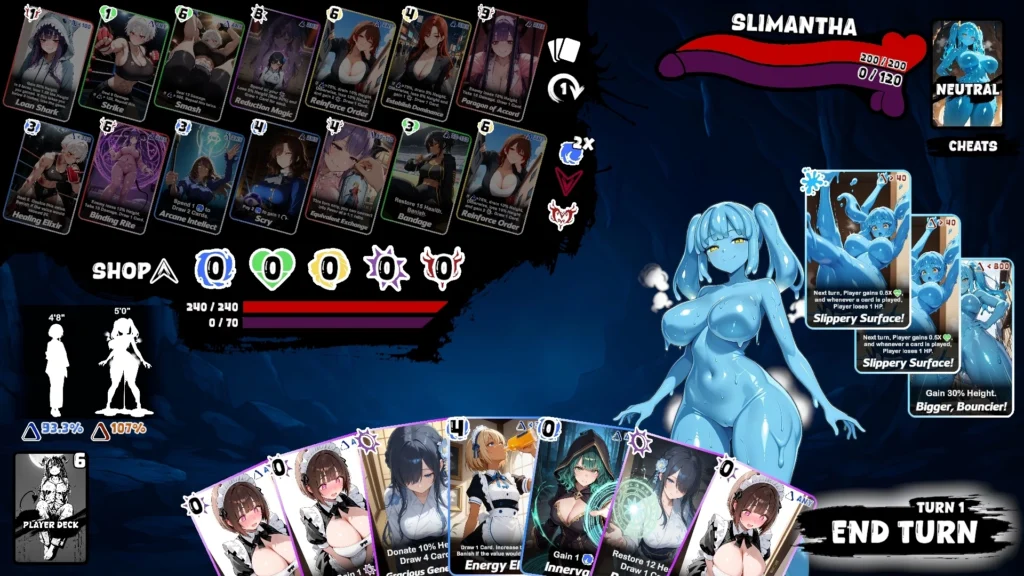

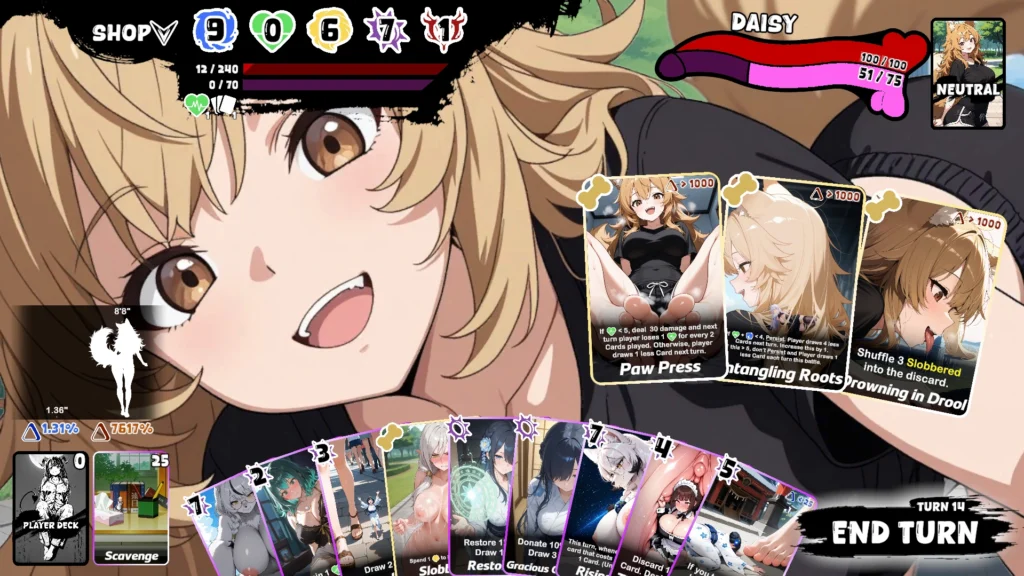

Dwarfing Dreams places you in a roguelike deckbuilder where scale, strategy, and a surreal dreamscape meet. In this single-player experience you explore shifting battle arenas inside the subconscious of an enigmatic succubus figure, adapting both your deck and your relative height to survive encounters whose dynamics change depending on scale. Dwarfing Dreams blends tactical card play with a provocative mechanical twist: every fight is reshaped by how large or small you are compared to your foes, turning ordinary choices into situational strategy.
Key Features
Size-driven card mechanics are central to the experience: the cards available and many card effects change with your height relative to opponents, forcing you to think about scale as a resource. The core loop follows a roguelike deckbuilding pattern where you draw cards to generate resources each turn, spend those resources to play cards, and visit a personal shop between battles to acquire stronger cards or useful modifiers. Opponents are dynamic; their move sets and priorities shift according to their own scale and status, which creates emergent encounters rather than boilerplate combat patterns. The dreamworld setting is more than cosmetic—battle arenas themselves morph, offering vantage points, hazards, and environmental interactions that feel coherent with the subconscious theme. Finally, the game emphasizes interactions built around varying scale and perspective, giving a consistent theme to its mechanics and encounters without explicit or erotic content.
Gameplay and Controls
Gameplay revolves around turn-based card resolution and tactical positioning. Each turn you draw a hand, allocate resources, and choose how to play your cards to manipulate size, deal damage, or create defensive setups. Controls are designed for touch-first devices: tap cards to play, tap targets to resolve effects, and use simple gestures to inspect cards or zoom the battlefield when needed. Targeting aims are clearly indicated and the UI communicates size relationships so players can make fast, informed decisions. Combat pacing balances thoughtful choices with moments of quick adaptation as enemy scale shifts mid-encounter.
Progression and Customization
Runs are intended to be meaningful but transient: you will refine your strategy from run to run, learning which cards and size states synergize. Successful runs unlock additional cards and persistent options that expand your strategic space; these unlocks encourage experimentation and give long-term goals beyond immediate survival. Deck customization is flexible—build around size manipulation, direct damage, economy engines, or defensive combos—and the personal shop provides mid-run decisions that change the trajectory of each attempt. Visual and minor cosmetic customization options support player expression within the game’s aesthetic without affecting balance.
Visual Style and Level Structure
The visual presentation leans into dreamlike surrealism, using scale shifts, atmospheric lighting, and layered foreground elements to sell the sense of being inside a subconscious landscape. Arenas are compact but varied, designed as self-contained scenes that shift layout and scale across a run; these shifts change line-of-sight, available cover, and interactable objects to make familiar cards feel new in different contexts. Sound design and ambient music underscore the uncanny mood, reinforcing each run’s shifting tone.
Replay Value and Challenge
Dwarfing Dreams is tuned for replayability: a deep card pool, a personal shop that mixes available upgrades each run, and opponents whose tactics evolve with size create a high ceiling for strategic depth. Difficulty is driven by encounter variety and the need to adapt on the fly rather than by artificial stat inflation; players who enjoy refining a deck over multiple runs will find long-term engagement through emergent tactics and experiment-driven discovery. The game also includes challenge modifiers and optional risk-reward choices that let players tailor difficulty to their preferred level of tension.
Accessibility and Offline Experience
The interface emphasizes clear icons, readable text, and straightforward input models to make the core systems approachable on mobile devices. Controls and feedback are designed to be responsive on a range of screen sizes and input styles. The single-player structure does not require persistent online connectivity to play runs, so the core experience remains accessible whether you have an active connection or not.
Advantages
Players will appreciate the layered decision-making that comes from managing both deck composition and relative size, the strong replay loop provided by shifting card pools and shop choices, and the creative enemy behaviors that reward flexible strategies. The aesthetic and mechanical cohesion gives each run a distinctive feel as the dreamscape morphs around you.
Disadvantages
Because Dwarfing Dreams is built around a niche mechanical twist, it may not match the immediate expectations of players seeking a more traditional deckbuilder. The current build is early-stage, so players may encounter limited content or rough edges while the developers continue to expand and polish systems.
Development Team
Dwarfing Dreams was developed by YrelReversal in collaboration with Chiharai Games, a small team focused on experimental mechanics and atmospheric presentation within the deckbuilding roguelike space.
Version Information
The release you are viewing is version 0.2.3a, an early-stage build that reflects active development and iterative improvements planned for future updates.