



Naughty Blocks: Hashira Gone Wild offers a measured, progression-driven take on classic paddle-and-ball gameplay, packaged as a native Android APK for players seeking a completionist-style puzzle experience with mature-themed art presented tastefully. The title blends familiar arcadey timing with a chapter-based campaign and a persistent upgrade system that encourages methodical play rather than frantic reflexes. This editor description outlines how the native build handles controls, progression, visuals, and accessibility so you know what to expect before installing.
Gameplay and core mechanics
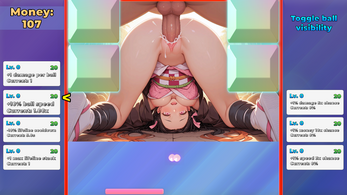
The foundation of Naughty Blocks: Hashira Gone Wild is simple and reliable: position a paddle to keep one or more balls in play while clearing tiles on a grid to reveal artwork beneath. Levels vary in layout and introduce breakable obstacles, multi-hit tiles, and occasional locked tiles that require either repeated hits or specific persistent upgrades to clear. Power-ups drop during play and provide temporary advantages such as multi-ball, expanded paddle width, or slowed ball speed; in parallel, collectible in-game currency funds permanent improvements that change how later chapters play. The design rewards careful target selection and strategic use of upgrades to approach tougher encounters without abandoning the accessible base mechanics familiar to brick‑breaking fans.
Controls and accessibility
Controls are intentionally approachable to make the game comfortable on phones and tablets: a touch-friendly left/right paddle input keeps interaction direct and minimizes accidental inputs. The native Android build also supports external keyboard navigation for tablets and devices with physical keys, and basic sensitivity options in settings let you tune how quickly the paddle responds. Visual clarity options, adjustable contrast for tile visibility, and simplified control modes help the game remain usable for a wide range of players and screen sizes. These choices make it possible to focus on timing, placement, and strategy rather than learning complex control schemes.
Progression, upgrades, and replay value
Progression centers on a persistent upgrade tree paired with chapter advancement: every destroyed block contributes currency, and currency purchases permanent boosts that carry between chapters. Upgrades influence paddle size, ball behavior, and secondary parameters that change how specific tile formations are best approached. Chapters are grouped into thematic sets that gradually increase in difficulty by introducing denser arrangements and more resilient tiles, while a large in‑game gallery—documented in the original release as containing over 250 images and unlockables—provides long-term goals. Replaying earlier chapters with new upgrades opens alternate strategies for clearing tiles and speeds up gallery completion, giving collectors a clear path to completion without forcing repetitive single-screen runs.
Visual presentation and gallery
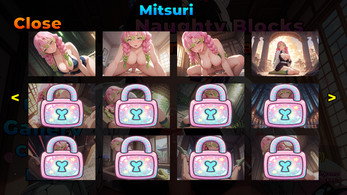
The visual approach favors high-quality, stylized imagery that is framed and revealed progressively as you clear tiles; the artwork is intended for mature audiences but remains tasteful and non-explicit. Tile art and level backgrounds are composed to read well on phone displays, with contrast and animation tuned to keep the action readable during gameplay. A built-in gallery tracks unlocked images and collectibles, lets you revisit completed pieces, and provides a simple index of what remains to be revealed. The reveal mechanic adds a steady sense of reward to each level and ties the puzzle flow to the progression system.
Performance, compatibility, and offline play
Packaged as a native APK, this build generally runs more smoothly on Android devices than browser-based alternatives and reduces the chance of WebGL-related loading issues on lower-end hardware. Graphics quality and performance settings can be adjusted to reduce frame drops on older devices, and the game is fully playable offline after installation with progress saved locally. If you run into compatibility problems, check available storage and app permissions and ensure you have installed the Android APK variant intended for your device to get optimal performance.
Challenge systems and level design
Challenge ramps through level design rather than sudden spikes: early chapters provide wide-open grids that teach core mechanics, mid-game chapters introduce obstacles and locked tiles that require tactical upgrades, and later sets combine denser patterns with multi-hit elements that demand precision and planning. The balance between temporary power-ups and permanent upgrades encourages players to adapt their strategy across chapters rather than relying on a single playstyle, and optional difficulty scaling lets casual players progress steadily while offering harder clears for those chasing full completion.
User experience and settings
Settings focus on practical customization: adjust control sensitivity, audio levels, and visual clarity to match your device and preferences. The interface keeps navigation straightforward so you can access the gallery, upgrade tree, and level selection without friction. Local saves mean you can jump into sessions without an internet connection, and the game’s pacing supports both short play sessions and longer runs aimed at unlocking new gallery content.
Notes on content and suitability
Naughty Blocks: Hashira Gone Wild is intended for mature audiences and contains suggestive, artistically framed artwork rather than explicit material; it is not suitable for minors. The presentation aims to remain tasteful while offering a completionist collector experience built around thoughtful mechanics, chapter progression, and a robust upgrade system. If you prefer brick‑breaking games with meaningful long-term goals, careful mechanics, and a gallery of unlockables, this Android APK provides a considered alternative to fast‑paced arcade variants.