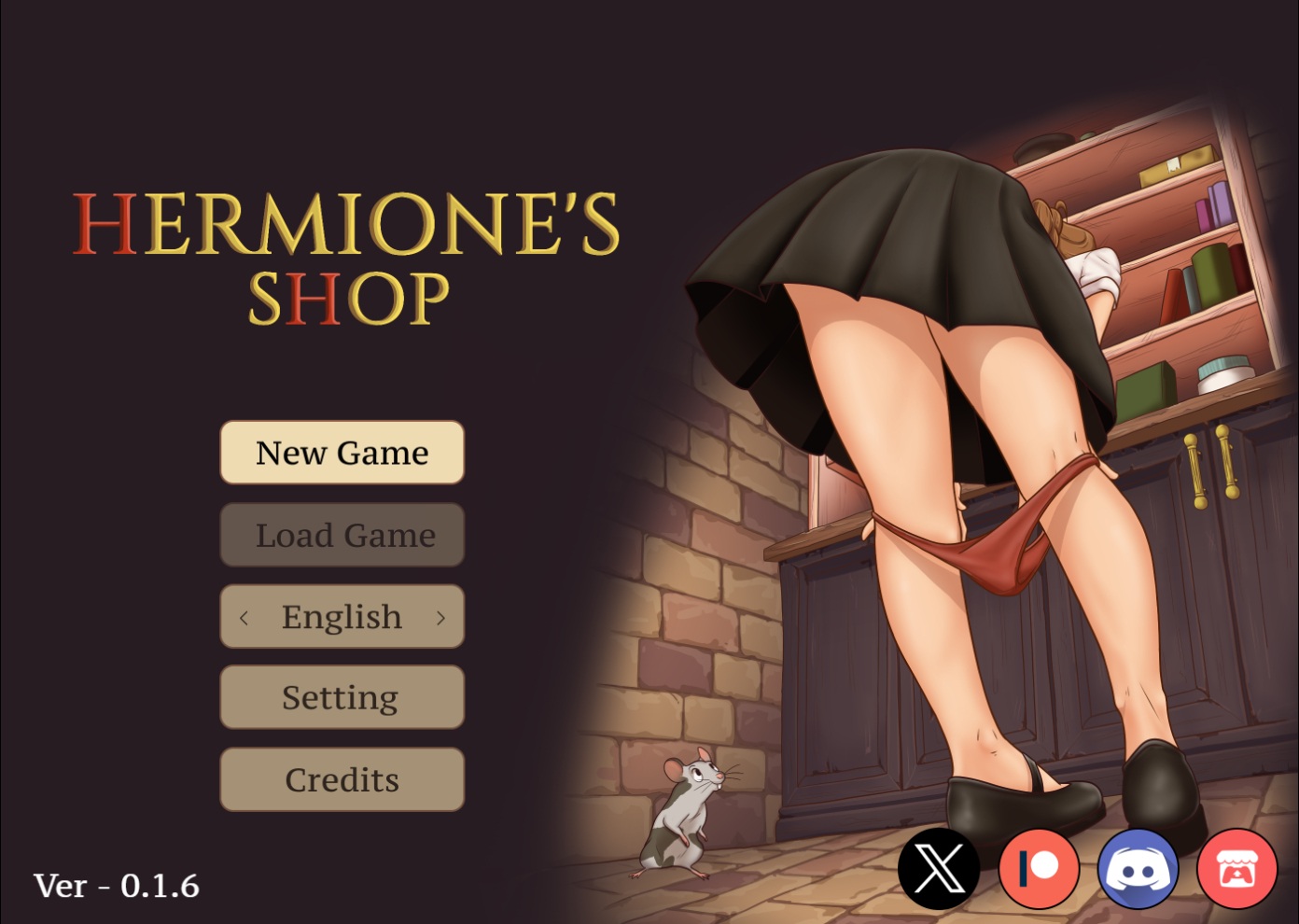
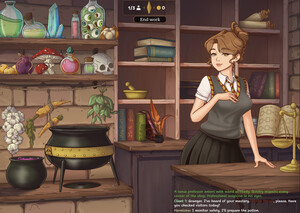



Hermione’s Shop places you in the role of a young witch who must rebuild her life after close friends betray her and disappear with her savings; offered a lifeline by an influential mentor, she turns a deserted potion laboratory into a small but promising shop. The opening premise sets a clear character-driven objective: restore reputation, balance the books, and defend the business from persistent debt collectors while learning a complex recipe and customer ecosystem. Hermione’s Shop opens with a short narrative introduction and then hands players a practical set of daily tasks that combine time management, resource allocation, and story choices.
Gameplay and Controls
Gameplay centers on running day-to-day potion shop operations: gathering ingredients, brewing recipes that take varying times and resources, serving customers with different patience and preferences, and upgrading equipment to increase efficiency. Controls are touch-first, designed for intuitive taps and drag gestures to move ingredients between storage, cauldrons, and serving counters; context-sensitive buttons let you speed up processes or reroute staff when the rush begins. The interface emphasizes readability during hectic periods, with clear timers and brief tooltips for new mechanics so players can learn by doing rather than memorizing complex menus.
Progression and Challenge Systems
Progression is driven by a combination of reputation, income, and story milestones. Completing orders and side requests earns gold, unlocks new recipes, and raises the shop's standing in town; hitting narrative checkpoints advances the plot and introduces new characters and complications. Challenge systems include fluctuating customer demand, ingredient scarcity, equipment wear that requires repair, and periodic encounters with Gringotts-style debt collectors who pressure you to prioritize income over long-term investments. Difficulty ramps through scenario-based events that require tactical choices—whether to invest in quality ingredients or to accept a risky deal that could bring quick cash at the cost of reputation.
Visual Style and Level Structure
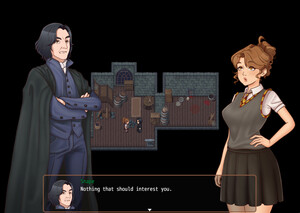
The visual presentation leans into a moody, atmospheric laboratory setting—dusty shelves, amber potion bottles, and hand-drawn character portraits that lend personality to daily interactions. Levels are structured as in-game days or episodes: each day presents a set of goals, customer mixes, and optional side tasks that feed into broader story arcs. As you advance, the laboratory can be expanded and visually customized to reflect the shop's growth, and new rooms introduce additional gameplay layers such as long-brew elixirs or experimental recipes that require careful scheduling.
Customization and Replay Value
Cosmetic and functional customization lets players tailor the experience: upgradeable workstations speed brewing, decorative items change the shop's look, and recipe variations encourage experimenting with different ingredient combinations. Replay value comes from branching narrative choices, different playstyles (conservative investor vs. aggressive expansion), and the randomization of certain customer types and daily events. Those who enjoy optimizing will find room to refine strategies across multiple playthroughs while uncovering alternate story beats.
User Experience and Accessibility
Attention to accessibility is included in the design: adjustable text sizes, color-contrast options for visual clarity, and a paced learning curve that eases new players into deeper mechanics. The user experience aims to balance narrative moments with clear feedback loops so decisions feel meaningful without being punitive. The tutorial is integrated into early story beats rather than as a separate block, and controls remain responsive on a range of devices to support consistent play sessions.
Offline Play and Performance
Hermione’s Shop is primarily designed for single-player offline play, allowing you to manage the shop without a persistent internet connection; periodic updates may add content but the core gameplay remains available when offline. Performance optimizations target smooth frame rates on mid-range devices and reduced battery use during long brewing cycles, while save states ensure you can pick up an interrupted day without losing progress.
Advantages, Limitations and Version Information
The game offers a compelling narrative hook, an atmospheric setting, and a satisfying resource-management loop that rewards thoughtful planning. Limitations in the early 0.1.6 release include a compact content scope and a steep challenge curve for players who prefer relaxed, low-pressure management. Version 0.1.6 represents the initial public build and focuses on the core shop premise, basic progression systems, and the main story elements that define Hermione’s Shop; future updates are expected to expand content and refine balancing based on player feedback.