
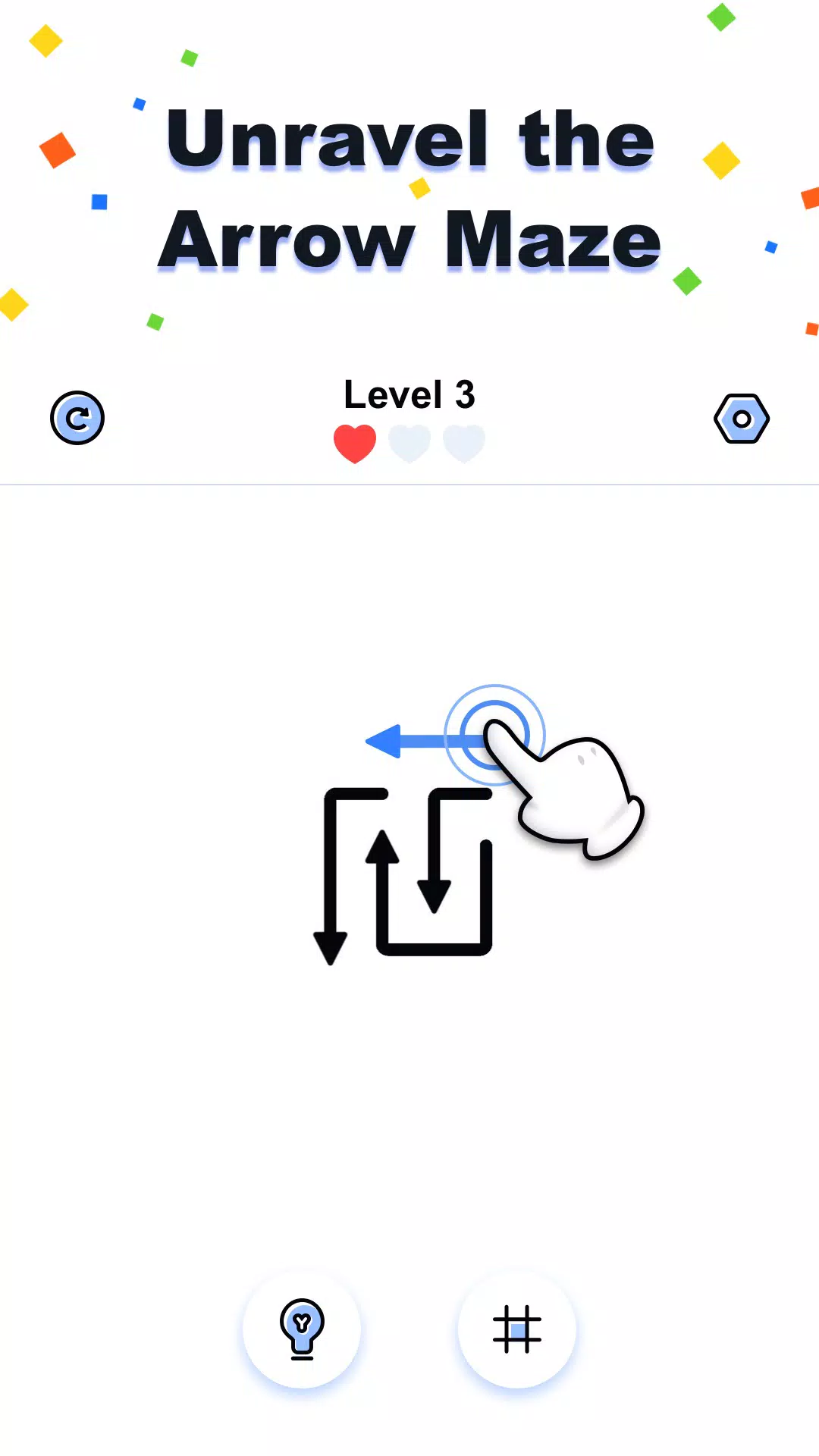
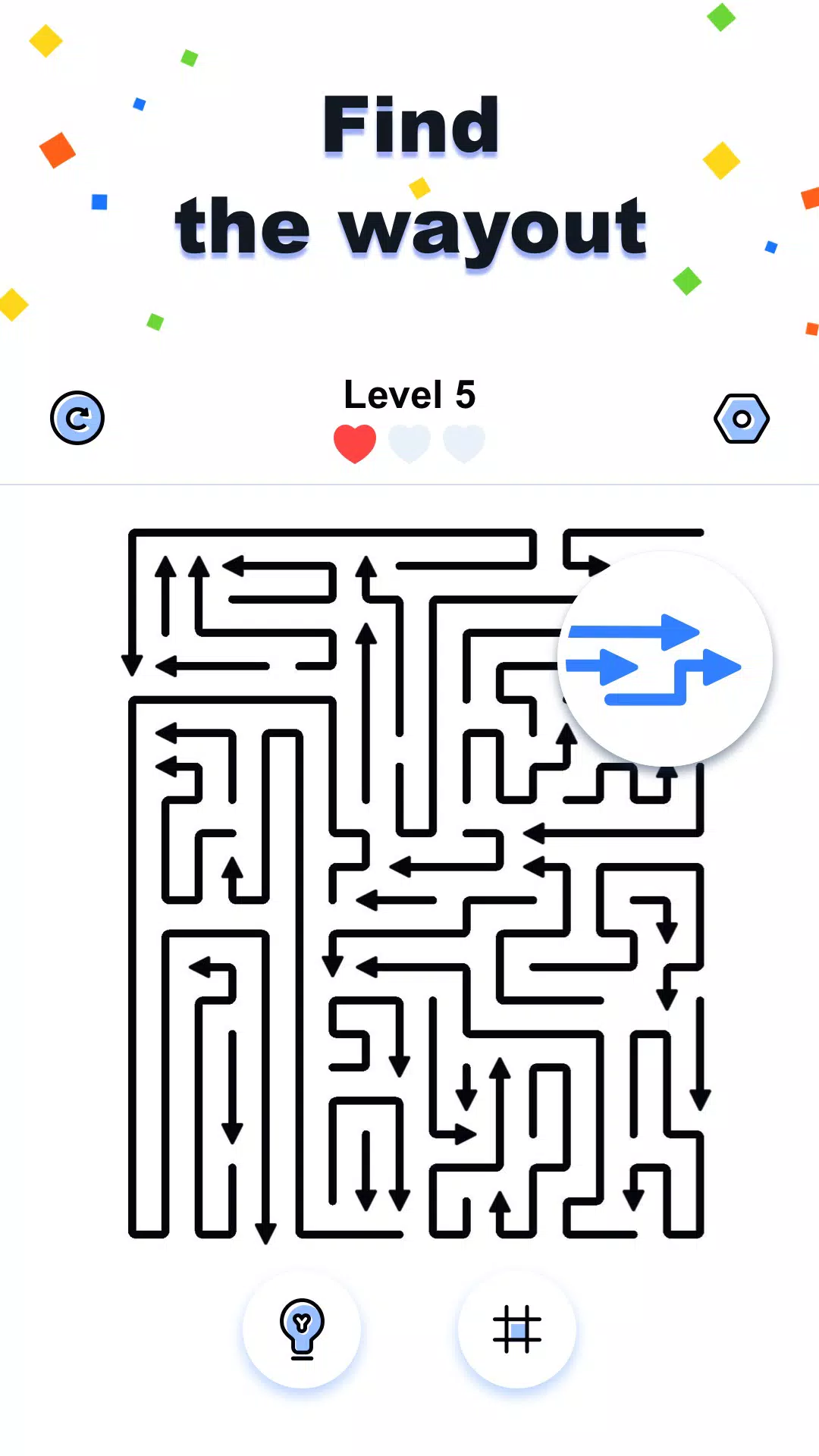
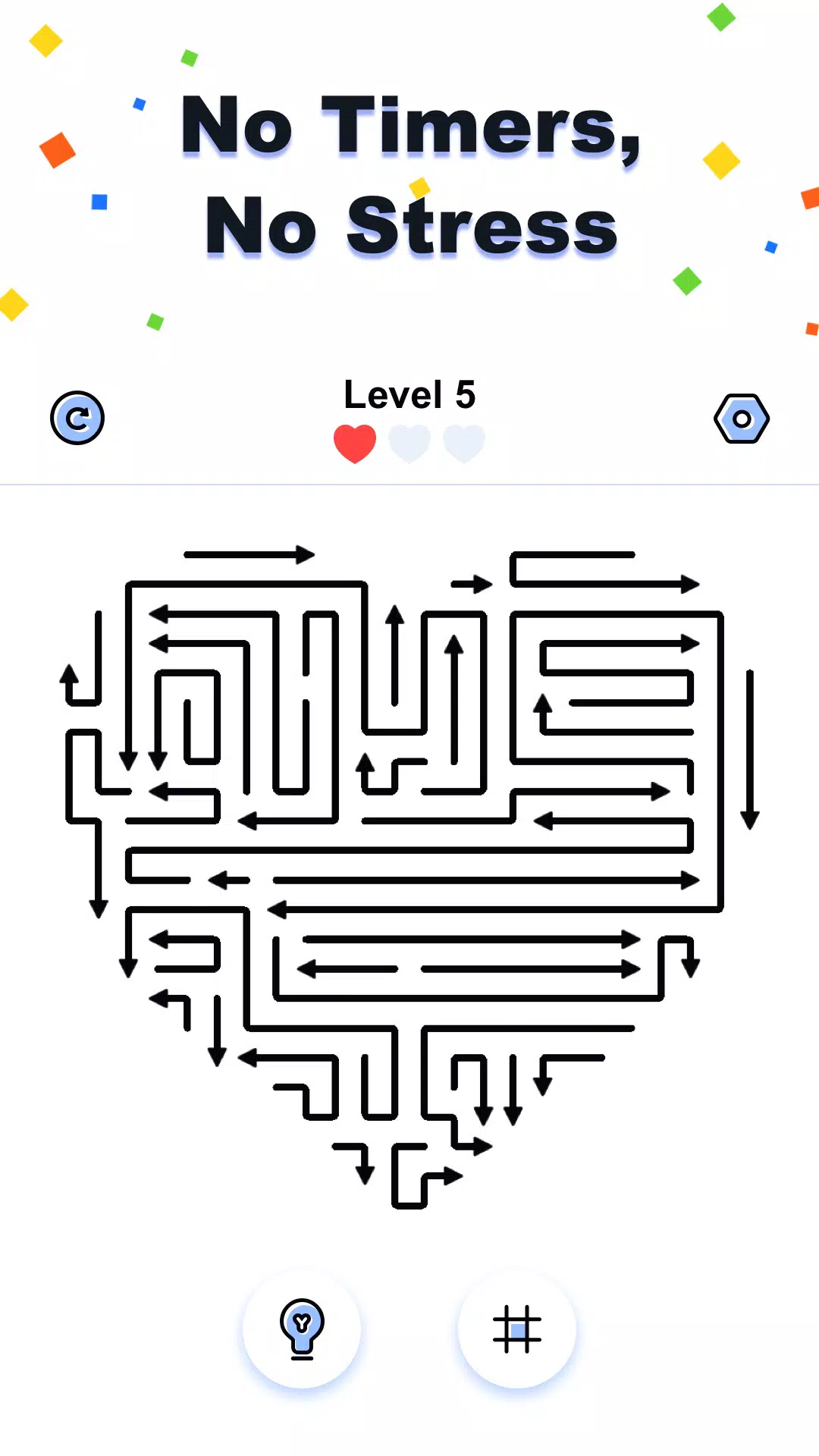
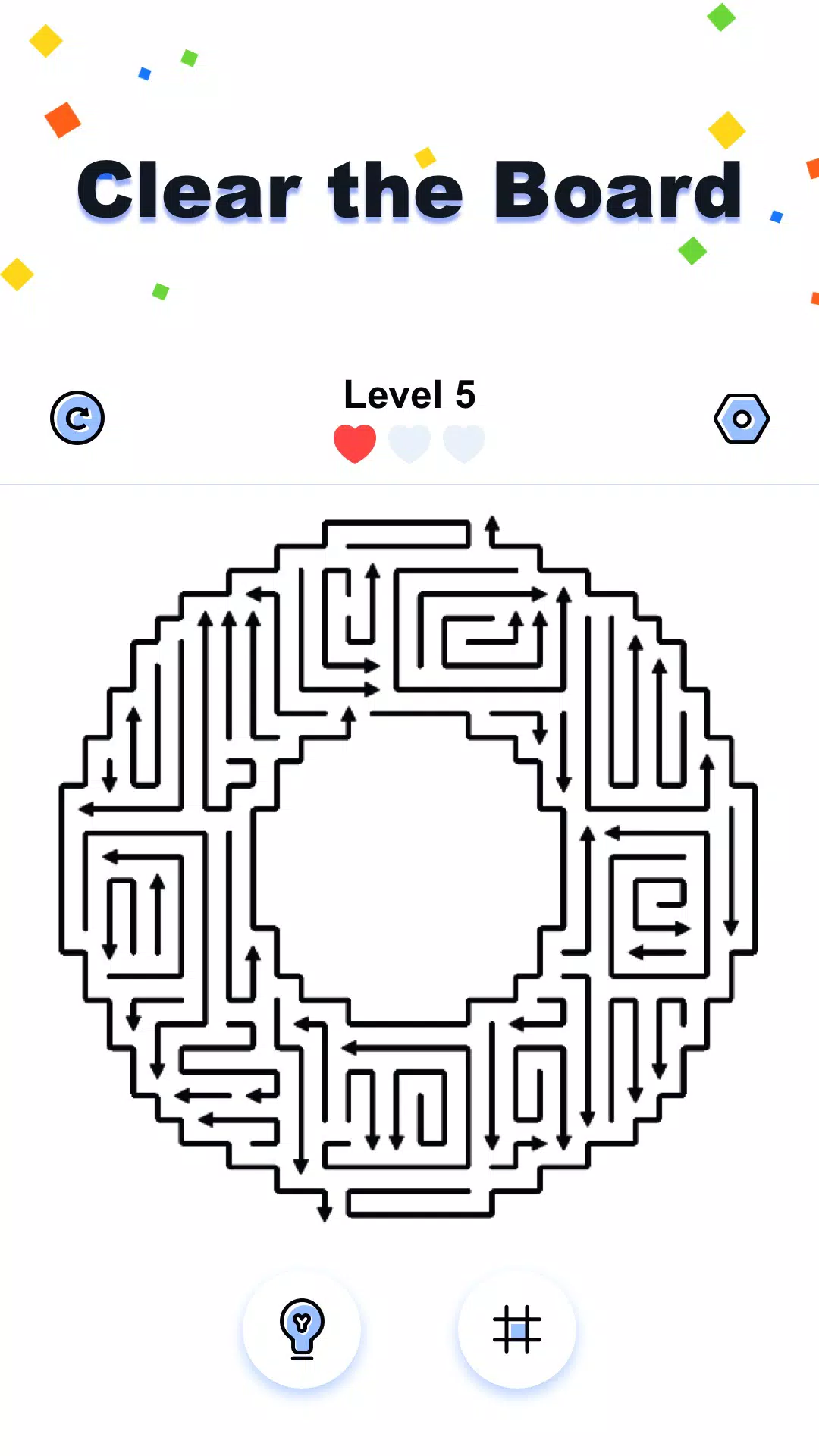
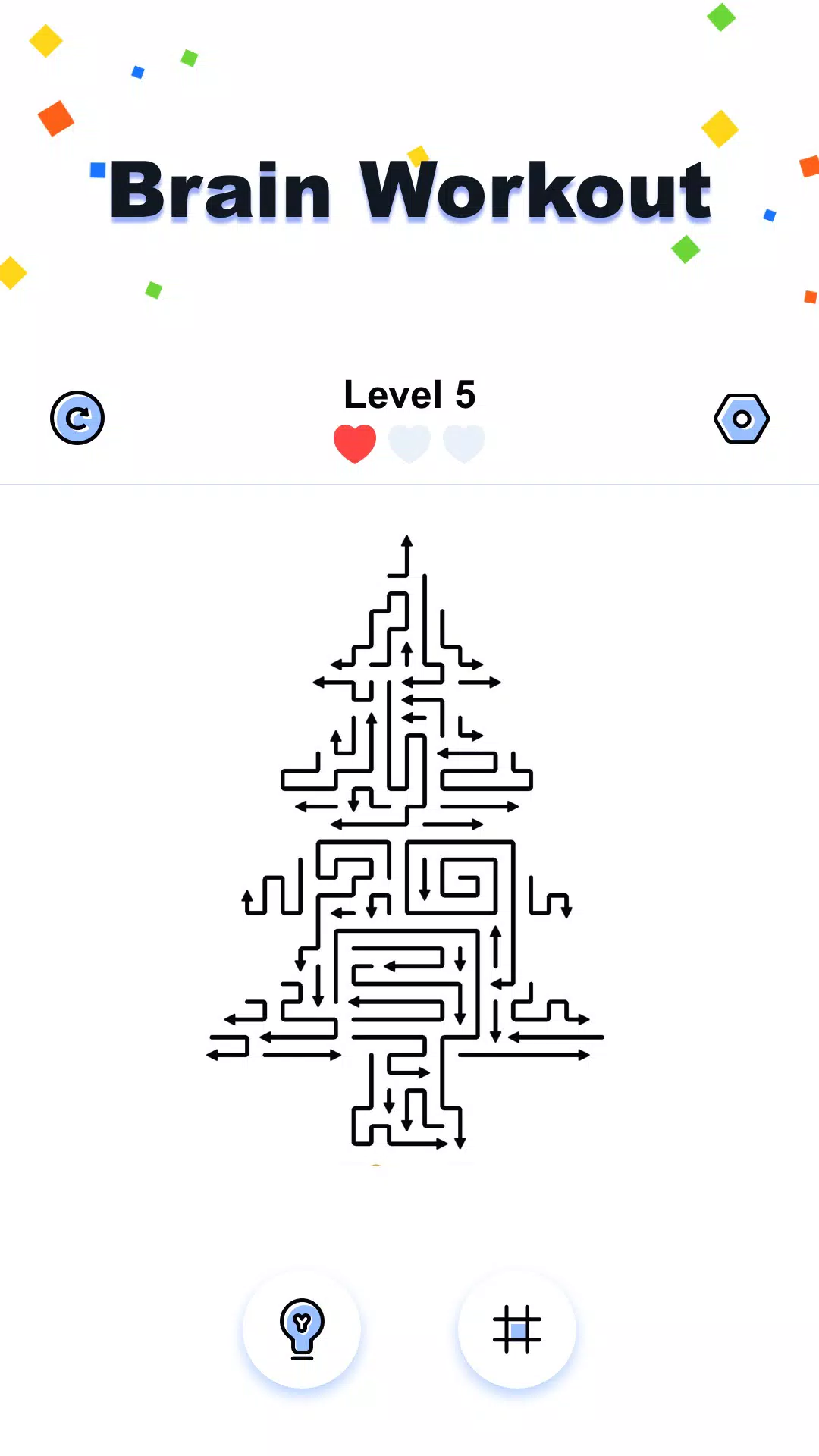

Arrow Quest! is a calm, minimalist puzzle game built around a single elegant idea: remove arrows in the exact order required so that no two paths collide and each layout clears cleanly. Arrow Quest! places emphasis on deliberate thinking rather than reflexes, making it a good pick for short mental breaks or longer sessions where you want to focus on pattern recognition, sequencing and spatial logic without timers or pressure.
Key features
The core mechanic is sequencing: every level presents a set of arrows and intersecting paths where the correct removal order is the puzzle. The visuals are intentionally uncluttered to keep attention on the relationships between arrows and paths rather than flashy effects. Levels scale from approachable beginner layouts that teach the basic cause-and-effect of removals to compact clusters where dozens of intersecting paths require multi-step reasoning. There are no countdowns or forced moves, so you can pause, experiment and return at your own pace.
How to play
Controls are simple and immediate: tap an arrow to remove it and observe how the remaining paths reconfigure. Each tap is a deliberate decision because removing arrows in the wrong order will create collisions that block a clean solution. The feedback is visual and predictable, helping you learn to anticipate how sequences unwind. The game favors careful observation and planning—watch how paths overlap, identify independent segments you can safely remove first, and build toward an order that resolves every intersection.
Progression and level structure
Progression in Arrow Quest! is organized into sets of levels that introduce new spatial arrangements and increasing density. Early levels establish simple interactions and teach core patterns, while mid-game puzzles combine those patterns into larger compositions. Later levels focus on tightly packed configurations that reward forward-planning and patience; many of these puzzles have multiple viable approaches, encouraging experimentation and iterative thinking. Levels are short and self-contained, so you can complete one or play through a series for a longer session.
Visual style and accessibility
The presentation is intentionally minimal: clean shapes, restrained color palettes and clear contrasts keep visual noise low and make it easier to read complex layouts. This pared-down design supports accessibility by reducing distracting animations and emphasizing the geometric relationships that matter to solving puzzles. Sound is supportive but unobtrusive, and simple settings let you adjust volume or mute audio to suit your environment. The clarity of the visuals and controls makes the game approachable for a wide range of players.
Replay value and challenge systems
Replay value comes from the puzzle design itself: many levels admit alternate sequences and cleaner solutions that only become obvious after experimentation. Because there are no timers or lives, the experience encourages repeated attempts and thoughtful iteration. The difficulty curve is gradual but meaningful—some later puzzles demand sustained attention and multiple attempts, providing that satisfying feeling when you finally see the full sequence. If you prefer lower-stress sessions you can revisit earlier layouts to practice pattern recognition or challenge yourself to find more efficient orders.
User experience, offline play and device compatibility
Arrow Quest! is designed to be lightweight and distraction-free, making it a convenient game for offline play when you want a brain workout without requiring a network connection. The interface is optimized for touch: large, easy-to-tap elements and immediate visual responses reduce friction so you can focus on solving rather than fiddling with controls. Performance is optimized for a broad range of devices so the calm visuals and smooth interactions remain consistent across phones and tablets. Tooltips and in-game hints are minimal by design; the learning curve comes from observing cause-and-effect and building intuition through play.
Overall, Arrow Quest! rewards patient observation and methodical planning. If you enjoy puzzles that emphasize sequence, spatial logic and quiet satisfaction over speed, this game delivers a range of challenges wrapped in a clean, focused presentation that adapts well to short sessions or longer stretches of problem solving.