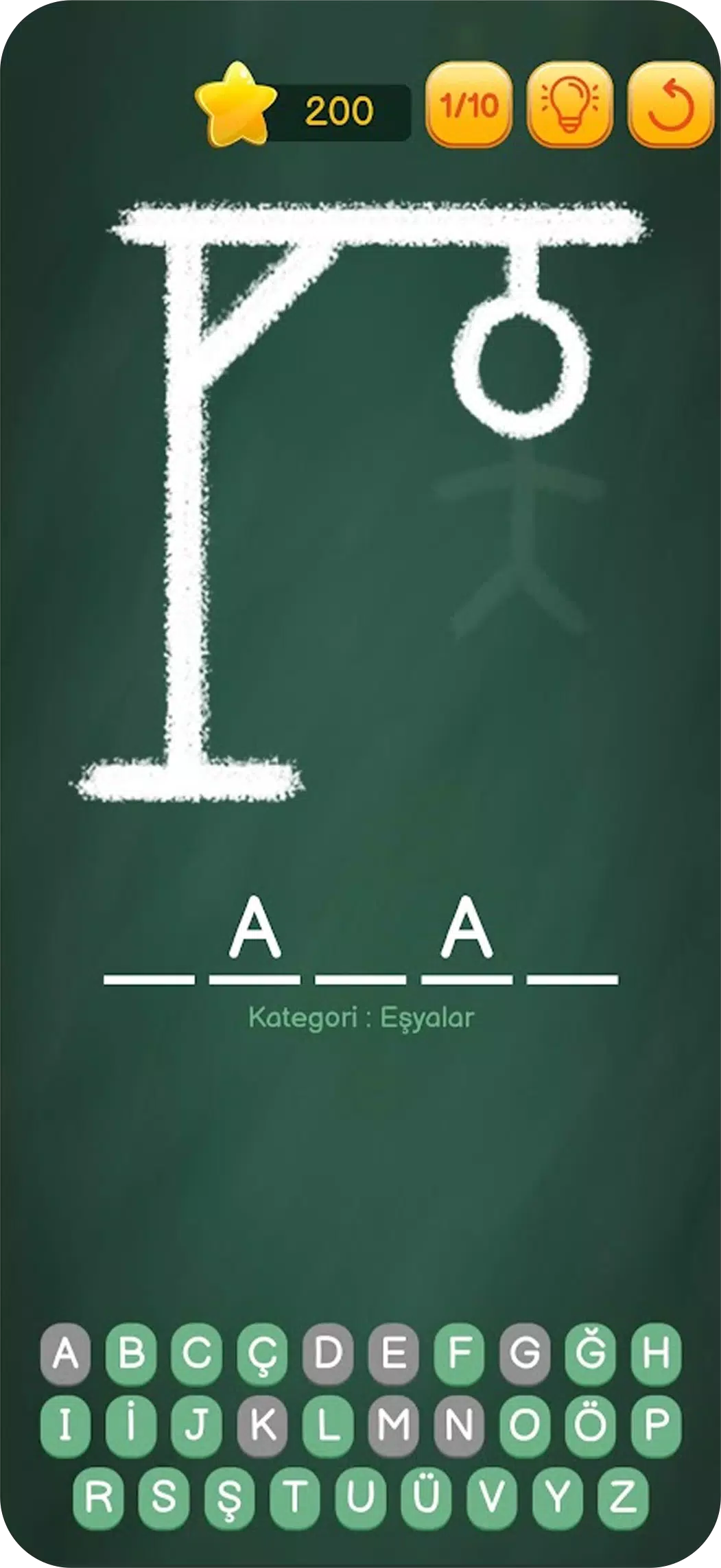
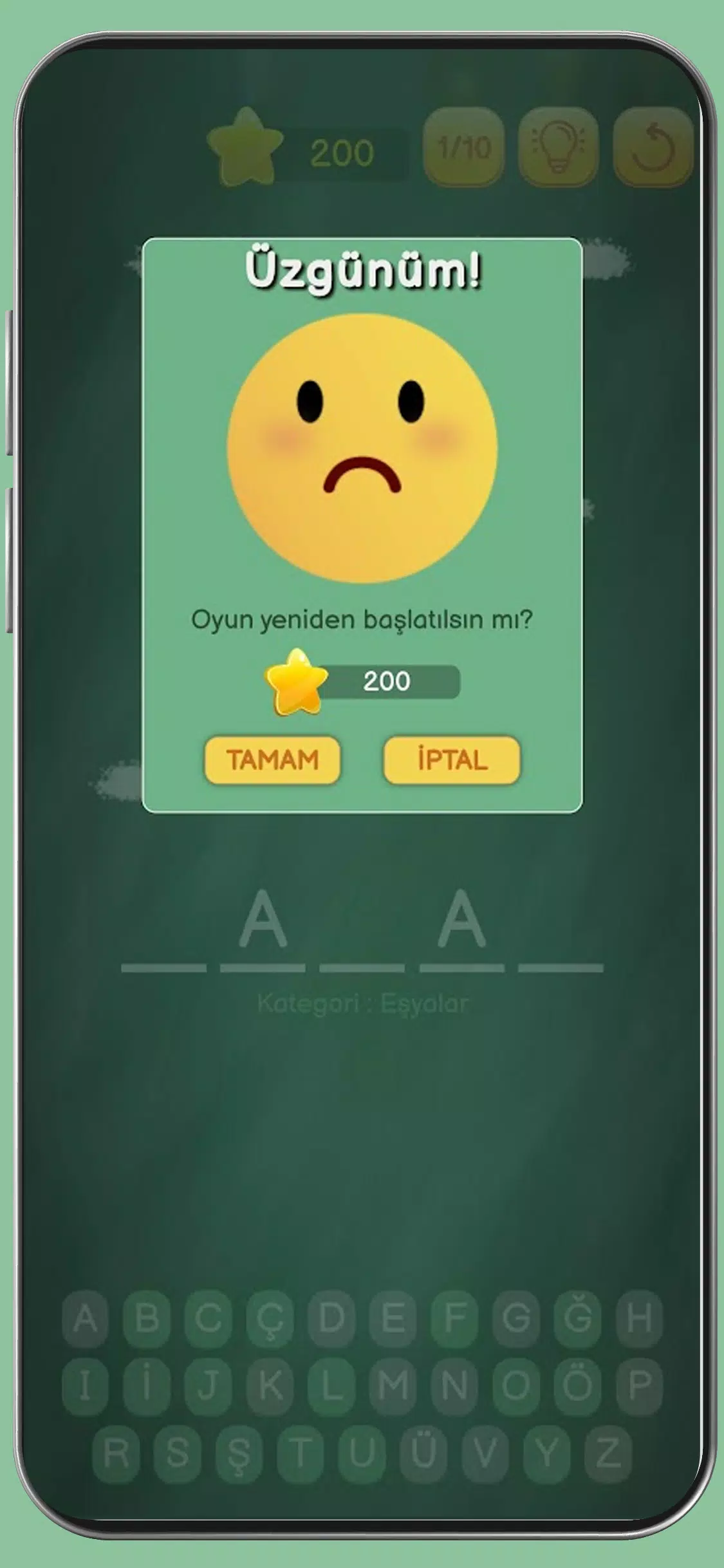

Adam Asmaca brings the classic hangman puzzle to Android with a clean, study-friendly presentation that fits short play sessions and casual vocabulary practice. Adam Asmaca focuses on fast, turn-based rounds where you guess letters to reveal hidden words drawn from seven thoughtfully arranged categories and hundreds of curated entries. The design emphasizes clarity over clutter so each round is easy to start, quick to finish, and useful for brief study breaks or classroom warm-ups.
Gameplay and Level Structure
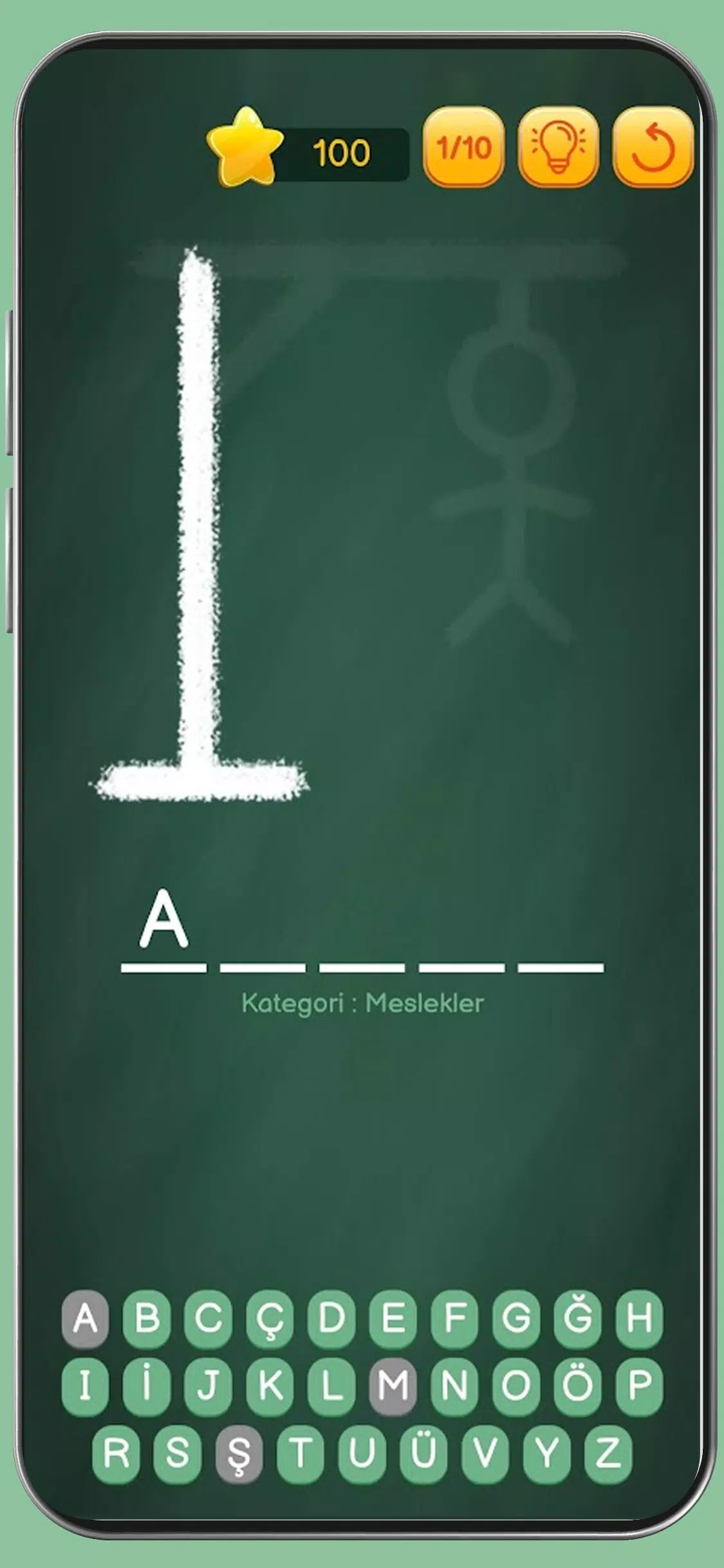
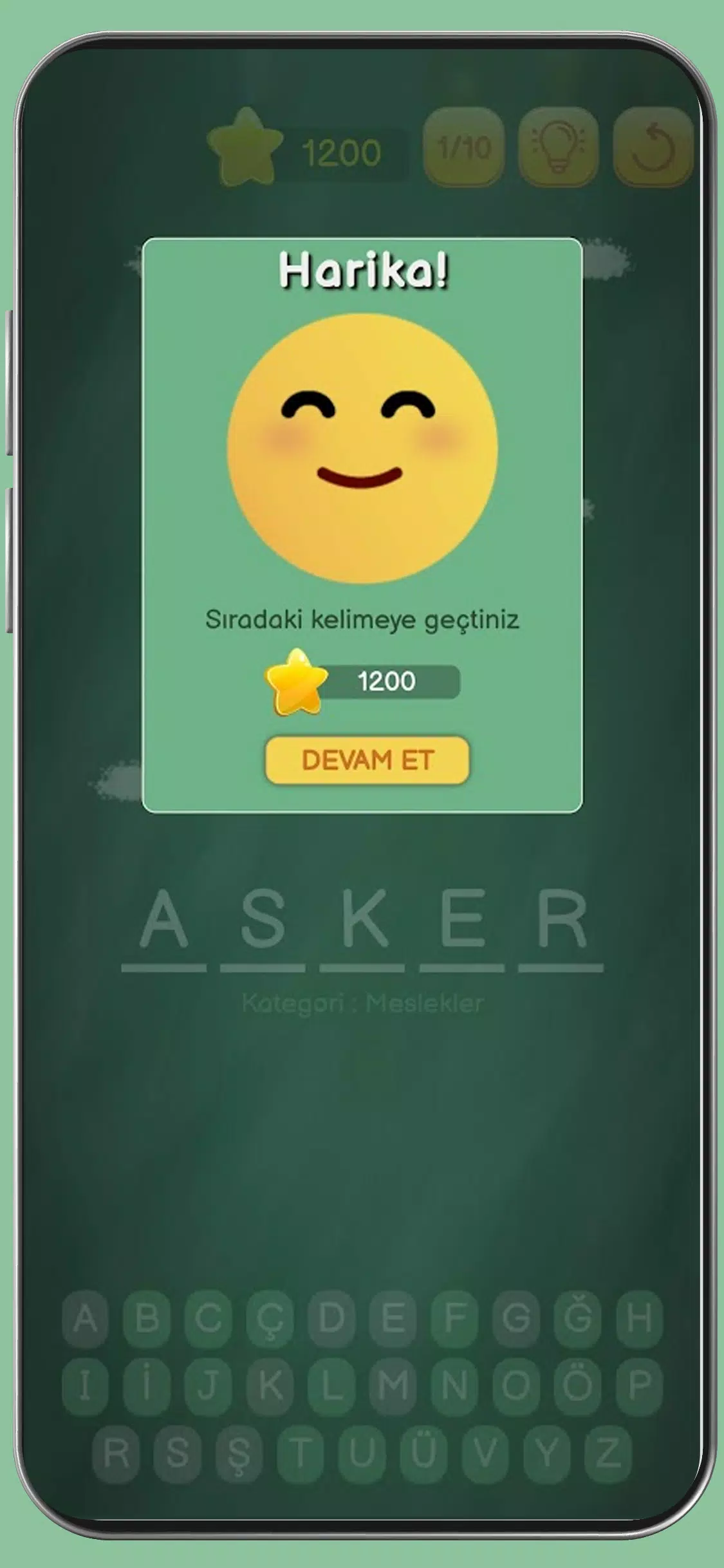
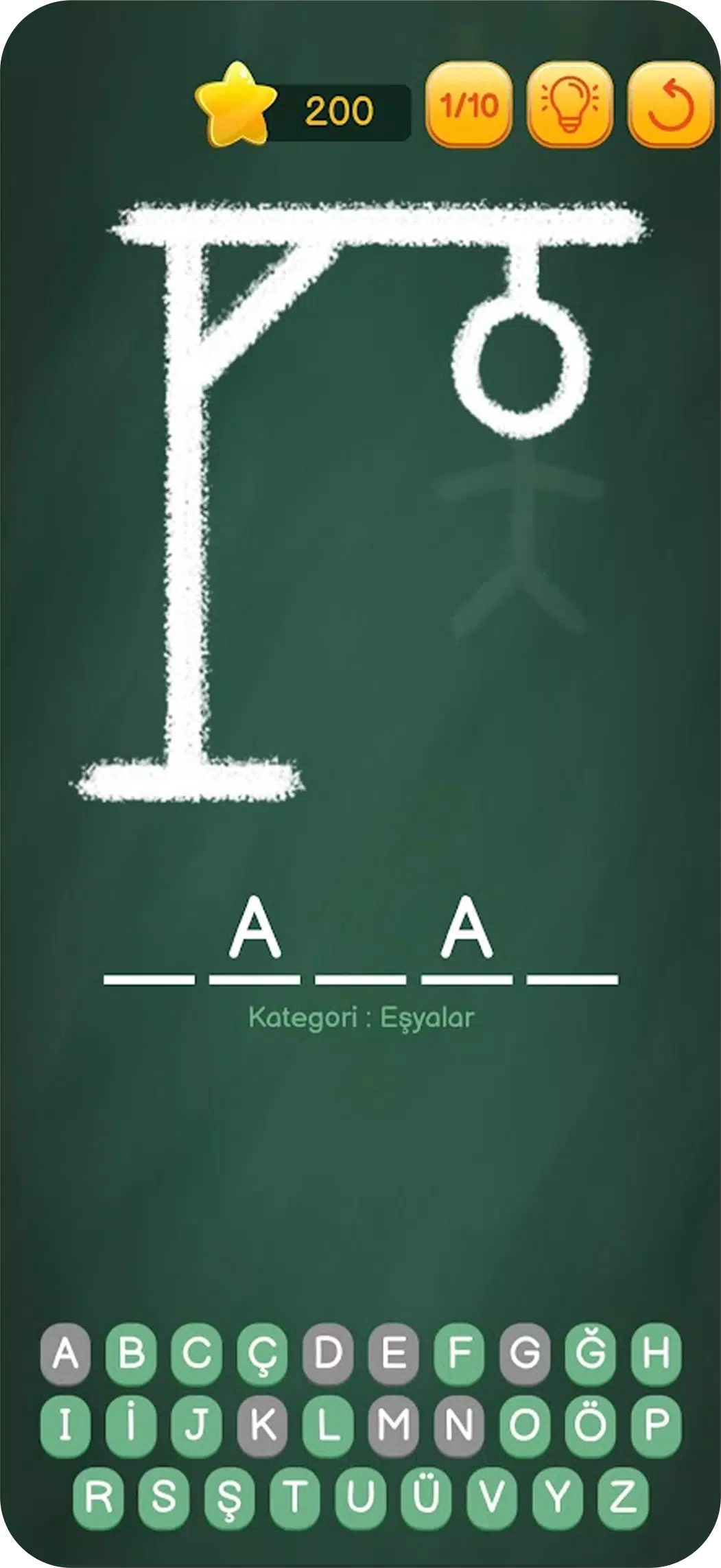
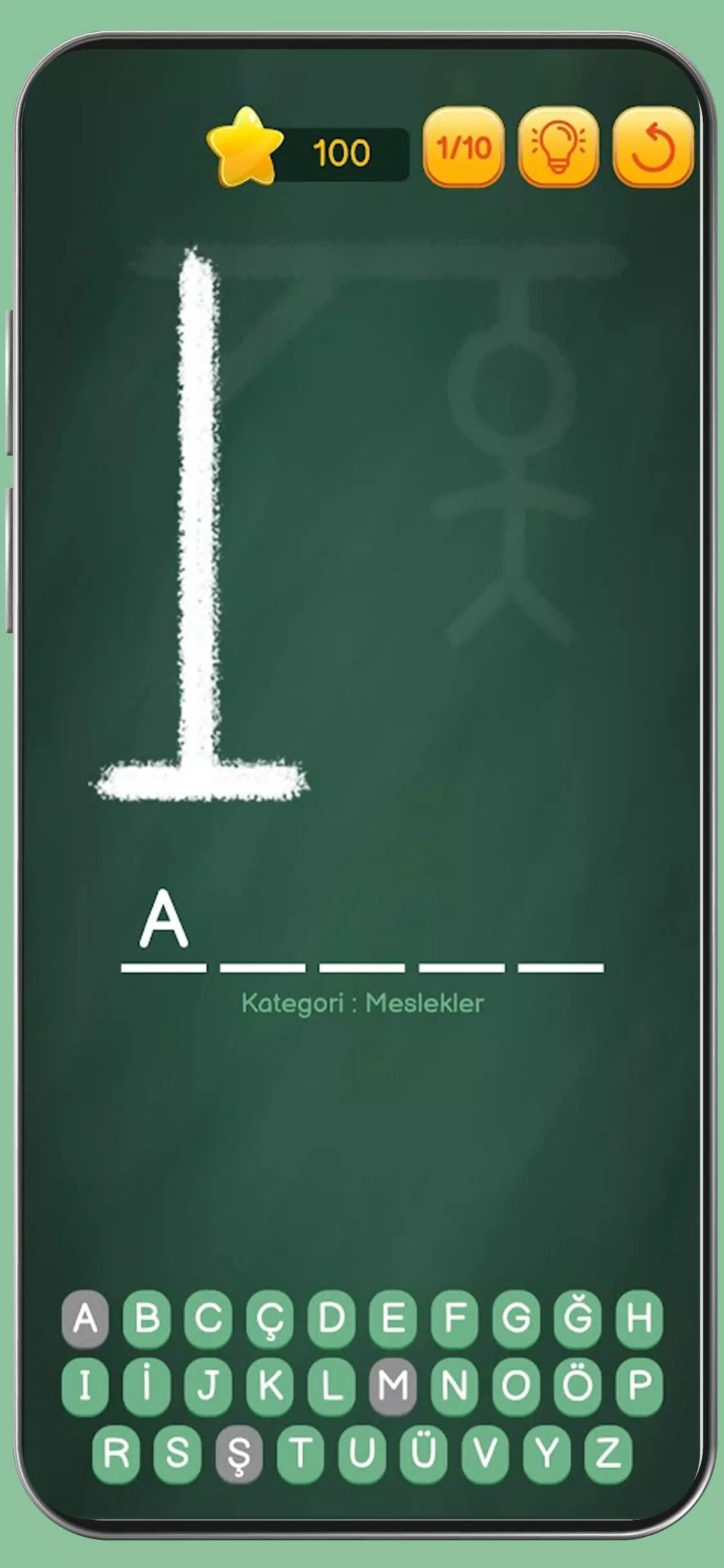
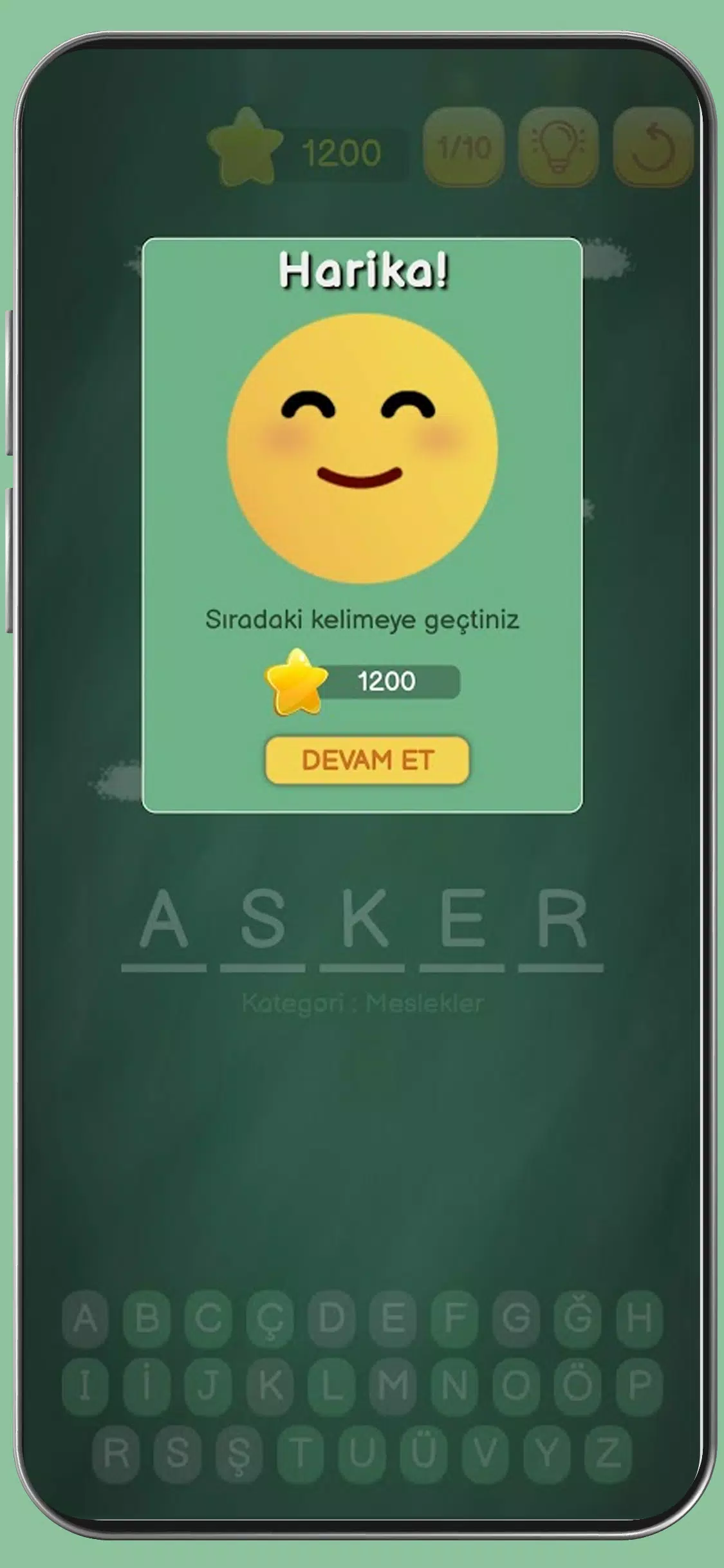
The gameplay follows traditional hangman rules adapted for mobile: a single hidden word appears on the screen and you tap letters on an on-screen keyboard to reveal matches. Correct letters fill in the word while incorrect guesses advance a simple visual indicator that shows remaining attempts. Words are organized into categories that range from very common everyday vocabulary to less familiar terms, which creates a gentle, continuous difficulty curve rather than abrupt jumps between levels. Rounds are intentionally short so you can play several in a row or pick up the app for one focused challenge during a spare moment.
Controls and User Experience
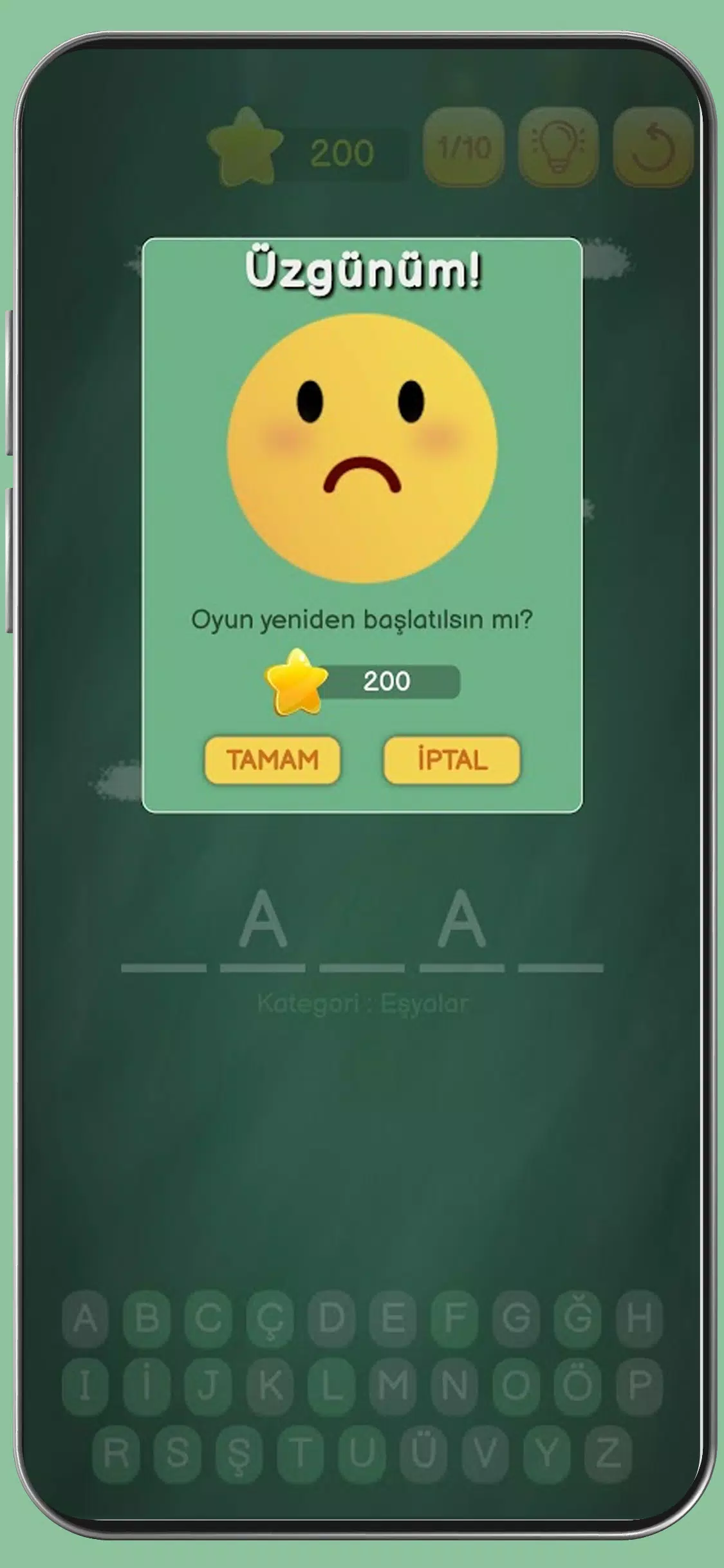
Controls are deliberately straightforward to keep the focus on puzzle solving. Tap a letter to make a guess, use the round control to start a new game, and watch immediate visual feedback for correct and incorrect choices. The keyboard layout is optimized for one-handed use and the most common letters are easy to reach. Visual cues are minimal but clear, ensuring you spend attention on deduction rather than navigating menus. New players can understand the interface within seconds and begin improving their performance through repeated play.
Progression and Challenge Systems
Progression in Adam Asmaca is driven by content and exposure to varied words. As you play more rounds within a category, you will naturally encounter increasingly challenging vocabulary, helping to build word recognition over time. There are no complicated leveling mechanics or in-game currencies; instead, the challenge comes from category selection and the breadth of the word pools. This approach keeps the experience approachable for casual users while providing measurable improvement for learners who use the app regularly.
Visual Style and Customization
The app uses a restrained visual style that prioritizes legibility and quick comprehension. High-contrast text, clear category icons, and a modest hangman illustration keep the screen uncluttered. A compact settings menu allows small but meaningful adjustments—choose a larger font, toggle letter outlines, or select a color scheme with higher contrast for better readability. These customization options make it easy to tailor the display for longer sessions, different lighting conditions, or varied screen sizes without introducing distracting animations.
Accessibility, Offline Play, and Performance
Adam Asmaca is lightweight and optimized to run smoothly across a wide range of Android devices. The game does not require a continuous internet connection, so rounds can be played offline during commutes or in areas without reliable service. Accessibility considerations include legible typography, clear controls, and contrast options that support users with visual sensitivities. Because the app avoids resource-heavy effects and background services, it conserves battery and uses minimal storage while still providing a responsive experience.
Replay Value and Use Cases
Short sessions, multiple categories, and hundreds of words combine to create high replay value without complex progression screens. Players can use Adam Asmaca as a casual pastime, a lightweight tool for language practice, or a simple icebreaker in educational settings. Randomized draws from category pools ensure that repeated sessions remain varied, and the single-player format keeps interactions low-pressure for users who prefer solo puzzles. The game works equally well for quick mental warm-ups or structured practice periods.
Privacy and Data Handling
The app includes an in-app privacy policy accessible from the settings menu that clearly explains data handling and storage. Because Adam Asmaca is designed for offline, single-player play, it minimizes the need for personal data collection and focuses on the puzzle experience rather than account management or online features. Review the privacy policy in settings to see what, if any, data is collected and how it is used; the default behavior preserves local play and limits external connections unless you explicitly enable them in the options.