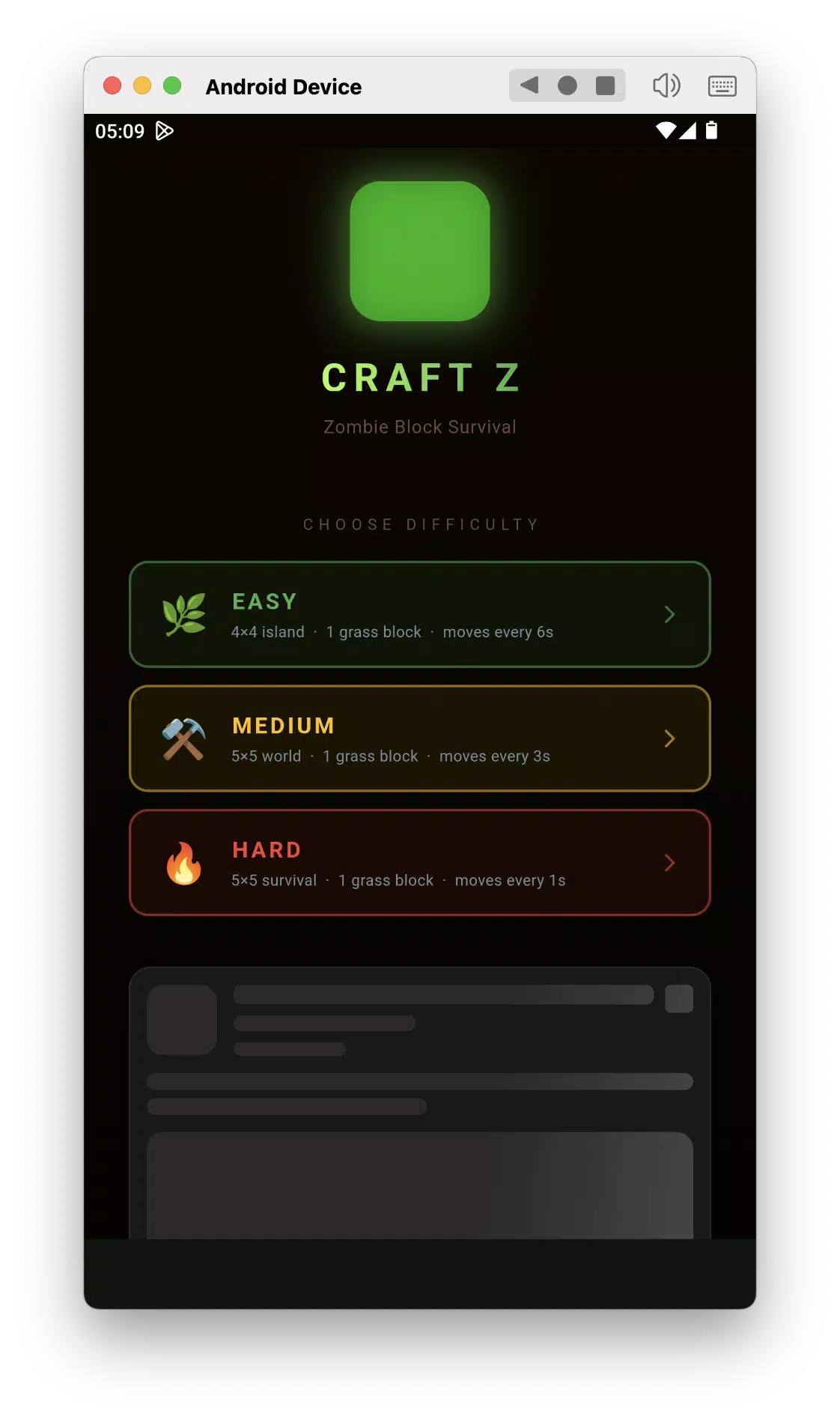
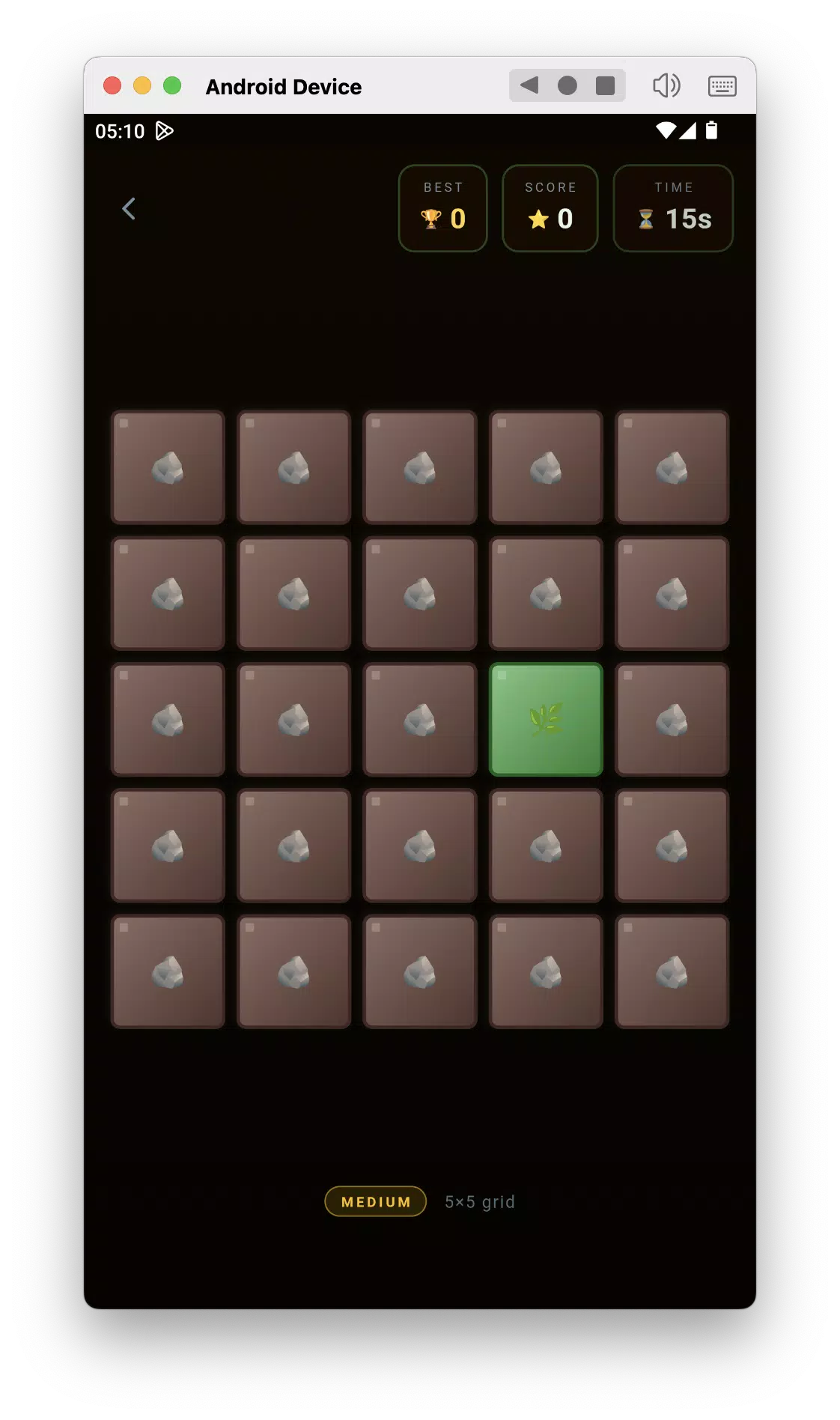

Craft Z: Sandbox Survival places you into short, intense arcade rounds where pixelated, Minecraft-style grass blocks appear in a changing grid and your goal is to tap the correct green blocks before the timer runs out. The game is tuned for quick reflex challenges and repeatable runs, offering three difficulty tiers—Easy, Medium, Hard—that let casual players relax while letting more focused users push for faster reaction times and higher scores. Its simple premise makes the learning curve gentle, while randomized block patterns and accelerating pace keep each session fresh.
Key features
The feature set is focused and practical: smooth, responsive touch controls optimized for fast tapping; clean, modern interface elements that emphasize the play area; three clearly labeled difficulty settings to match skill and mood; dynamically changing block patterns so no two rounds feel identical; and instant score feedback with a quick restart option to encourage repeated attempts. Craft Z: Sandbox Survival also highlights short session lengths, making it an easy pick-up-and-play title for moments when you have just a minute or two to spare.
Gameplay mechanics
Gameplay centers on identifying and tapping the correct green grass blocks while avoiding incorrect taps that end the round. Each level is presented as a timed grid whose contents shuffle or change according to the chosen difficulty, forcing players to scan, decide, and act rapidly. Accuracy and timing matter more than complex inputs: a single misplaced tap will typically conclude a run, while correct chains of taps build score and rhythm. The balance between reaction speed and steady focus is the core challenge.
Controls and user experience
Controls are strictly touch-based and designed to feel immediate and reliable so that rapid sequences register accurately. The interface minimizes clutter around the play field to reduce accidental taps and to keep visual attention on block patterns. Audio cues and simple visual feedback help confirm successful hits, while the quick game-over screen and restart flow encourage trying again without delay. These design choices aim to lower frustration during fast rounds and to keep the experience snappy.
Progression and replay value
Progression is measured through score tracking and personal bests rather than linear levels, so improvement is driven by practice and refinement of reflexes. Players advance their own performance by repeatedly attempting runs at different difficulties, learning common patterns and shaving reaction time. Craft Z: Sandbox Survival rewards consistency of play: short, high-intensity sessions make it easy to squeeze in multiple attempts, and the desire to top personal records provides long-term replay value without complex progression systems.
Visual style and accessibility
The aesthetic relies on blocky, pixel-inspired graphics with clear color coding that separates target blocks from distractions. The minimalist HUD and clean typography keep information legible on small screens. Adjustable difficulty modes inherently provide a simple accessibility pathway for new or mobility-impaired players who need more time to respond; combined with tactile-friendly touch zones and unobtrusive UI, the title aims to be approachable for a wide audience.
Offline play and performance
As a single-player arcade experience, the game runs fully offline and is suitable for casual play without a network connection. Lightweight assets and straightforward rendering keep performance smooth on a range of devices, helping maintain consistent frame timing and tap responsiveness during fast rounds. This makes the app ideal for travel, short waits, or situations where connectivity is limited.
Challenge systems, tips, and limitations
Challenges come from timing windows that narrow at higher difficulties and from the randomized nature of block placement; players can expect increasing speed and more frequent pattern changes as they push into harder modes. Practical tips include warming up on Easy to find a rhythm, focusing on small areas of the grid to reduce visual scanning time, and using the quick restart to run frequent short practice sessions. Known limitations are inherent to the format: core gameplay is intentionally simple and may feel repetitive over prolonged play, and the time-pressured rounds can be stressful for those who prefer leisurely pacing. Short breaks and varied difficulty selection can help maintain enjoyment over longer play periods.