
PMII Swan

| Package ID: | |
|---|---|
| Latest Version: | v3.0.4 |
| Latest update: | May 20, 2026 12:08:04 |
| Developer: | is software |
| Requirements: | Android |
| Category: | Finance |
| Size: | 36.57 MB |
| Tags: | Office Navigation Date |
Rating :4.5
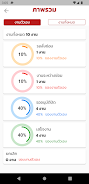
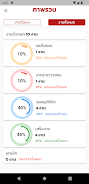
PMII Swan is a productivity app designed to help teams and individuals streamline task coordination, reduce repetitive steps, and lower operational costs through clearer workflows and time tracking. PMII Swan combines overview dashboards with detailed item views so users can quickly see what matters, assign responsibilities, and monitor progress without switching between multiple tools. Built for people who manage recurring processes or small projects, the app focuses on making routine work predictable and discoverable so teams can spend less time organizing and more time doing.
Key features and practical uses
The app offers a set of core utilities that make contacting, coordinating, and tracking tasks more convenient while keeping the learning curve low. In everyday use PMII Swan surfaces an at-a-glance overview of active work items, lets users drill into task details, and records time spent so managers and contributors can understand effort distribution. These features are suitable for standard office workflows, small operations, and individual productivity routines where reducing handoffs and clarifying next steps matters most. The description of features emphasizes transparency: who is responsible, what the next action is, and how long tasks are taking in practice.
Controls and user interaction
User interaction is straightforward and optimized for mobile touch screens and tablet use. Basic controls include creating, editing, and tagging tasks, assigning owners, and adjusting planned durations with simple gestures and form fields. Filters and quick-search let you surface work items by priority, deadline, or owner, and inline comments or notes allow rapid contextual updates without leaving the task view. For editors and managers the interface supports batch updates so repetitive edits can be applied across multiple tasks, reducing time spent on administrative upkeep.
Progression systems and task structure
PMII Swan models work as a series of stages that mirror common operational flows: intake, in progress, review, and completion. Progression is flexible; teams can adapt stages to match their internal process and use templates to standardize repetitive task sequences. Templates accelerate onboarding of new projects or recurring routines by pre-filling fields, estimated durations, and typical assignees. This progression system helps teams measure throughput and identify bottlenecks by comparing expected versus actual time at each stage.
Visual style, views, and customization
The visual design favors clarity and minimalism to keep attention on tasks rather than decorative elements. PMII Swan provides multiple views—list, card, and timeline-like overviews—so users can choose the representation that suits their workflow. Color-coding and tag-based organization allow quick visual sorting, and display preferences can be adjusted to emphasize deadlines, owners, or time estimates. Small customization options let teams align the app with their existing terminology and reduce cognitive friction when switching between work contexts.
Time calculation, control features, and challenge systems
Central to PMII Swan is the ability to calculate and control time spent on tasks. Built-in timers and manual entry options let individuals record work duration, while summary reports aggregate time by project, owner, or task type. These reports are useful for spotting inefficiencies, testing process changes, and making resource decisions based on measured effort. The app also supports challenge-style goals such as weekly completion targets or reduction-of-steps experiments, where teams can set measurable objectives and track progress over time to encourage continuous improvement.
User experience, accessibility, and offline use
Accessibility considerations include readable type sizes, high-contrast elements, and straightforward navigation to accommodate a range of users and devices. PMII Swan is designed to be resilient in environments with intermittent connectivity: core task lists and recent changes remain accessible offline and synchronize when the device reconnects, allowing field workers and remote contributors to continue updating tasks without data loss. These behaviors support consistent use in varied conditions and improve the reliability of time calculations and status updates.
Replay value and long-term utility
Because PMII Swan focuses on reducing friction in routine work, its long-term value comes from repeated use rather than one-off interactions. Templates, historical time data, and the ability to compare periods offer meaningful insights over weeks and months, increasing the app’s usefulness as processes mature. Regular use can reveal process improvements that compound over time, turning small time savings on individual tasks into measurable operational gains.
Advantages and considerations
PMII Swan helps reduce costs by lowering the time required to complete tasks, clarifies workflows to prevent unnecessary steps, and simplifies communication across linked tasks. It is not a complete replacement for all manual work: some tasks require human judgment and occasional hands-on oversight, and accurate time tracking depends on consistent input and initial configuration. Teams that commit to an initial setup and modest discipline will find PMII Swan becomes a practical tool for making day-to-day operations more efficient and predictable.