




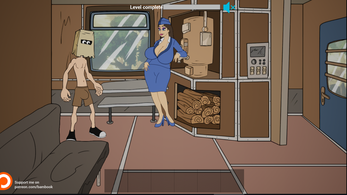

Fuckerman: Train is a story-driven simulation that places you aboard an uncanny, ever-moving train where each carriage presents a self-contained vignette, a new character to meet, and consequential choices to make. In Fuckerman: Train the emphasis is on slow-burning narrative and character interaction rather than action-oriented mechanics; decisions shape dialogue, relationships, and the discovery of hidden scenes across multiple playthroughs. The tone blends dry humor with moments of tension and curiosity, and the game rewards patient exploration and attentive reading more than reflexes.
Overview
The game is structured around a sequence of carriages, each functioning like a short chapter with a focused story arc and a small cast of characters. Progress is narrative-based: you move from compartment to compartment as events unfold, unlock side encounters, and reveal branching storylines based on how you respond in conversations. Rather than traditional level clearing or score chasing, advancement is measured by the scenes you unlock and the relationships that evolve. This approach keeps the player oriented on consequence and discovery, making the experience feel like an interactive novella set on rails.
Gameplay and Mechanics
Core gameplay revolves around exploration, dialogue choices, and light strategic decisions that influence how scenes play out. Interactions are presented through conversation nodes and contextual choices that can alter a character's attitude, trigger alternative events, or reveal secret sequences hidden deeper in the narrative. There are occasional inventory-like elements where items encountered in one carriage can affect options in another, encouraging players to remember details and experiment with different approaches during replays. The pacing is deliberately moderate: moments of quiet observation are interleaved with pivotal decision points where the consequences are meaningful rather than immediate.
Controls and Interface
Controls are designed for touch devices with a simple, intuitive layout: tap to advance text, choose dialogue options with a single tap, and swipe sideways to move between accessible compartments when the story allows it. A clean HUD keeps the focus on writing and art; dialogue choices are clearly labeled and contextual explanations appear when an option could have a long-term effect. The interface includes text speed settings, an auto-advance mode for hands-free reading, and a replay cue that highlights branches you have not yet visited. These small quality-of-life features help make longer sessions comfortable and accessible.
Progression and Structure
Progress in Fuckerman: Train is non-linear: while there is a main throughline that moves the train forward, many outcomes depend on which side conversations you pursue and which scenes you unlock. The game tracks narrative flags that determine how later interactions are framed, so early decisions can open or close paths in subsequent carriages. Checkpoints are scene-based rather than time-based, allowing you to return to specific moments to explore alternate choices. A modest unlock system rewards exploration by revealing supplementary content—hidden dialogues, character backstories, and alternate scene variations—without gating the central experience behind artificial difficulty.
Visual Style and Audio
The visual presentation is stylized and atmospheric, leaning into surreal design and character silhouettes that emphasize mood over hyper-realism. Art direction uses color and composition to differentiate carriages and to signal shifts in tone, from whimsical to unsettling. Subtle animations and parallax backgrounds create the sensation of motion as the train travels through strange landscapes. Sound design supports immersion with a restrained soundtrack, ambient noise, and terse audio cues during pivotal decisions; none of these elements compete with the writing, but they help inform the emotional context of each scene.
Customization and Accessibility
While Fuckerman: Train centers on narrative choices rather than character loadouts, players can influence the protagonist's tone and responses through dialogue options, effectively customizing the way the story is told. Accessibility features include adjustable text size, contrast-friendly UI options, and an optional narration pacing control for readers who prefer slower or faster presentation. The game is playable offline after installation, enabling uninterrupted single-player sessions without requiring a network connection.
Replayability and Challenge
The primary source of replay value is branching narrative structure: multiple endings, alternative scenes, and a variety of character reactions encourage players to revisit the train to see how different choices reshape the story. Challenges are narrative in nature—deciding which confidences to share, balancing competing loyalties, and piecing together information across carriages—rather than mechanical tests of speed or accuracy. For players who enjoy literary games and branching fiction, the layered outcomes and hidden content present ongoing incentives to explore new paths.
Who Should Play
Fuckerman: Train is best suited to players who appreciate dialogue-driven adventures, slow-burn storytelling, and games where atmosphere and consequence take precedence over combat or fast action. If you enjoy thoughtful pacing, character-focused vignettes, and exploring how small decisions ripple outward, this title offers a compact yet richly textured experience that invites multiple sessions to fully uncover its narrative possibilities.