
The You Testament drops players into a bold reimagining of Gospel-era stories where you can relive or rewrite more than fifty biblical scenes through branching, choice-driven gameplay. This narrative-focused RPG places you alongside a prophet across some thirty historically inspired locations, introduces roughly two hundred distinct characters, and offers up to twenty-four unlockable abilities that can be used for compassionate, pragmatic, or disruptive strategies. The full experience is free to play, supports on-the-fly character recreation, and includes a searchable in-game guide plus configurable controls so players can explore moral decisions and tactical challenges at their own pace.
Key Features
The You Testament centers on branching narrative design: each scene is written to allow multiple believable outcomes, so player choices matter beyond moment-to-moment rewards. Expect alternating paths that change relationships, unlock new encounters, or redirect entire story threads. Rather than a single play-through, the structure encourages deliberate experimentation, letting you discover how small choices accumulate into meaningful consequences across the campaign.
Characters in the game are built to feel grounded and varied. Approximately two hundred NPCs carry their own loyalties, personal goals, and shifting dialogue trees, and their responses reflect not only your dialogue but also how you use abilities in interactions. Abilities are intentionally versatile; up to twenty-four distinct skills provide tactical options in combat and social encounters alike, and many are useful in both constructive and chaotic approaches. The combination of character loyalties and ability effects creates emergent situations that reward planning and adaptability.
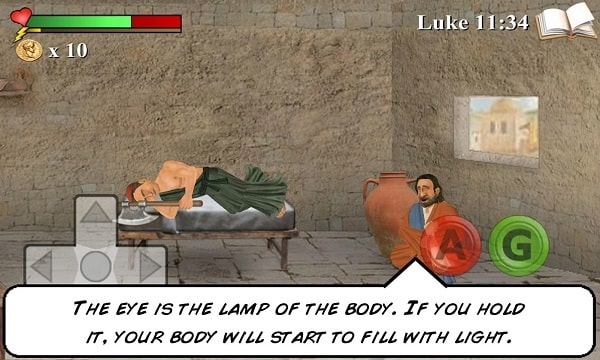
Controls and accessibility were designed for broad device compatibility. Core actions—attack, grapple, pick up, use, merge, and meditate—have explicit control mappings that you can remap to match your preferred layout. Performance options let you tune graphics and frame pacing for older hardware, and the in-game guide offers context-sensitive tips when you first encounter mechanics. These systems are intended to reduce friction so players spend more time exploring the story and less time wrestling with input or performance issues.
Gameplay and Progression
Progression in The You Testament balances narrative advancement with mechanical growth. As you move from location to location, milestones in the story unlock new abilities and narrative branches rather than relying solely on traditional leveling. Unlocks may arrive after key encounters, through the completion of side episodes, or as rewards for creative problem solving. The on-the-fly character recreation feature allows you to retune your approach between scenes, enabling different builds without restarting an entire campaign.
Level structure is organized around thirty historically inspired regions that function like chapters. Each region contains multiple scenes, some short and others more elaborate, that interconnect through recurring characters and thematic threads. This tiered approach helps keep pacing varied: smaller encounters teach or test mechanics, while larger sequences combine exploration, dialogue, and tactical challenges. Save points and an autosave system preserve your progress and let you experiment safely with difficult choices.
Combat and challenge systems are designed to be tactical rather than reflex-only. Encounters often require you to mix abilities, leverage the environment, or influence NPC loyalties to gain advantage. Some challenges present moral dilemmas with mechanical consequences, so choosing a nonviolent route may change available abilities or future options. Surreal or unexpected outcomes are part of the design, intentionally encouraging players to rethink assumptions and discover novel strategies.
Customization, Visuals, and Replay Value
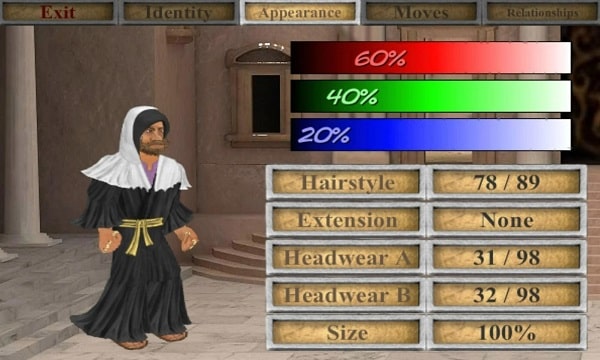
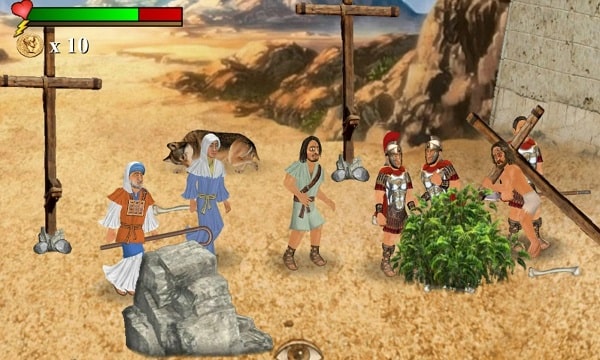
Customization covers both visual and gameplay preferences. Character appearance and certain personalization options are available to make your avatar distinct, while in-game choices shape the world state and the responses of major characters. The visual style blends historically inspired environments with stylistic touches that emphasize narrative tone rather than strict historical simulation, which supports both serious and surreal storytelling moments.
Replay value is a core aim: branching outcomes, unlockable abilities, and a wide cast of characters create strong incentives to replay scenes with alternate approaches. Optional personalization settings allow you to preserve or reset broader changes between runs so you can experiment with continuity or start fresh. Because scenes are modular and choices ripple across chapters, each new playthrough can feel strategically and narratively different.
For players who value accessibility and offline play, The You Testament runs as a single-player experience without required online services, so you can play in offline mode and continue your campaign wherever you are. The game also includes configurable difficulty and assist options to help newcomers learn complex systems while still presenting deeper tactical challenges for experienced players.
Technical support and the in-game manual are available if you encounter issues or want to explore advanced mechanics. The You Testament is presented as a full, free-to-play single-player package with all core content included, giving players the freedom to explore its moral and tactical possibilities at their own pace.