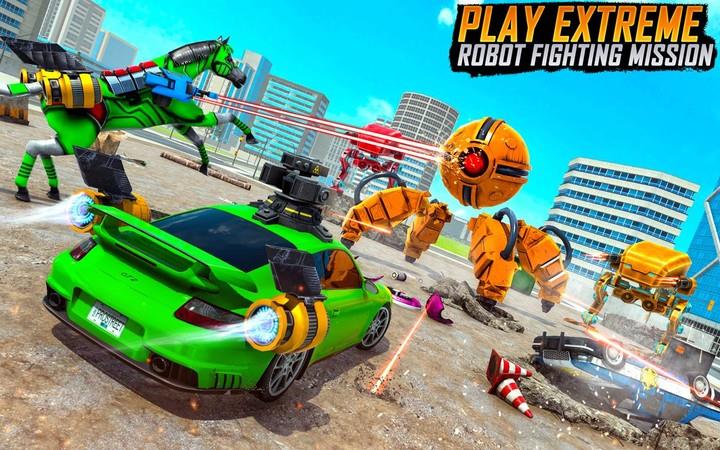
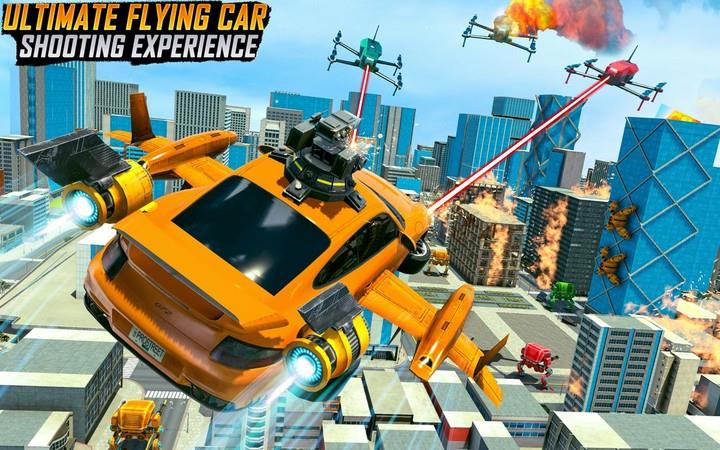
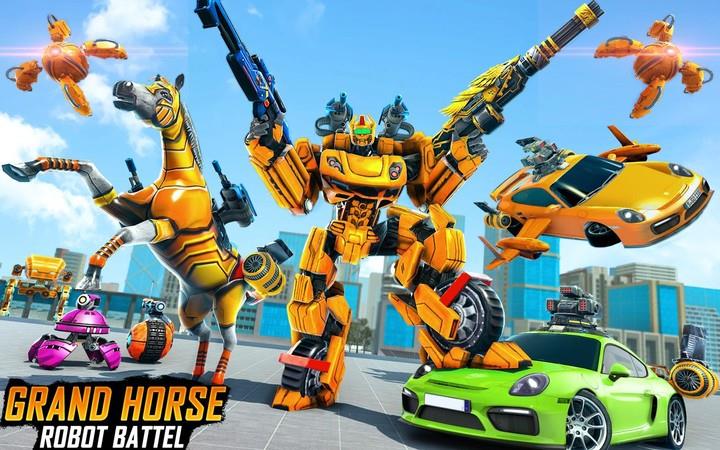

Dino Transform Robot Games places you in a single-player action experience where you control a powerful dinosaur that can shift into a robotic vehicle to tackle missions across an open futuristic city. Dino Transform Robot Games opens with a practical tutorial and immediate transformation mechanics so new players can feel the rhythm of switching between beast and vehicle quickly, and the editor overview below describes what you can expect from the APK release in clear, search-friendly detail. This introduction highlights core gameplay, controls, progression, visuals, and user-settings without overstating features.
Key Features
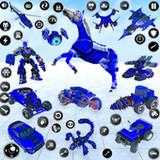
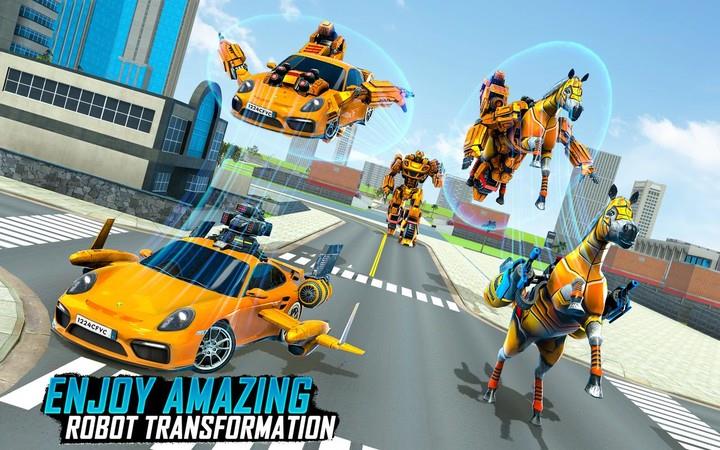
The core loop centers on seamless transformable combat and driving. Switching between dinosaur and vehicle forms changes your tactical options: melee reach, charge attacks, and close-quarters crowd control in dino mode; speed, mounted weaponry, and long-distance approaches in vehicle mode. Multiple robot frames and shell designs provide varied movement and combat balances so encounters feel different as you unlock new forms. Missions are staged within an explorable cityscape that supports both aggressive engagements and tactical repositioning, with HUD elements focused on clarity so objectives, health, and transformation state are always readable during fast action.
Gameplay Mechanics
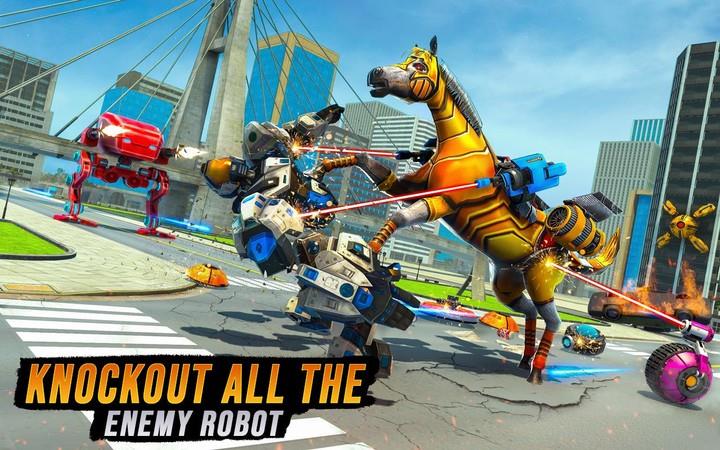
Gameplay emphasizes fluid transitions and predictable responsiveness. In dinosaur form you rely on heavier melee combos, short charged strikes, and area-close effects that reward positioning and timing. Vehicle form emphasizes momentum, ranged fire, and the ability to traverse larger map distances quickly. Missions combine open-roam objectives, escort tasks, and timed challenges that encourage switching forms mid-encounter; for example, clearing a patrol in narrow alleys favors dino tactics while sprinting down wide boulevards rewards vehicle precision. Collision and impact feedback are tuned to feel satisfying on touchscreens, and enemy design encourages adapting loadouts to match sector layouts.
Controls and User Experience
Controls are tailored for touchscreen play, prioritizing responsiveness with a small set of on-screen buttons and gesture-friendly inputs. Movement, transformation, primary attack, and a context-sensitive action button are placed for easy reach, with options to customize sensitivity and button layout so the interface fits different hand sizes and play styles. The UI scales across devices, keeping core information visible without clutter. Tutorials introduce mechanics gradually and include optional tooltips so players can skip familiar explanations or revisit them later from the settings menu.
Progression and Upgrades
Progression is designed around a clear single-player path that does not rely on online connectivity. Completing missions and optional challenges grants resources used to unlock new forms, weapon attachments, and cosmetic variants. Upgrade menus explain the statistical effects and recommended uses for each module, helping you decide whether to prioritize mobility, damage, or defense. Early missions teach mechanics through paced objectives while later tasks require mastering timing, transformation combos, and module synergies to succeed.
Visual Style and Audio
The visual approach favors readable 3D graphics with a clean, futuristic aesthetic that supports fast action. Lighting, particle work for weapon effects, and distinct transformation animations emphasize each form’s identity without overwhelming the scene. Sound design reinforces gameplay cues — engine notes, roars, transformation swells, and weapon impacts provide useful audio feedback so you can perceive state changes and incoming threats even with the camera pulled back for situational awareness.
Level Structure and Mission Variety
Levels are organized as sectors within a single open robotic city that invite exploration as well as objective completion. Short mission hubs let you select tasks of varying difficulty and replay missions to improve performance. Encounter design deliberately mixes narrow alley skirmishes that favor dinosaur tactics with wide avenues better suited to vehicle engagements, so each sector feels distinct while contributing to a coherent city identity. Optional side objectives and time-based challenges add variety without requiring long grind sessions.
Customization and Personalization
Customization covers both cosmetic and tactical options. Visual skins, paint schemes, and lighting choices let you personalize appearance, while weapon loadouts and module choices alter combat behavior and survivability. Customization is presented in a straightforward in-game menu so you can experiment between missions and tailor builds to particular sectors or challenges without navigating complex submenus.
Replay Value and Challenge Systems
Replayability comes from multiple mission objectives, optional time and efficiency challenges, and the satisfaction of refining transformation combos and loadouts. Adjustable difficulty settings let players tailor challenge levels, and optional performance goals encourage replay to earn better rewards. These systems reward practice and strategy rather than prolonged monotony, offering measurable improvement paths for players who enjoy mastering mechanics.
Accessibility and Offline Play
The APK supports offline-friendly play so the main campaign is accessible without an internet connection, and a range of accessibility options accommodate different needs: remappable controls, adjustable contrast, scalable UI, and audio toggles. The overall design aims for quick pickup-and-play sessions while still offering deeper mechanical systems for players who want to invest time refining their approach. With its mix of transformation combat, vehicle traversal, and clear progression, Dino Transform Robot Games delivers a focused single-player experience for mobile players looking for action and mastery.