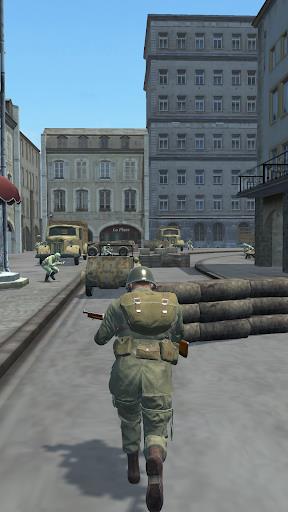
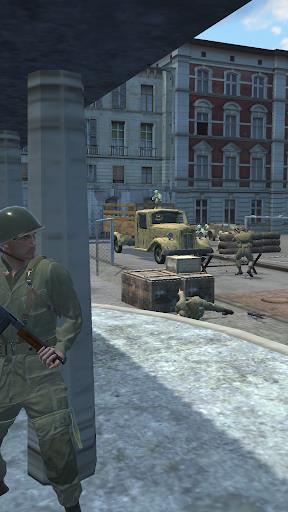
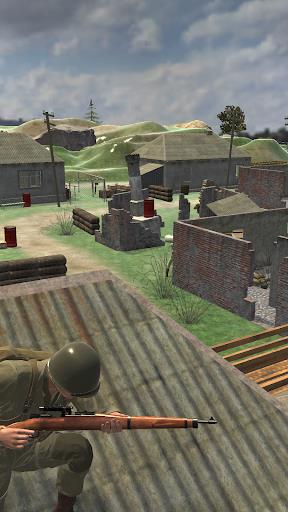
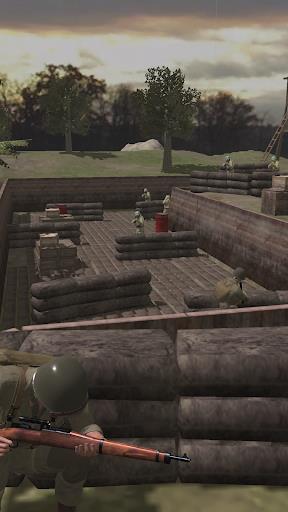

Frontline Heroes places you in a single-player, story-driven World War II shooter built for mobile devices, delivering compact, cinematic missions that recreate tense landings, muddy trench fighting, and defensive stand-offs across Europe. Frontline Heroes emphasizes atmosphere and tactical choices over large open-world maps: each scenario is presented as a focused war scene with clear objectives, checkpointed progression, and period-accurate weaponry that rewards situational awareness and deliberate play. The introduction mission pacing and mission briefings set expectations early, so new players can jump straight into the campaign while veterans can pursue tougher settings and optional challenges.
Gameplay and Level Structure
The campaign is arranged into distinct mission types — amphibious landings, close-quarters trench encounters, and defended strongpoints — each built around a few scripted set pieces and room for emergent combat. Levels are mission-centric rather than sandbox, with objectives such as securing beachheads, clearing trench lines, escorting injured squad members to extraction, and holding defensive perimeters until relief arrives. Designers focused on short, intense chapters that present varied pacing: an infiltration sequence might require stealth and patience, followed by a chaotic push under artillery fire. Alternate routes and destructible cover create tactical choices and encourage experimentation with different loadouts.
Mechanics and Challenge Systems
Combat relies on conventional shooter mechanics adapted for touchscreens: use cover to mitigate incoming fire, manage tactical reloads, employ grenades to dislodge enemies, and switch weapons to handle different ranges. Enemy behavior changes with difficulty: higher tiers increase squad coordination and flanking attempts while reducing on-map resources. Optional mission modifiers can be enabled to alter enemy placements, reduce ammo spawns, or limit med supplies for a steeper challenge without affecting campaign save progression. A balanced checkpoint system and intentional ammo placement keep frustration low but preserve the tension of carefully managed firefights.
Controls and User Experience
Controls are optimized for mobile with several configurable options so players can tailor input to their comfort. Choose between larger touch buttons for accessibility or a thumb-stick layout for finer control; sensitivity sliders and aim-assist levels help bridge the gap between casual and experienced shooters. HUD elements are repositionable to suit different screen sizes and hand positions, and menus and briefings are designed to be readable on phones and tablets. Contextual feedback such as hit indicators, suppression effects, and concise objective updates keep the interface informative without distracting from combat.
Progression and Customization
Progression follows a chapter-style structure: completing missions unlocks the next scenario and expands access to an authentic arsenal of WWII firearms. Loadouts are customizable before each mission, allowing you to select primary and sidearms, attachments like scopes or silencers, and tactical grenades that shape your approach. Mission-specific challenges and in-game medals provide secondary goals that unlock cosmetic items and convenience options, encouraging replay of individual chapters rather than forcing repetition of long campaign stretches. Persistent progression focuses on player choice and customization rather than pay-to-win mechanics.
Visual Style and Audio Design
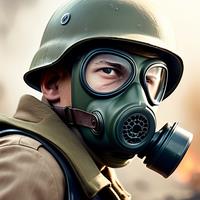
The visual presentation aims for a grounded, historically coherent look: muted color palettes, period-accurate uniforms, and weathered environments create an immersive sense of place rather than arcade brightness. Environmental effects such as mud, rain, smoke, and dynamic lighting are used to underline cinematic moments and influence visibility during assaults or defensive stands. Audio design prioritizes battlefield clarity with directional gunfire cues, ambient environmental sounds, and selective voice lines for mission-critical updates, all tuned to support solo storytelling and improve tactical decision-making.
Replay Value and Mission Variety
Replayability is built into mission design through optional objectives, branching approaches, and difficulty modifiers that change enemy behavior and resource availability. Many maps contain alternate routes, hidden positions, and tactical flanks that reward exploration and different loadout choices. If you enjoy mastering a particular map, the chapter layout makes it easy to replay favorite missions without restarting large portions of the campaign, and mission-specific challenges provide focused goals for repeat sessions.
Accessibility and Offline Play
Frontline Heroes is designed primarily as an offline single-player experience so once downloaded it can be played without a persistent internet connection, which is useful for travel and limited connectivity. Accessibility options include subtitle toggles, control remapping, adjustable difficulty, sensitivity sliders, and color-contrast settings to accommodate a broad range of players and devices. These settings aim to make the campaign approachable while preserving the intended tactical challenge across different hardware.
What to Expect
Overall, Frontline Heroes delivers a tightly directed WWII single-player shooter experience with deliberate mission design, mobile-first controls, and a progression loop centered on unlocking and customizing authentic weaponry. The game favors staged, cinematic encounters and tactical decision-making over open-ended multiplayer systems, offering contained, replayable chapters and accessibility options that let you tailor difficulty and input to your preferred play style. Expect focused storytelling, varied mission types, and modular challenges that extend playtime without changing the campaign core.