
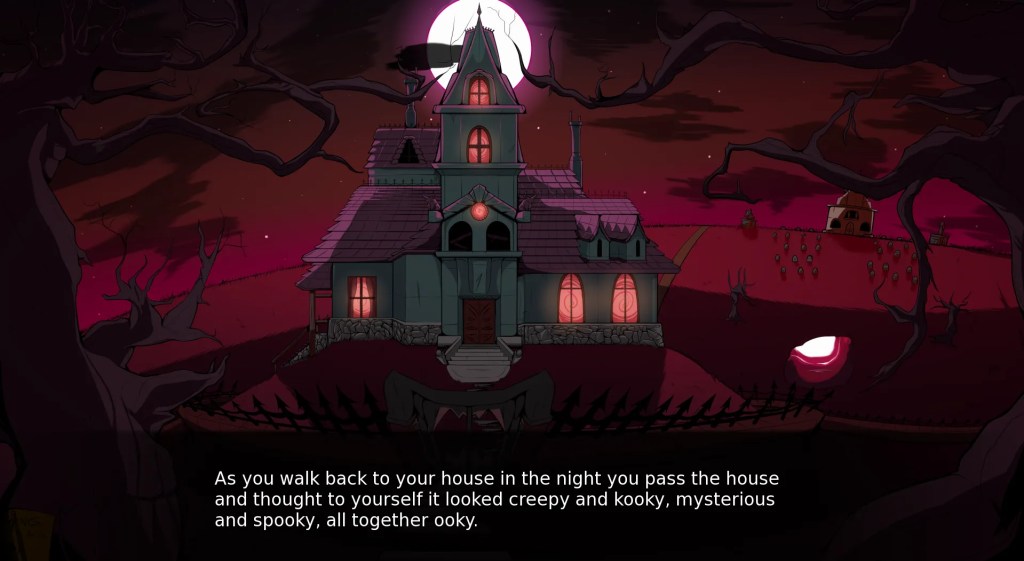

Creepy house places players in the role of an adult newcomer who becomes intrigued by a single, mysterious residence after relocating to a small town. Creepy house blends exploratory gameplay with branching narrative choices and mature, atmospheric encounters designed for players aged 18 and over. The experience emphasizes mood, character interaction and short, replayable story segments rather than complex mechanics, and recent updates add practical navigation tools and more scene variety to the house.
Gameplay and controls
The core loop centers on room-by-room exploration, conversational choices and item-based interaction. Navigation is touch-first: tap hotspots to investigate objects, swipe to pan static scenes, and select responses from clear dialogue prompts to steer relationships and unlock alternative outcomes. Interactions are scene-driven and bite-sized, making individual sessions easy to complete in short sittings. A lightweight checkpoint system saves progress between key scenes so you can pick up where you left off without replaying earlier content. Controls are intentionally simple to keep the focus on discovery and narrative pacing.
Progression and unlocks
Progression in Creepy house is unlocked through decisions, exploration milestones and collectible discovery. As you explore each themed room, new character interactions become available based on previous choices, and completing specific scene chains grants access to additional encounters and gallery items. Collectible artwork and themed images are tracked in an in-game gallery that records which pieces you have earned and which remain locked, offering a visible sense of advancement. The branching structure encourages replay to see alternate paths and to find all available artwork without requiring long play sessions.
Visual style and level structure
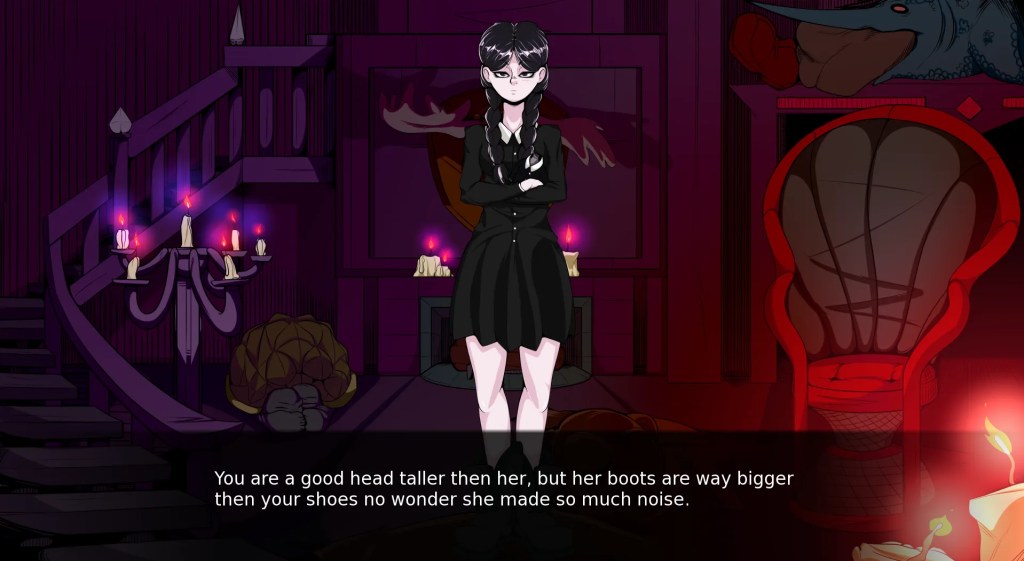
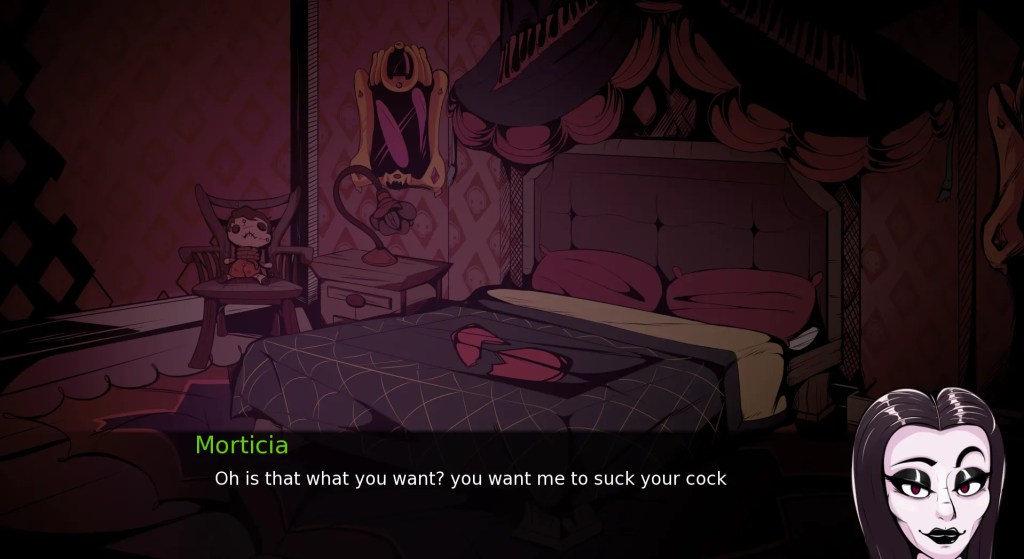
The game presents a gothic-inspired aesthetic with moody lighting, textured interiors and character designs that emphasize atmosphere over realism. The house itself is arranged as a series of distinct rooms and themed areas, each written and staged as a short narrative chapter. Scenes are focused and self-contained: a single visit typically unfolds into one or more character-driven encounters, then resolves while leaving threads that can be followed in later visits. This room-by-room structure helps guide exploration while supporting a strong visual identity throughout the title.
Customization, accessibility and offline play
Creepy house includes settings to tailor the experience to individual preferences. Adjustable text size and subtitle toggles improve readability, and audio sliders allow fine-grained control of music and dialogue levels. Content notices and an explicit-content toggle are provided to help players manage what appears during play sessions. The game is designed to be playable offline after installation so you can explore scenes and manage your gallery without a persistent internet connection. Basic assist options such as skip and replay for previously viewed scenes make it easier to revisit specific moments or to navigate branching content efficiently.
Replay value and challenge systems
Replay value is driven by branching interactions, collectible completion and hidden scene triggers. While Creepy house is not a puzzle-centric title, it does include exploration challenges such as discovering concealed hotspots, meeting conditions for alternate responses and sequencing encounters to unlock premium gallery items. These light challenge elements reward curiosity and careful reading of character cues rather than reflex-based gameplay, which supports multiple playthroughs to reveal the full set of content and artwork.
User experience and performance
The interface aims for clarity with a minimal HUD, readable dialogue boxes and a compact menu system for managing saves, gallery items and settings. The game performs smoothly on a range of devices and is optimized for short sessions—ideal for players who prefer episodic or scene-focused stories. Map overlay support, added in a recent update, helps you track explored areas and quick-jump to unlocked rooms, reducing tedium while maintaining the sense of discovery that defines the title.
Advantages and known limitations
Players interested in character-driven, atmospheric narratives will find Creepy house rewarding: the title emphasizes tone, intimate encounters and collectible progression. Its compact chapter structure makes it easy to dive in for brief sessions, and the gallery system provides clear goals for replay. Limitations include a relatively narrow scope compared with larger narrative games and the usual quirks of an early release version, such as occasional pacing rough edges or limited long-term content plans. The developer has issued incremental updates that address navigation and content expansion over time.
Version information
Version 0.9b introduces the in-game map overlay to aid navigation and adds two new interior scenes that expand character interaction options and room variety. These incremental updates focus on improving navigation, increasing scene variety and enriching collectible rewards as the title evolves. If you prefer atmospheric, choice-driven adventures with an adult focus and a clear collectible progression, Creepy house delivers a compact, controllable experience suitable for mature players.