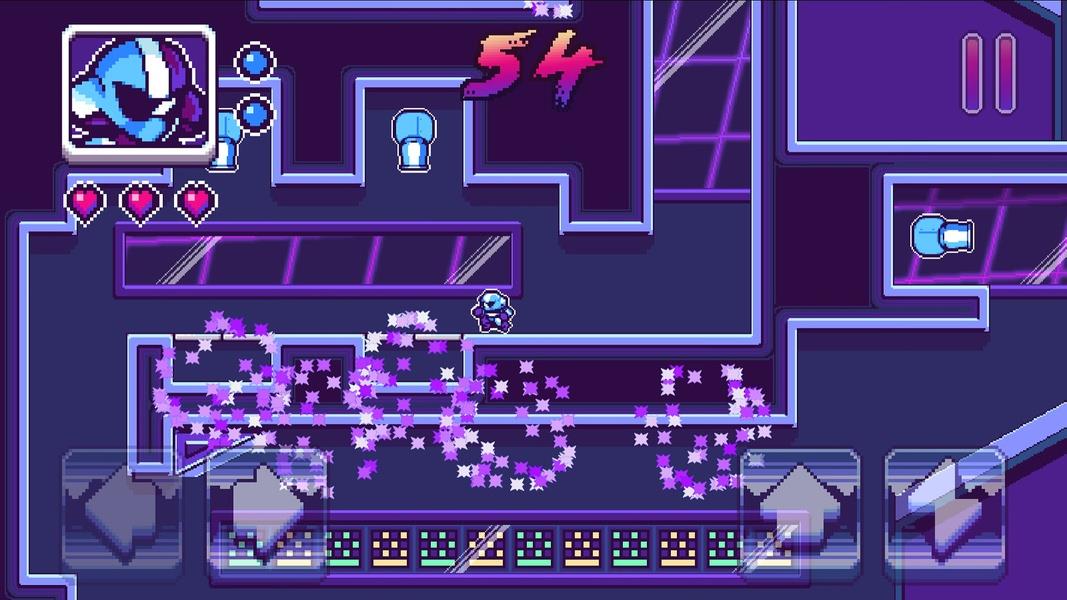
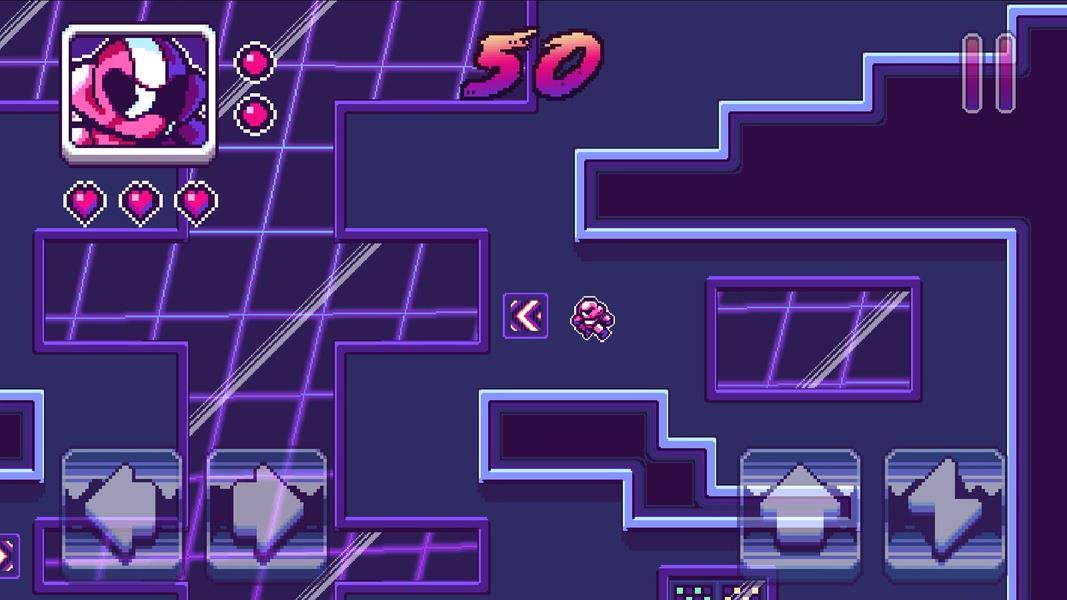
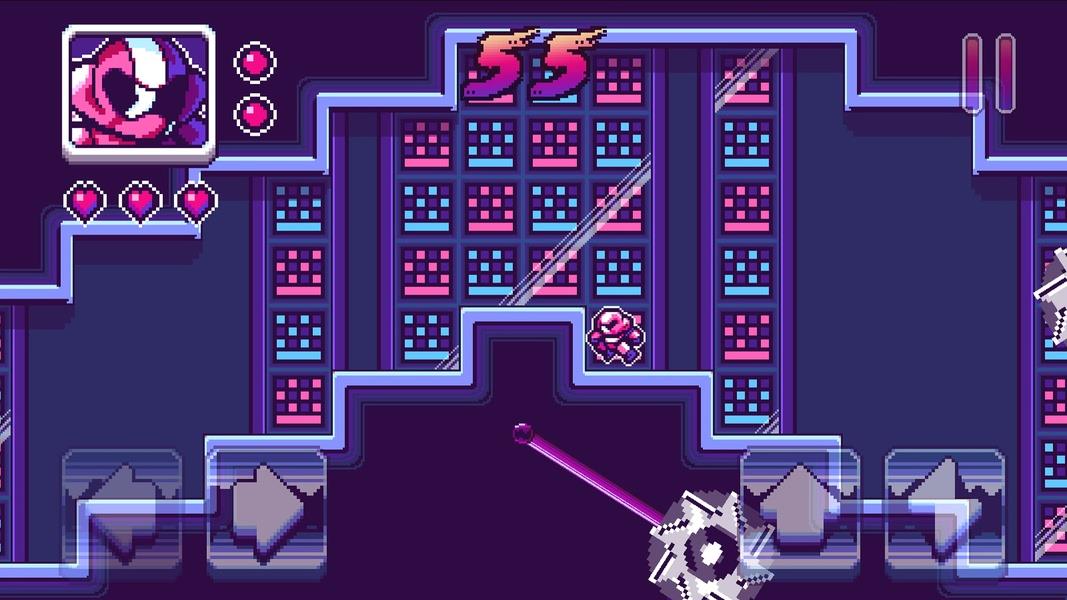
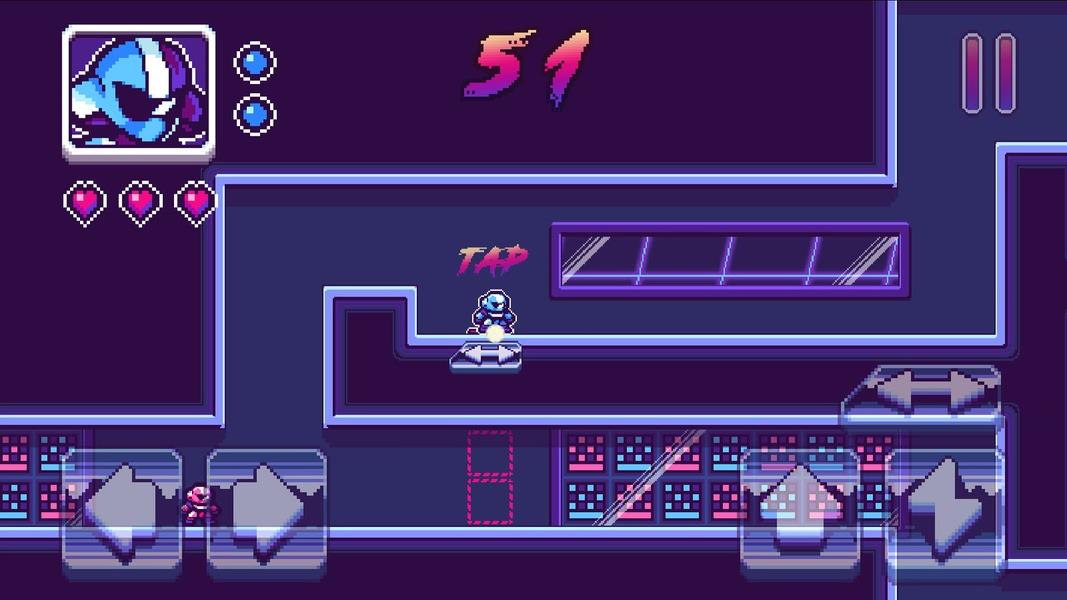
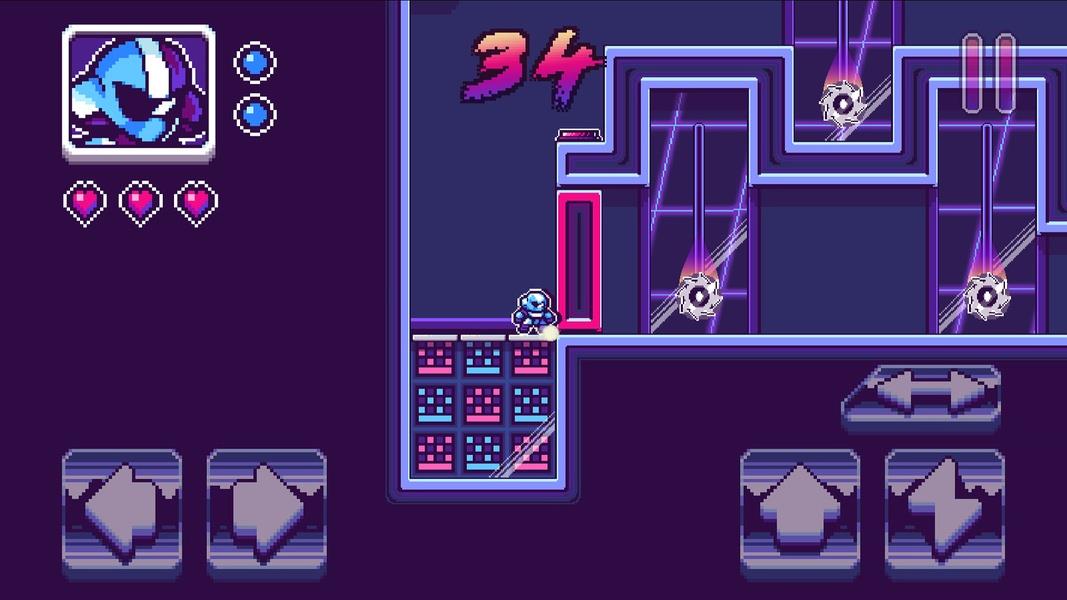
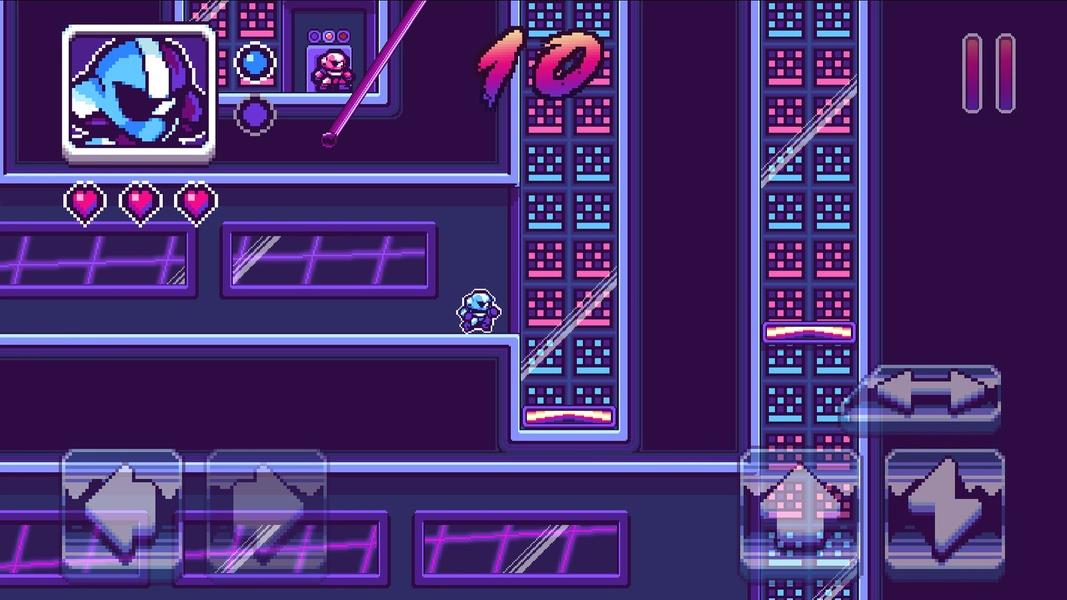
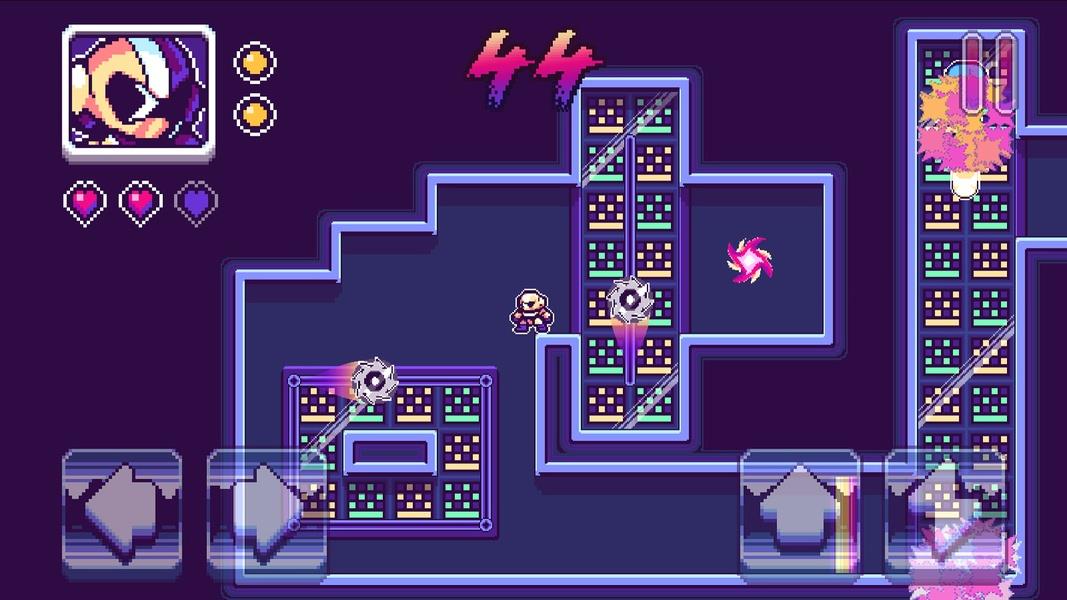
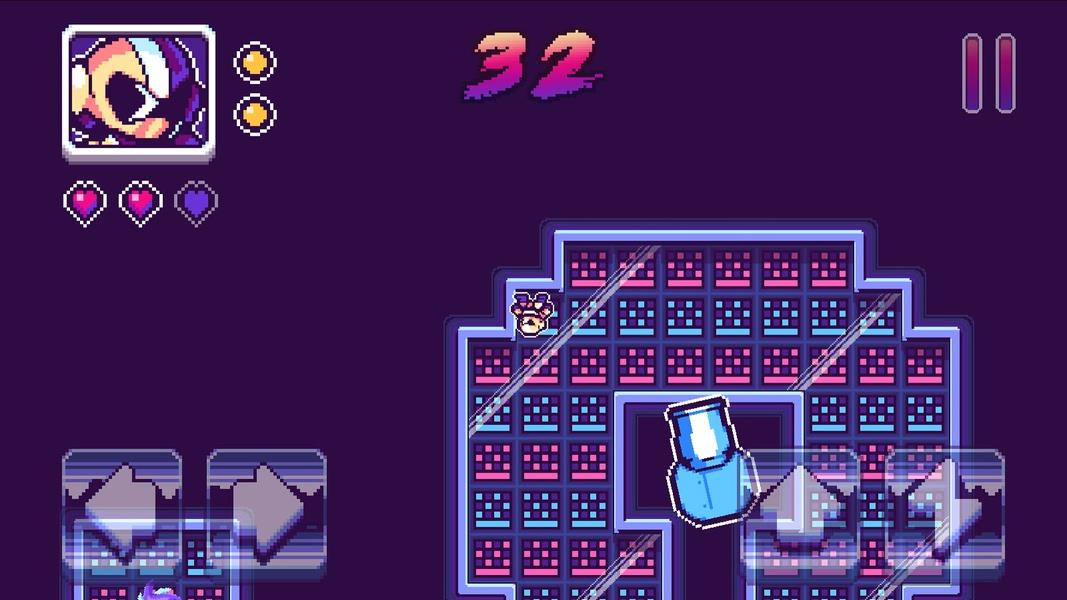
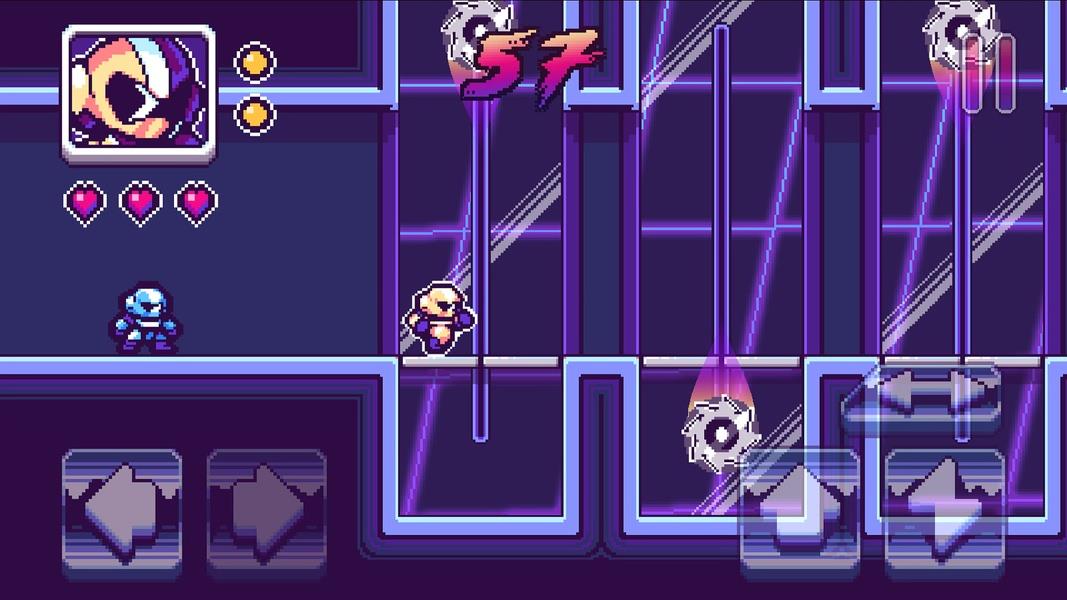
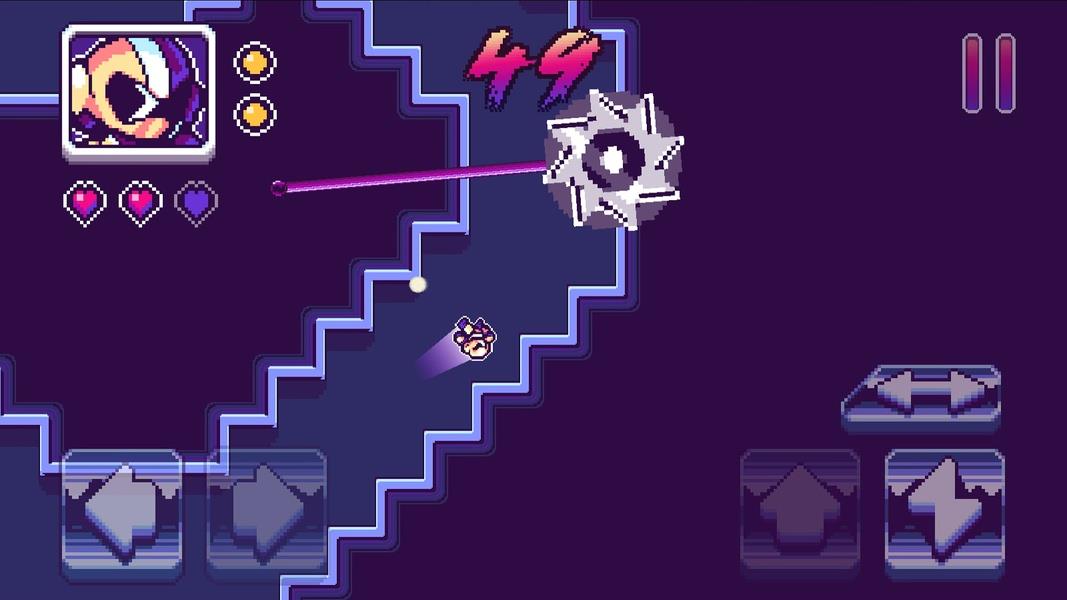

Synthwave Escape invites players into a retro-futuristic 2D platforming experience where timing, puzzle-solving and precise reflexes are the core of progression. In Synthwave Escape you control a team of up to four distinct robots, switching between them on the fly to clear traps, solve stage puzzles and navigate complex platform layouts. The game pairs straightforward touch controls with layered level design: move on the left side of the screen and use jump, a context-sensitive special ability and a character-swap button on the right, making it easy to pick up and play while offering depth for players who like to master timing and sequence.
Gameplay mechanics
The core loop centers on traversing 60 handcrafted single-player levels that gradually introduce new hazards and puzzle patterns. Each stage combines platforming sections, timed traps and environmental puzzles that reward planning as well as reflexes. Instead of overwhelming players with many systems, the design focuses on a few expressive mechanics—platform timing, ability interactions, and spatial puzzles—so that each new level feels like a small lesson in how to apply the robots’ tools more creatively.
Controls and responsiveness
Controls are intentionally simple and tactile: left and right movement sits under your left thumb, while jump, special ability and character change live on the right. The control scheme is built for touchscreens and short play sessions, with responsive input and forgiving window frames for jumps to reduce frustration. For players who prefer different setups, the game offers basic control sensitivity adjustments and an option to remap the primary functions for comfort, improving accessibility across device sizes and playstyles.
Progression and level structure
The campaign is divided into themed blocks of levels that introduce new obstacles and then combine them in later stages for more complex challenges. Difficulty ramps steadily, with early levels serving as tutorials for individual robot skills and later levels requiring rapid swaps and coordinated use of abilities to progress. While the campaign is a fixed set of 60 levels, designers included branching paths and optional stage routes that encourage revisits to earlier levels to discover secrets or cleaner completion routes, adding a layer of exploration to the linear structure.
Robots, abilities and strategy
Each of the four playable robots plays a complementary role: one may jump higher to reach vertical routes, another executes a quick dash to cross hazardous gaps, while another can reverse gravity to access upside-down platforms. Switching characters is not just cosmetic but strategic, and mastering the interplay between abilities is central to solving later puzzles. Players are encouraged to experiment with ability sequences and to approach levels with different combinations to find faster or more elegant solutions.
Visual style and soundtrack
The presentation pairs pixel-art visuals with a driving synth-inspired soundtrack to create a stylized retro atmosphere that supports gameplay clarity. Levels use a limited palette and readable foreground/background contrast so hazards stand out, while animations emphasize character intent—jump arcs, dash bursts and gravity flips are all designed to communicate timing to the player. The soundtrack and aesthetic work together to make each stage feel distinct without distracting from the core platforming challenges.
Replay value and challenge systems
Replayability comes from multiple directions: optional objectives, secret routes and performance improvement. Players who enjoy mastery can replay levels to reduce completion time, use fewer swaps, or collect optional items hidden off the main path. These non-required challenges provide a reason to revisit stages and experiment with different robot combinations, while the fixed campaign ensures a polished, curated progression rather than procedurally generated unpredictability.
Accessibility, user experience and offline play
The user interface is compact and focused on the essentials, with clear indicators for ability cooldowns and active robot selection. Lightweight accessibility options—including control sensitivity and simplified input windows—help make the game approachable for a wider audience. Because the campaign is single-player and self-contained, Synthwave Escape runs fully offline and saves progress locally, making it convenient for play on the go without network dependency.
What to expect
Expect a concise, deliberate platformer experience that emphasizes tight controls, clever level design and a nostalgic audiovisual package. Synthwave Escape is geared toward players who appreciate short sessions with a steady difficulty curve, strategic character swapping and the satisfaction of uncovering alternate routes through carefully crafted stages. With 60 levels and layered challenges, the game offers a focused single-player campaign that rewards experimentation and skill improvement.