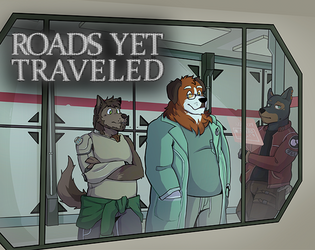






Roads Yet Traveled follows a cast of strangers; Roads Yet Traveled stages a sudden upheaval on a protagonist's first day of class; Roads Yet Traveled asks you to guide a small group of companions through an unfamiliar world with few obvious answers. The opening scenario drops you into a quietly tense situation that quickly becomes disorienting: a steady life marked by moves and new beginnings snaps into ambiguity, and you must make choices that shape who survives, who trusts whom, and how the story unfolds. This introduction is deliberately focused on narrative momentum and emotional stakes rather than fast action, giving the game a steady, character-first rhythm.
Key Features
The game emphasizes companion-driven storytelling and difficult, meaningful choices. Scenes are crafted as compact vignettes that build a sense of first-day nerves, fragile friendships, and sudden loss. Decision points have consequences that ripple through later episodes: who you defend, who you leave behind, and how you allocate scarce resources influence future interactions. The core experience centers on exploring new locations, piecing together what happened, and deciding when to press on or hold back to protect the group.
Gameplay and Controls
Gameplay relies on touch-friendly interactions suited for mobile devices. Dialogue and choice menus are navigated by tapping options, while exploration uses simple tap-to-move and context-sensitive interaction prompts. Encounters combine conversational choices with limited item use and environmental decisions; you will examine objects, manage a small inventory, and select approaches that change how companions react. Controls are designed to be approachable for players comfortable with visual novels and narrative adventure games, with clear prompts and an interface that keeps focus on story and characters rather than complex mechanics.
Progression and Challenge
Progression is narrative-driven and structured around short chapters that unlock as you complete scenes. There are no traditional leveling systems; instead, advancement comes from unfolding plot threads and the evolving relationships between characters. Challenge emerges from tense decisions, occasional resource scarcity, and the emotional trade-offs you must weigh—choosing safety over curiosity, or vice versa. Some moments introduce time pressure or constrained options to heighten tension, while other sections allow reflection and careful planning. Multiple narrative paths and branching outcomes encourage replay to see how different choices reshape the journey.
Visual Style and Level Structure
The visual presentation favors mood and atmosphere over hyper-realism, using a restrained color palette and focused scene framing to underline feelings of displacement and tentative hope. Levels are presented as a sequence of distinct locations—classroom hallways, makeshift camps, quiet neighborhoods—each treated as a scene with its own emotional beat. Short, self-contained segments help maintain narrative momentum while giving players space to absorb character moments; transitions between locations are used to signal shifts in tone and stakes rather than to extend playtime artificially.
Character Focus and Customization
While Roads Yet Traveled does not center on deep character customization, it offers meaningful ways to influence companion dynamics. Your dialogue choices, actions in critical scenes, and decisions about group priorities shape companion attitudes and story arcs. This character-focused design fosters attachment to new companions and makes later dilemmas feel personal. Any minor customization is narrative in nature—how relationships are formed and how backgrounds are revealed—not cosmetic microtransactions or unrelated add-ons.
Replay Value and Player Experience
The game rewards curiosity and persistence: different choices reveal alternate scenes, character beats, and endings, so multiple playthroughs offer a fuller picture of the world and its people. Pacing is tuned to be contemplative yet forward-moving, appealing to players who appreciate emotional storytelling and moral gray areas. A built-in save or checkpoint system allows you to revisit earlier decisions without restarting the entire experience, making it easier to explore secondary branches while keeping progress intact.
Accessibility and Offline Play
Roads Yet Traveled supports accessibility options common to narrative games: adjustable text size, readable fonts, and clear contrast for dialogue windows. Subtitles and explicit prompts help players who prefer a slower pace or need visual clarity. The game is playable offline once installed, so you can experience its chapters without a persistent internet connection. Controls are forgiving and the interface includes explanatory tooltips for new mechanics, which reduces friction for newcomers to narrative-driven adventure titles.
Final Notes
This is a character-centered adventure built around tough choices, fragile bonds, and the search for direction when everything familiar disappears. If you value careful storytelling, companion dynamics, and moments that linger after you close the app, Roads Yet Traveled offers a compact but emotionally rich experience that encourages exploration, reflection, and multiple returns to see how different paths resolve.