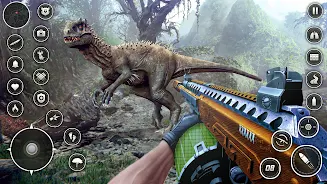
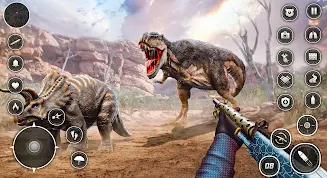
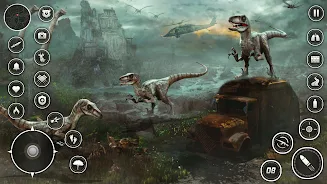
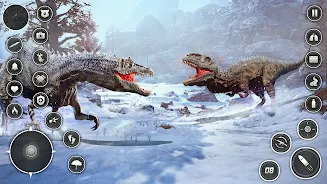

Deadly Dinosaur Hunter drops you into a tense, first-person hunting simulator where you take on the role of a seasoned tracker in expansive prehistoric environments. Deadly Dinosaur Hunter emphasizes careful observation, weapon handling, and tactical movement rather than arcade-style shooting, and it is built to be fully playable without an internet connection so you can hunt on the go.
Gameplay and mechanics
The core experience centers on tracking behaviors, anticipating movement, and placing accurate shots under pressure. Dinosaurs in the game are designed to react differently based on species, herd dynamics and alertness, so encounters can range from quick skirmishes with agile pack hunters to drawn-out confrontations against slow but powerful apex predators. The mechanics reward patient play: use scent wind, footprints and terrain to plan approaches, consider shot placement to avoid unnecessary damage to gear, and manage weapon recoil and follow-up shots when engaging aggressive targets. Visual and tactile feedback for hits helps you learn each weapon's effective range and the vulnerability of different dinosaur types.
Controls and camera
Touch controls are tuned for mobile play with adjustable sensitivity and customizable layout so you can find a setup that matches your comfort level. A tight first-person camera is provided for precise aiming, while wider viewpoints are available for assessing cover and escape routes before committing to a shot. Aim stabilization and optional aim assist are included to make the early learning curve smoother; experienced players can switch assists off for a more demanding, simulation-like feel. Movement and stance options influence accuracy and visibility, encouraging considered positioning rather than rushing into confrontations.
Weapons and customization
Deadly Dinosaur Hunter offers a selection of rifles and firearms with clearly presented stats for damage, range, recoil and rate of fire. Each weapon accepts attachments such as optics, barrels and ammunition types that modify handling and effective performance in different scenarios. Choices matter: a long-range setup with high-precision optics suits open plateaus and ambushes, while a shorter-barrel, high-damage loadout is better for close, high-threat environments. Progression unlocks upgrade paths so you can specialize weapons for hunting styles that match particular dinosaurs or level designs.
Progression and level structure
The game uses a mission-driven progression loop where objectives and level challenges increase in complexity over time. Completing missions opens new hunting zones with varying terrain and environmental hazards, along with tougher dinosaur variants and higher-tier gear. Levels are designed to test stealth, marksmanship and resource management in different combinations: some stages favor methodical stalking and single-precision shots, while others present time-limited or multi-target scenarios that demand quick decision-making. The structure encourages revisiting earlier stages with upgraded equipment to discover alternative strategies and routes.
Visual style and environments
Visual presentation focuses on scale and atmosphere, from dense fern groves to wide, sun-bleached plateaus where predators patrol. Lighting and foliage density are used to shape encounters and sightlines, making stealth and positioning meaningful. Environmental audio cues—rustling plants, distant calls and ambient weather—contribute to immersion and help you detect movement beyond visual range. Small details such as dust, muzzle flash and impact effects are tuned to reinforce a believable hunting world without distracting from gameplay clarity.
Challenge systems and replay value
Difficulty ramps deliberately so new players can learn core systems while later missions require tighter shot placement, better loadout choices, and advanced situational awareness. Replay value stems from experimenting with different weapons, attachments and approaches to the same objective, and from randomized elements like dinosaur patrol routes or spawn points that change the tactical landscape. Optional challenge modifiers and harder variants of missions provide additional tests for players seeking higher-stakes hunts.
User experience and accessibility
The interface is built for readability on mobile screens, with uncluttered HUD elements and clear menus for loadout selection and mission briefing. In-game tutorials and contextual tips introduce weapon stats, tracking cues and behavior patterns without overwhelming you, and accessibility options include adjustable control sensitivity, simplified HUD modes and toggleable assists to make the game approachable for a broader audience. Performance settings allow the game to run smoothly on a range of devices while keeping visuals coherent for hunting decisions.
Offline play and practical details
Because Deadly Dinosaur Hunter is fully playable offline, save data is kept locally so you can pause and resume missions without relying on connectivity. The offline design prioritizes consistent load times and uninterrupted single-player progression, and the game stores progress between sessions so you can return to unfinished hunts at any time. This focus on local play helps ensure predictable performance and a private, single-player experience.
Who should play
This title will appeal to players who enjoy tactical first-person hunting, deliberate pacing, and the challenge of understanding AI-driven animal behavior. Deadly Dinosaur Hunter is suited to those who prefer strategic planning and careful resource use over fast-paced arcade combat; mastery comes from learning weapon characteristics, reading creature behavior and using the environment to gain an advantage.