



Lost Times

| Package ID: | |
|---|---|
| Latest Version: | v0.15 |
| Latest update: | Jun 17, 2026 11:13:03 |
| Developer: | evelai |
| Requirements: | Android |
| Category: | Casual |
| Size: | 663.47 MB |
| Tags: | War Drive Management |
Rating :4.0
Lost Times is a narrative-driven survival sim that places you in the role of a shelter gatekeeper after societal collapse. In Lost Times you decide who enters, assign jobs, run missions and balance scarce resources while navigating faction influence and personal relationships. The game focuses on branching story choices, tactical base management and occasional mini-games; it also contains mature scenes presented in a neutral, narrative context for adult players.
Key Features
The core of Lost Times is decision-driven gameplay: each visitor you admit, each mission you approve and each resource you allocate changes the shelter’s social balance. Gatekeeping is more than a binary choice—you weigh reputation, threat level and the long-term consequences that appear in end-of-part summaries. Faction systems react to your actions, unlocking new missions, allies and conflicts as trust shifts.
Several mini-games and side missions break up the narrative pacing. A raider mini-game tests reflexes and tactical timing in high-risk situations at the gate, while targeted criminal-hunting missions provide focused narrative encounters with characters like Viktor. These sections add short-term challenge and variety without changing the single-player, offline structure of the experience.
Gameplay and Controls
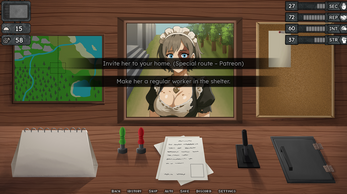
Lost Times uses a primarily touch-oriented interface optimized for phones and tablets. Dialog and choice screens present multiple readable options with clear consequences; management screens let you assign workers and commanders with simple taps and drag-to-assign gestures. Mini-games rely on straightforward controls such as tap timing and basic swipes, making them accessible while still offering increasing difficulty for players who want a tougher test.
Resource management is intentionally transparent. Shelter jobs produce income and supplies, while commanders and workers have roles that influence productivity and morale. A concise job screen and tooltips explain stat effects so new players can learn the systems, while more experienced players can fine-tune assignments to optimize rewards and unlock specialized content.
Progression and Challenge
Progression in Lost Times is structured into parts and chapters that advance the main storyline and introduce new missions and characters. Each part concludes with a summary of your most consequential choices, helping you track long-term effects and plan different strategies in subsequent playthroughs. Reputation, faction standing and resource levels are persistent variables that shape access to story branches and late-game content.
Difficulty arises from scarce resources, political pressure and timed choices. Players must balance short-term survival against long-term relationships and influence. Optional challenge modifiers in certain missions increase stakes for players seeking a harder experience, while balance tweaks in recent updates have smoothed progression for those who prefer a narrative-first approach.
Visual Style and Customization
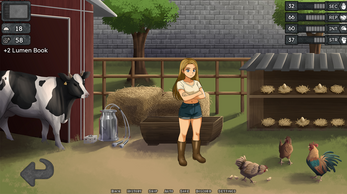
The visual presentation in Lost Times pairs character portraits, environmental art and animation to support immersion without overcomplication. Updates added refined animations, new character visuals and an updated main menu for clearer navigation. Customization focuses on the refuge: assign different staff, appoint commanders with unique behaviors and, in some storylines, modify key characters’ roles or appearances through unlocked scenes and visual updates.
Supporter and bonus content expands personalization with additional dialogue variants, interaction animations and non-essential cosmetic options. These extras enhance the feel of the shelter and its cast but remain optional for the main narrative experience.
Replay Value and User Experience
Lost Times emphasizes replayability through branching outcomes, multiple faction paths and varied character interactions. Choices that seem small in one playthrough can cascade into major differences later, encouraging players to replay parts with alternative strategies to discover new missions, scenes and endings. The game autosaves at key checkpoints and supports manual saves so you can experiment without losing progress.
User experience improvements aim to keep the interface approachable: readable dialogue text, adjustable text size options, clear mission logs and a straightforward help system. The game is playable offline after installation, making it convenient for sessions without a constant connection.
Accessibility and Support
Accessibility features include text scaling and clear contrast in UI elements to help readability. Control mechanics are deliberately simple to reduce physical complexity, and optional pacing settings let players slow dialogue or skip repeated scenes. Regular updates address balance and stability, and patch notes highlight mission fixes, new content and quality-of-life changes so returning players can quickly see what changed between versions.
For players interested in a decision-focused survival narrative with tactical gatekeeping and a steady flow of new content, Lost Times delivers a focused, replayable experience that combines story depth, base management and bite-sized gameplay challenges without relying on online systems.