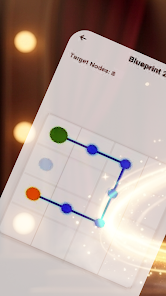


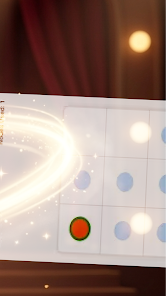

FlowFold is a calm, geometric puzzle game that turns dot-to-dot mechanics into deliberate spatial challenges. In FlowFold you draw a single continuous line through a grid of nodes to recreate target blueprints, and every connection behaves like a virtual crease: each node can be used only once, so planning and foresight are rewarded. The core loop is intentionally simple to learn but rich in emergent strategy thanks to a mix of handcrafted blueprints and a procedural puzzle generator that keeps puzzles fresh.
Key Features
The app offers a focused set of mechanics: a Blueprint Challenge made up of 50 carefully designed levels that introduce new patterns and constraints, and an Infinite Fold Mode that procedurally generates puzzles across a range of difficulties for ongoing practice. FlowFold also includes a clear rating system — S, A, B or C — that evaluates how efficiently you complete each fold, encouraging players to revisit levels and refine their solutions. Minimal UI elements and smooth animations place the emphasis on the grid itself, while short level lengths make it practical for quick sessions or longer, thoughtful play.
Gameplay and Controls
Controls are touch-first and intentionally straightforward: tap or press on a starting node and drag a continuous line through adjacent nodes to complete the target shape. Visual feedback highlights available moves and shows creases as you progress, and a reset option lets you start a level again without affecting progress in the Blueprint Challenge. The game prevents revisiting nodes, which creates puzzle constraints that require route planning rather than trial-and-error. Subtle haptic and audio cues reinforce success and mistakes without distracting from concentration.
Progression and Challenge Systems
The progression is twofold: handcrafted Blueprint Challenge levels are arranged to introduce mechanics and increase complexity gradually, while Infinite Fold Mode adapts difficulty parameters to provide endless practice and surprises. The rating system gives a simple performance metric; achieving higher ratings unlocks nothing explicit but serves as a personal progression marker for players who enjoy optimization. Procedural generation varies grid size, node layout and target shapes so replaying the same difficulty still feels novel.
Visual Style and Customization
The visual approach is minimalist and zen-like: clean lines, muted palettes and smooth transitions reduce visual clutter so players can focus on spatial reasoning. Options include a choice of light or dark themes and adjustable animation speeds to fit personal preference or device performance. These modest customization choices help FlowFold feel approachable across different devices and player tastes without adding unnecessary complexity.
Replay Value and User Experience
Replay value comes from mastering handcrafted levels to improve ratings and from the infinite stream of procedurally generated puzzles that provide endless brain-teasing. Levels are intentionally short, making it easy to complete a puzzle during a short break, while the underlying mechanics reward players who invest time in planning and pattern recognition. The interface keeps menus minimal and readable, and progress through the Blueprint Challenge is tracked so you can pick up where you left off.
Accessibility and Offline Use
FlowFold is designed to be lightweight and playable offline, making it suitable for use without a constant internet connection. Accessibility considerations include clear visual contrast, adjustable touch sensitivity, and audio toggles so players can tailor the experience to comfort and device conditions. The game runs smoothly on a wide range of hardware and prioritizes responsiveness so gameplay remains consistent even on lower-end devices.
Considerations
Advantages include a relaxing, focused presentation that emphasizes calm, methodical problem solving and a balanced mix of curated and infinite puzzles for both short and long sessions. Potential limitations to note are the modest scope of the Blueprint Challenge — fifty handcrafted levels may feel brief for players seeking a long curated campaign — and the single-use node rule, which can be unforgiving for those preferring a low-pressure, highly forgiving puzzle experience. Visual minimalism also means players looking for flashy graphics or narrative-driven content may find the presentation intentionally spare.